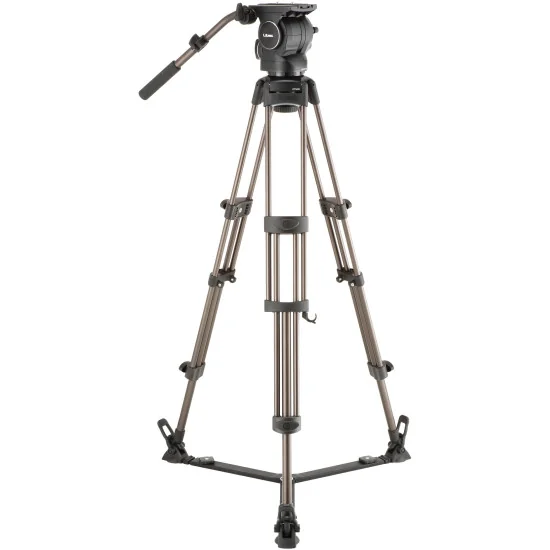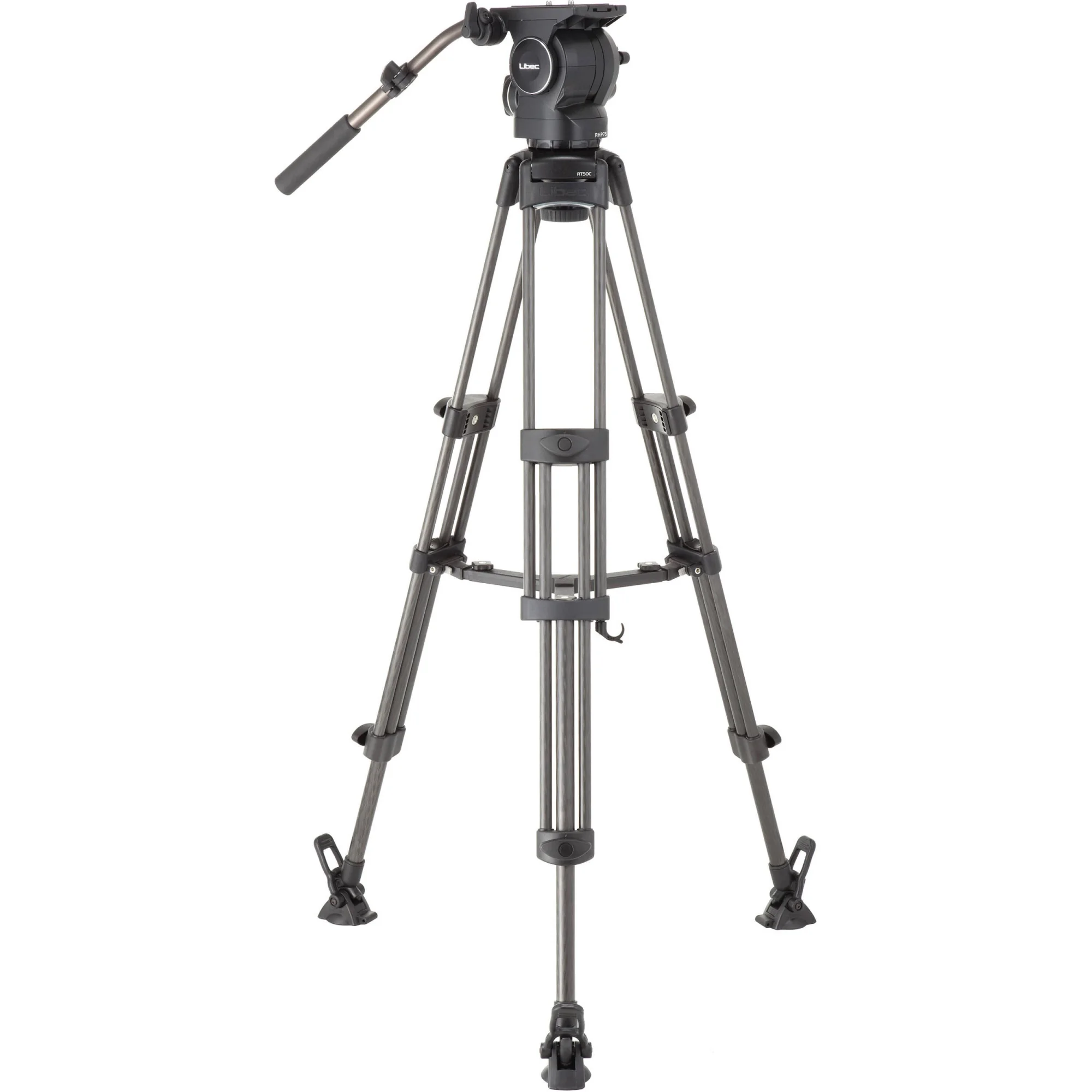
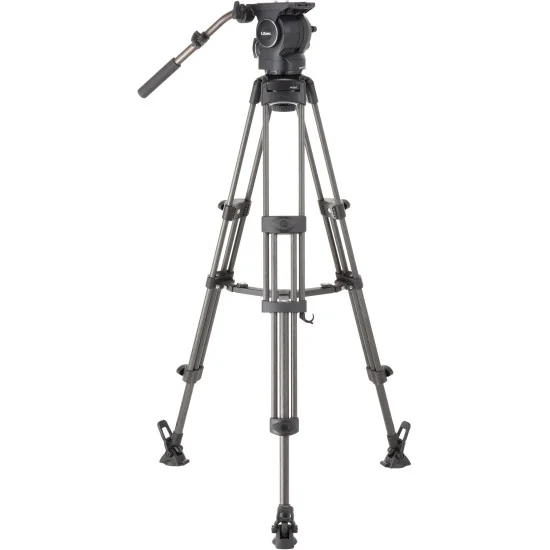
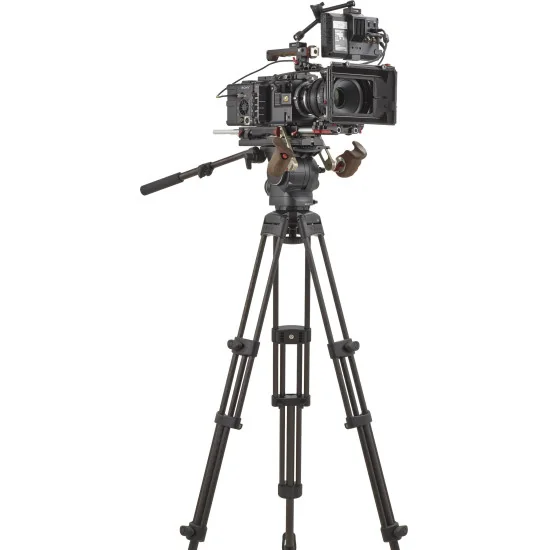
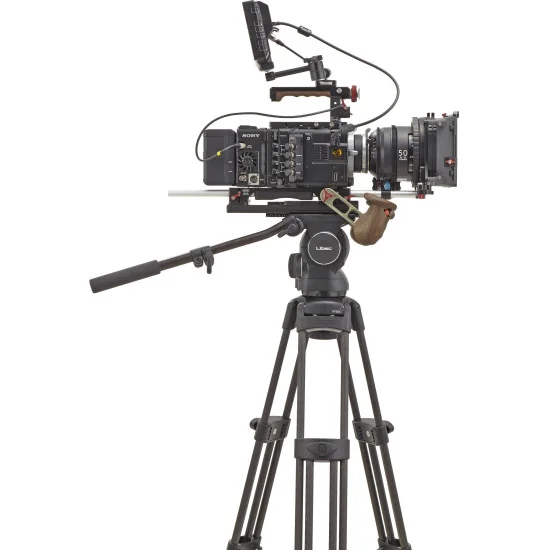
Libec RSP-750MC est un système de trépied broadcast réunissant la tête fluide RHP75, les jambes RT50C en tubes carbone, de larges pieds caoutchouc et une entretoise mi-hauteur réglable pour conserver une géométrie d’appui constante sur sols irréguliers, rampes de câbles ou positions serrées en régie mobile. La tête accepte jusqu’à 17 kg et fournit un contrebalancement continu « Perfect Balance » avec une plage 5,5–14 kg, ce qui facilite l’équilibrage des caméras ENG et des configurations à optiques lourdes sans dérive en tilt.
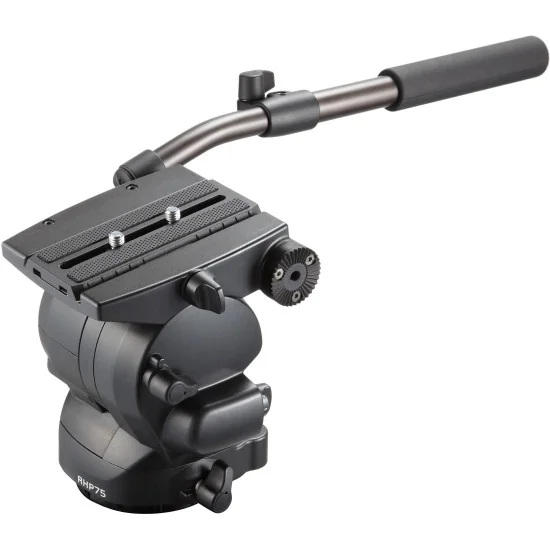
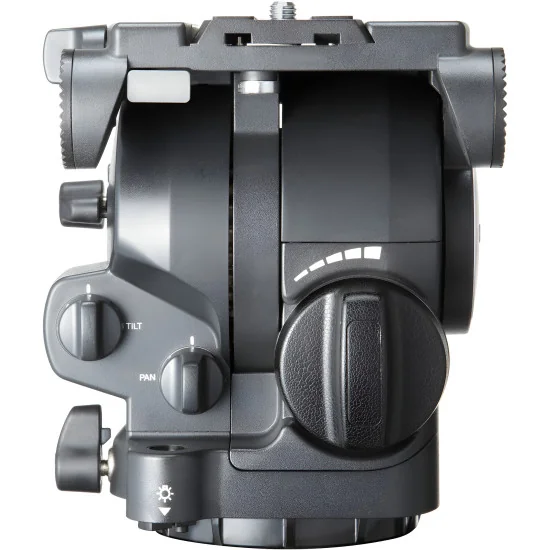
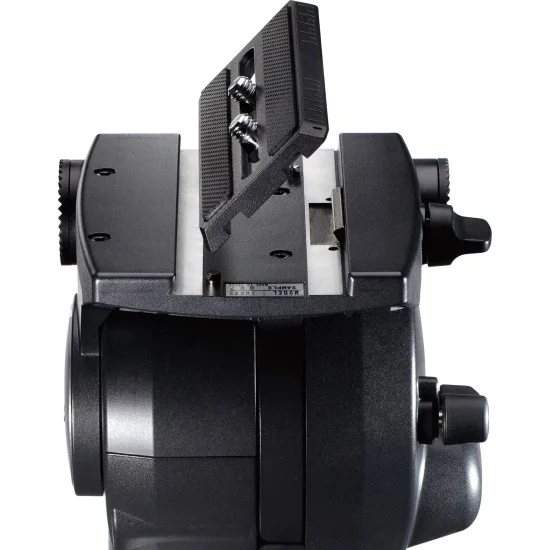
La résistance pan/tilt se règle via un freinage 7 niveaux avec verrouillage, afin d’obtenir des départs/arrêts reproductibles en sport, concert ou interviews enchaînées. L’inclinaison atteint +90° / −70°, tandis que le niveau à bulle LED et le nivelage par bol accélèrent la mise à niveau en studio comme en extérieur nocturne. La platine coulissante optimise le réglage avant/arrière, l’accroche one-touch réduit le temps de mise en place, et deux vis 3/8-inch limitent la rotation des rigs lourds, avec des vis de secours pour les changements de configuration.
L’interface bol broadcast et les jambes carbone privilégient la rigidité en torsion pour les panoramiques au téléobjectif, l’usage avec prompteur ou le streaming où la micro-vibration devient visible. La plage de fonctionnement −40°C à +60°C couvre les reportages hivernaux, les scènes chaudes et les événements extérieurs. Pointes métalliques intégrées et entretoise mi-hauteur stabilisent l’ensemble sur pelouse, béton et plateformes temporaires sans imposer l’encombrement d’une entretoise au sol.
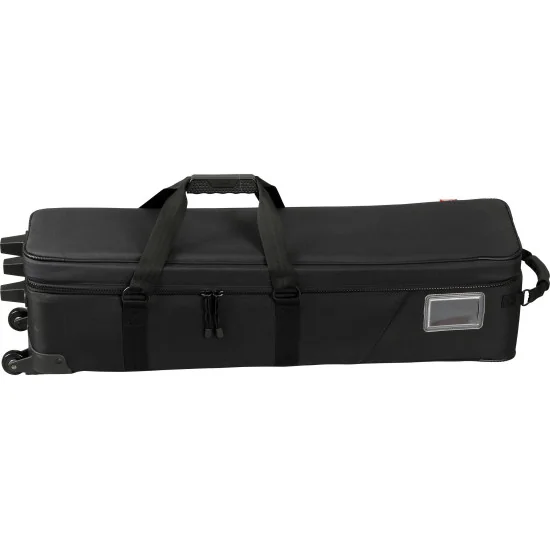
Pour les déplacements, la valise à roulettes RC-70 regroupe tête, jambes et entretoise pour les tournées, les vols et les packs camion. Le RSP-750MC s’intègre en news, captation événementielle, streaming live et production TV lorsque la constance du contrebalancement et du freinage conditionne la fluidité des plans.
Libec RSP-750MC est un système de trépied broadcast réunissant la tête fluide RHP75, les jambes RT50C en tubes carbone, de larges pieds caoutchouc et une entretoise mi-hauteur réglable pour conserver une géométrie d’appui constante sur sols irréguliers, rampes de câbles ou positions serrées en régie mobile. La tête accepte jusqu’à 17 kg et fournit un contrebalancement continu « Perfect Balance » avec une plage 5,5–14 kg, ce qui facilite l’équilibrage des caméras ENG et des configurations à optiques lourdes sans dérive en tilt.
La résistance pan/tilt se règle via un freinage 7 niveaux avec verrouillage, afin d’obtenir des départs/arrêts reproductibles en sport, concert ou interviews enchaînées. L’inclinaison atteint +90° / −70°, tandis que le niveau à bulle LED et le nivelage par bol accélèrent la mise à niveau en studio comme en extérieur nocturne. La platine coulissante optimise le réglage avant/arrière, l’accroche one-touch réduit le temps de mise en place, et deux vis 3/8-inch limitent la rotation des rigs lourds, avec des vis de secours pour les changements de configuration.
L’interface bol broadcast et les jambes carbone privilégient la rigidité en torsion pour les panoramiques au téléobjectif, l’usage avec prompteur ou le streaming où la micro-vibration devient visible. La plage de fonctionnement −40°C à +60°C couvre les reportages hivernaux, les scènes chaudes et les événements extérieurs. Pointes métalliques intégrées et entretoise mi-hauteur stabilisent l’ensemble sur pelouse, béton et plateformes temporaires sans imposer l’encombrement d’une entretoise au sol.
Pour les déplacements, la valise à roulettes RC-70 regroupe tête, jambes et entretoise pour les tournées, les vols et les packs camion. Le RSP-750MC s’intègre en news, captation événementielle, streaming live et production TV lorsque la constance du contrebalancement et du freinage conditionne la fluidité des plans.
Livraison dans toute l’UE pour 20 €, gratuite dès 1 000 €.
Boutique B2B réservée aux professionnels, prix HT.
Distribution et garantie officielles de l'UE.
Paiements en ligne sécurisés via Stripe.
Demande de devis via formulaire ou e-mail: avgear@avgear.shop
The perfect controllability captures every single movement. Setup, shooting and transportation. Excellent, user-friendly for all situations. Libec's stylish and highly-developed technology leads to a new tripod range. From the studio to the EFP and OB, RS PLUS series is the perfect tripod system for every broadcast production.
The spring tension of the head can be precisely adjusted according to the weight of the mounted camera using the counterbalance adjustment knob. This provides a perfect counterbalance between the camera weight and the innerspring tension at any tilt angle.
Libec’s unique balance stabilizer mechanism prevents even the slightest wobble on the image caused by the spring-back effect at a stopping tilt movement. In addition, this mechanism greatly simplifies the strict adjustment procedures needed for perfect balancing. First, turn the tilt torque dial to 1 and balance the camera lengthwise. Then, adjust the spring tension by turning the counterbalance adjustment knob. Tilt the camera, once the camera remains stationary, then the counterbalance adjustment is complete. This way, the “perfect counterbalance” is easily achieved, which ensures a stable image even when the pan handle is released from the shooter’s hands.
Generally, the spring tension gets stronger as the counterbalance adjustment knob is turned clockwise, increasing tension on the knob. This difficulty is simplified by the head’s smooth balancing system which stabilizes the turning force efficiently. The knob can be turned with constant force and offers easy and speedy adjustments.
The sealed torque unit contributes to the smooth start and stop of pan and tilt movement, and produces precise camerawork just as intended. In addition, specific silicon grease is applied to ensure ordinary pan and tilt movement at a wide temperature range from -40° C/-40° F up to +60° C/+140° F. The variable seven-step torque switch system covers remarkably wide torque range, by which an optimum torque is selectable according to every shooting conditions and circumstances.
The camera plate is attachable and detachable with just one touch, promoting speedy and easy setup.
The case is equipped with two wheels and can be pulled along by the side handle grip, which allows easy transportation on foot. Damages are prevented by the soft and hard protectors on all sides of the case which absorb impacts, while the inner strap holds the tripod firmly in place. This all-round tripod case is designed with high rigidity and can be safely transported as a check-in luggage during flight.
Importance of counterbalance
When looking for a suitable tripod head for your camera, one of the most important aspects to consider is counterbalancing capability. The counterbalancing function provides a counterforce to keep the balance between the tripod head and the camera that is mounted on it. If the right counterbalance is maintained, the camera remains stationary at any angle of tilt. You do not need to worry about holding the camera by hand and yet are able to maintain precise control of the camera.
Counterbalancing capability
RS/RS PLUS/QD is equipped with an excellent counterbalancing system that provides a perfect counterforce that corresponds to the weight and angle of the camera. A special innerspring mechanism is used for this system. When the strength of a spring is insufficient, the head cannot bear the weight of the camera. If a spring is too strong, the camera will tilt upward. RS/RS PLUS/QD "variable counterbalance system" enables users to adjust the strength of the innerspring within a certain range using the counterbalance knob located on the outside of the head. Different cameras can be used and a perfect counterbalance can be set for each individual camera.
Counterbalance chart to help you choose the perfect tripod head
The definitive way to find the most accurate counterbalance between camera/accessories and a tripod head is to actually mount the camera on the head. However, you can use this counterbalance chart to get a rough idea of the correct counterbalance. The vertical axis of the chart depicts the height of the gravitational center and the horizontal axis is load weight (total weight of the camera and accessories). Based on the combination of these two elements, you can find a suitable tripod head for your camera. The area between the two curved lines represents the range of counterbalance that you can set with the counterbalance adjustment knob. When a standard lens, microphone and battery are used, the normal height of the gravitational center is approximately 200mm/7.9"(box lens), 125mm/4.9"(shoulder type camera) and 75mm/3"(hand-held camera) The height of the gravitational center will not shift much even when a different lens or a different battery is used on the back of the camera. Please be aware that attaching a light or a monitor on top of the camera will shift the center of gravity.
Head (RHP75)
Tripod (RT50C)
Midspreader (BR-6B)
Large rubbber feet (FP-2B)
Carrying case
Specifications
Counterbalance range 5.5 to 14kg / 12.0 to 31.0lb (C.G.125mm)
Payload 17kg / 37.5lb
Counterbalance Continuous
Drag mode 7STEP
Tilt angle +90° / -70°
Weight 7.5kg / 16.5lb
Height 85 to 173.5cm / 33.5 to 68.5"
Ball diameter 100mm
Section 2STAGE

Fiche technique
Références spécifiques