


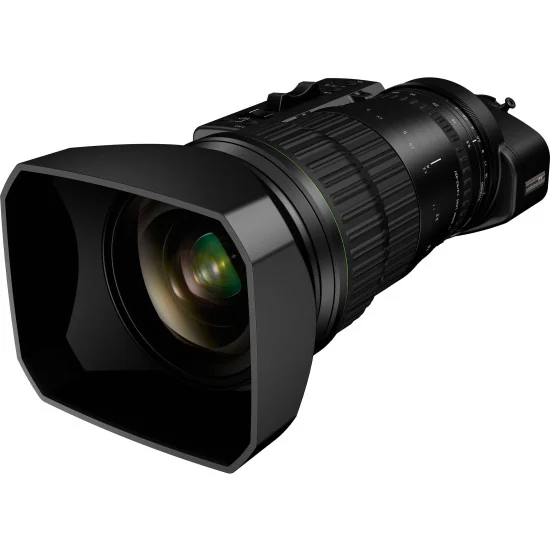
Fujinon LA16x8BRM 8-128mm f/1.9-2.8 2/3" 4K 16x Zoom Servo Broadcast Lens
€3,490.00
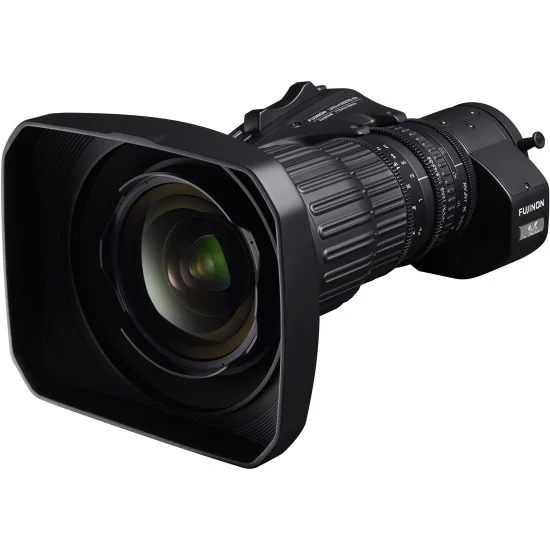
Fujinon LA16x8BRM is a 2/3" B4 mount 4K broadcast lens tuned for the Blackmagic URSA Broadcast family and other 2/3" studio or ENG chains. The...


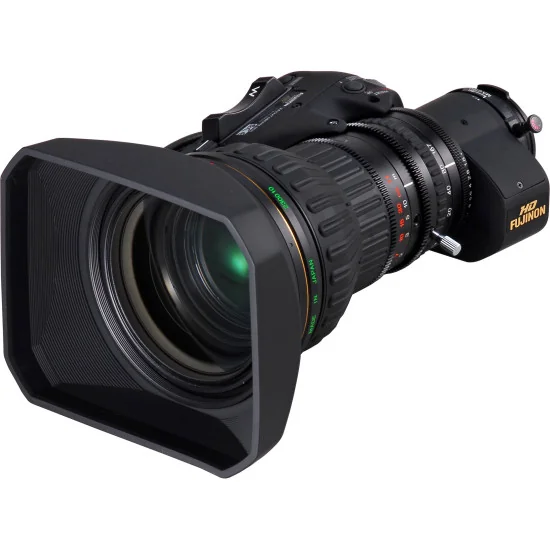

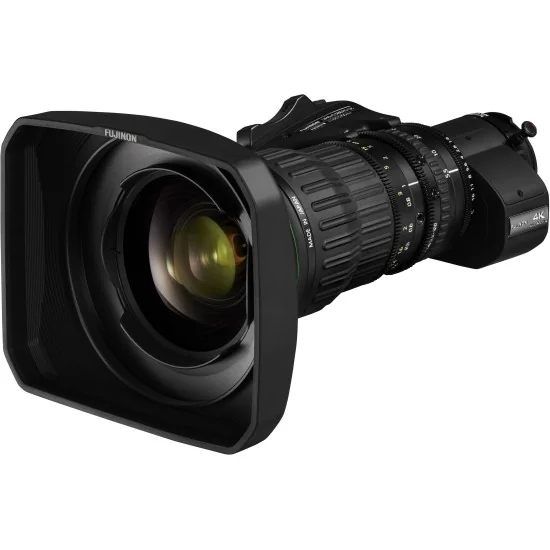


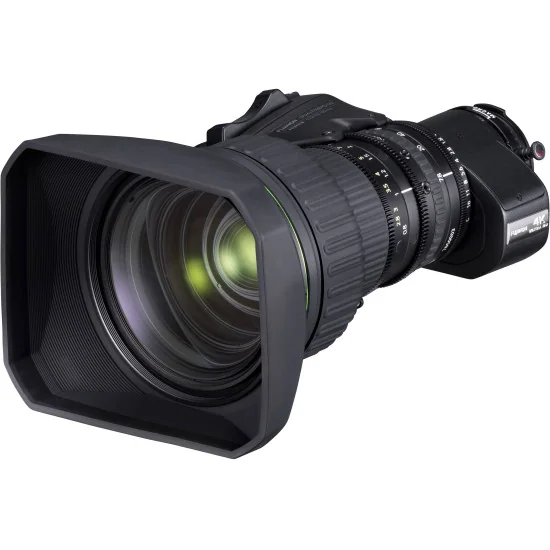

Fujinon lenses have been part of television production since 1962, the year Fujifilm's optical arm began dedicated research into TV lenses. Several techniques that camera crews now take for granted came out of the same labs: Electron Beam Coating, first applied in 1972; a built-in extender for ENG/EFP zooms in 1978; a patented process for moulding aspherical glass elements in 1993; and, in 2015, the first 4K lens for 2/3-inch sensors. That lineage explains why the name turns up on news cameras, stadium gantries and feature-film sets alike. Our Fujinon selection concentrates on 2/3-inch B4 servo zooms in HD, 4K and 8K versions, each listed with its exact focal range and aperture so you can shortlist by venue size before asking for a quote.
The UA series carries most 4K broadcast work. Wide specialists such as the UA13x4.5BERD and UA14x4.5BERD open at 4.5 mm and F1.8, which matters in tight newsrooms, interview corners and press rooms where stepping back is not an option. The UA18x7.6BERD, UA22x8BERD, UA23x7.6BERD and UA24x7.8BERD cover the bread-and-butter EFP and sideline jobs, while the UA46x9.5BERD and UA46x13.5BERD take a portable body to 437 mm and 621 mm – the latter being the longest telephoto end in its class, and both fitted with an anti-vibration mechanism that steadies the frame on a camera platform. Every UA model adds a built-in 2x extender and a 9-blade iris.
Not every contract requires UHD. For HD deliverables the ZA series – ZA17x7.6BERD (7.6–130 mm) and ZA22x7.6BERD (7.6–167 mm) – holds F1.8 through most of its range, comes with a digital grip and a 2x extender, and sits at a far lower price point than comparable 4K glass; the HA14x4.5BERD covers the wide-angle HD slot. At the other extreme, the HP12x7.6ERD (7.6–91 mm, 1.4x extender, focus from 0.3 m) serves 8K cameras with 1.25-inch sensors. Beyond portable zooms, Fujinon builds box lenses for studios and OB trucks: the UA107x8.4 AF was the first 4K box lens with autofocus, and the UA125x8BESM reaches 1000 mm before its extender is even engaged.
The LA family shows how much servo control fits into a light ENG zoom. Tailored to the Blackmagic URSA Broadcast, the Fujinon LA16x8BRM (8–128 mm, F1.9–2.8) uses a rear-focus layout to stay compact on the shoulder, and a single button on the barrel performs electronic flange-back adjustment – a back-focus calibration that once meant a chart and a screwdriver. Sliding the focus ring forward engages macro down to 0.05 m from the front element, handy for 4K product inserts or close-ups of e-sports hardware. Add standard Fujinon zoom and focus demands and the same lens moves onto a tripod for studio or EFP positions.
Shown at NAB 2025, the Fujinon LA30x7.8BRM-XB2 stretches that concept to 7.8–234 mm, a 30x ratio Fujifilm rates as the highest in its compact class. Its new drive unit completes a wide-to-tele move in about one second when a striker breaks clear, or spreads the same move across 120 seconds for a slow push during a live concert. Aperture runs from F1.9 to F3.9, minimum object distance is 0.8 m before macro, and the front thread takes M95 filters. Together the two LA zooms form a sensible pair for a multicam fleet: the 16x for handheld and studio, the 30x for sideline and back-of-hall positions.
Many current Fujinon zooms – the LA30x7.8BRM-XB2, the ZA models and most UA portables among them – read zoom, focus and iris through 16-bit encoders. That resolution gives tracking systems, AR graphics engines and robotic heads a precise position stream, so virtual sets and on-screen graphics stay locked to the live picture during a zoom. For a remote-production gallery steering cameras from another city, accurate lens data also cuts the time engineers spend recalibrating before each show.
On the cinema side, the Premista zooms – 19–45 mm and 28–100 mm at T2.9, plus 80–250 mm at T2.9–3.5 – project a 46.3 mm image circle for large-format sensors, use a 13-blade iris for smooth bokeh and output Cooke /i together with ZEISS eXtended Data, which saves time in grading and VFX. The PL-mount Cabrio zooms (ZK14-35, ZK19-90 and ZK85-300 mm) bridge two crew styles: with the detachable servo drive fitted they behave like an ENG lens for a solo operator, and with it removed they accept cine motors and a focus puller. Lighter Super 35 jobs, such as documentaries or corporate films on E-mount cameras, suit the compact MK18-55mm and MK50-135mm T2.9.
The Duvo range closes the gap between those worlds. Zooms such as the HZK25-1000mm (40x, F2.8 up to 465 mm), the HZK24-300mm and the HZK14-100mm combine broadcast-style servo handling with large-sensor coverage, giving concerts, fashion shows and sports features a shallow-depth look that 2/3-inch cameras cannot reproduce.
Seen from a balance sheet, the strongest argument for this brand is consistency. The B4 mount is shared by 2/3-inch cameras from Sony, Panasonic, Grass Valley, Ikegami and Blackmagic Design, so a zoom bought today stays usable when bodies are replaced. Fujinon demands and grips work across series, a single-brand lens park makes colour matching between positions simpler – shortening shading time in multicam – and features like electronic flange back trim set-up on every call. We sell B2B only, quote net prices with VAT-free intra-community invoicing across the EU, and can help match focal ranges to the real distances in your venues before you commit to a multi-lens order.