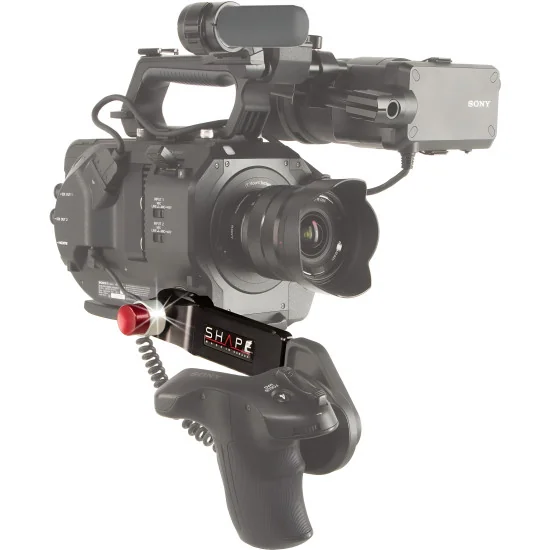
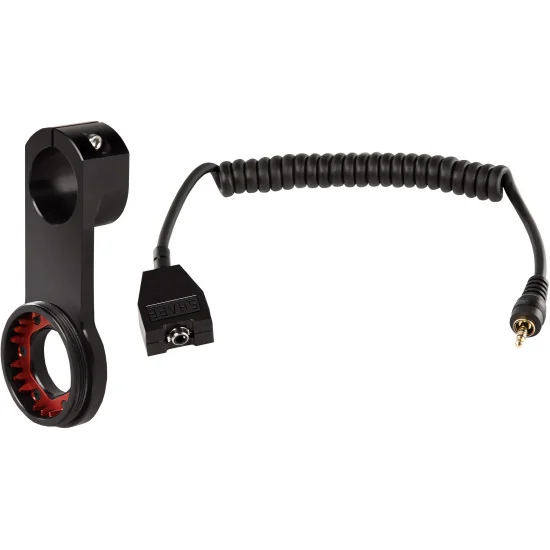
SHAPE Canon C70 15mm Base B15C70 | Baseplate
€203.00
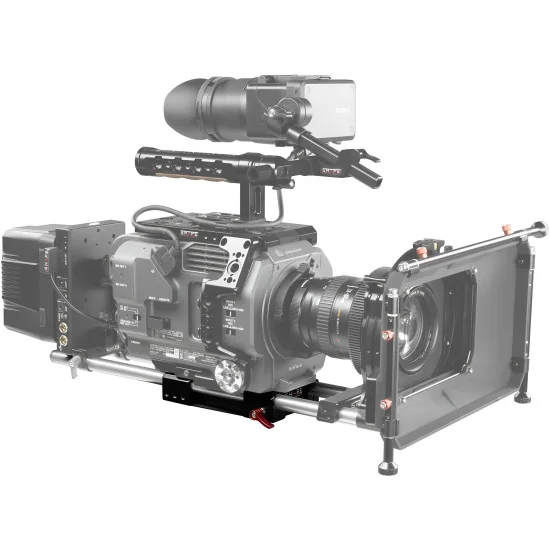
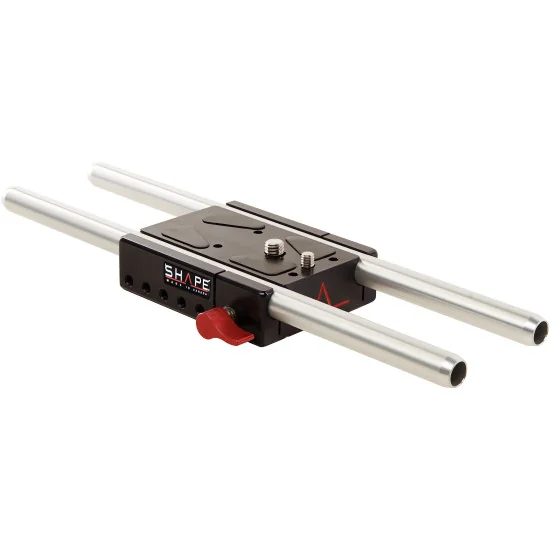
Tailored precisely for the Canon C70, the SHAPE 15mm Base B15C70 aligns seamlessly with the camera’s optical center. This baseplate system...
Filter By
Brand
Brand
Price
Price
€203.00 - €9,499.00
Compatibility
Compatibility
Configuration
Configuration
Camera Cage
Camera Cage
Dovetail Plate
Dovetail Plate
Rods
Rods
Top Handle
Top Handle
Mattebox Filter Stages
Mattebox Filter Stages
Mattebox Front Diameter
Mattebox Front Diameter
Mattebox Flags
Mattebox Flags
Follow Focus Mount
Follow Focus Mount
Follow Focus Hard Stops
Follow Focus Hard Stops
Follow Focus Gear
Follow Focus Gear
Battery Type
Battery Type
Build a camera system that carries more than a body and lens. Rigs, supports and matte boxes add mounting points, power distribution, lens control and operator stability for demanding production.
Active filters
Rigs, supports and matte boxes sit at the point where a camera stops being a simple body with a lens and becomes a production tool ready for focus motors, wireless video, external power, monitors, microphones and operator handling. In professional video, the value of a rig is not only in adding mounting points. It is in preserving lens height, keeping weight distribution under control, securing cable routes, and making it possible to move quickly between tripod, handheld, shoulder and studio support. That matters on commercial sets, live event coverage, television magazines, documentary production and multi-camera streaming where every accessory must be fixed in a predictable place. Systems from SHAPE, Tilta, Wooden Camera, Teradek and Edelkrone cover everything from compact mirrorless builds to full cinema shoulder configurations.
A professional rig begins with structure. Add a top plate, side plate, rod support, dovetail interface and battery mount, and the camera gains the mechanical backbone needed for longer lenses, matte boxes, wireless transmitters and monitor bridges. This is why a compact cinema body such as Sony FX3, Canon C80, Canon C400, Blackmagic PYXIS, RED KOMODO or VENICE often needs more than a simple handle before it reaches production level. Wooden Camera accessory systems for cameras such as the Canon C80/C400 and Sony VENICE 2 focus on camera-specific fit and external battery integration, while Tilta kits frequently combine cage, baseplate, rod support and back plate into one scalable package. On faster handheld jobs, Edelkrone solutions have shown another angle: a support can stay foldable and compact while still accepting 15 mm rod-based accessories such as a follow focus or matte box.
Baseplates determine lens height, rod standard and the speed of transition between support modes. In this category, the most searched solutions are typically 15 mm LWS baseplates, VCT-compatible shoulder bases, and quick-release systems compatible with dovetails or common plate standards. A good baseplate keeps the optical center aligned, gives the rods the correct distance from the lens, and carries front accessories without twist. That is critical when the build includes a matte box, lens motor, follow focus bridge or long cine zoom. AVGear listings in this category already reflect that demand with SHAPE baseplates for cameras such as Canon C70 and Sony FX9, while Tilta camera kits for bodies like Canon C80/C400 and Blackmagic PYXIS explicitly pair the cage with a 15 mm LWS support for rod-based accessories. For search visibility, this matters because buyers often search by phrases such as camera baseplate with 15 mm rods, VCT shoulder baseplate, quick release cinema base or baseplate for FX9 / C70 / C400.
Camera cages protect the body, but their real role is to multiply secure mounting positions without blocking ports, media access, battery doors or control buttons. In professional use, buyers look for ARRI locating points, NATO rails, cold shoes, rosettes and threaded 1/4"-20 and 3/8"-16 interfaces placed where they actually help routing a monitor arm, audio receiver, wireless video transmitter or top handle. Tilta camera cages for Canon C400, Canon C80, Sony FX9 and Blackmagic PYXIS highlight that approach with camera-specific geometry and accessory expansion points, while Wooden Camera systems for Sony FX3/FX30, Canon C400 and VENICE 2 push further into modular builds that can evolve from a stripped configuration to a larger production setup. A well-planned cage also helps with balance: once the monitor, transmitter and battery are placed where the operator needs them, handheld shooting becomes less front-heavy and shoulder use becomes easier to keep steady over a long take.
Follow focus systems remain one of the most practical additions to any lens-based rig. They bring repeatable focus marks, better hand position and more controlled pulls on cine lenses or still-photo lenses with gear rings. For shoulder operation, that means smoother lens control without touching the lens barrel directly. For studio or gimbal use, it means integrating a mechanical or motorised focus method into a larger camera package. SHAPE follow focus units built around standard 15 mm rods and Tilta Nucleus-oriented ecosystems speak to two common production routes: a compact manual unit for operator-side lens control, or a more complex build where a focus motor joins the rig. Buyers also search this section through intent terms like follow focus for 15 mm rods, manual focus unit for cinema rig, wireless focus rig or remote lens control for shoulder camera. Even when the main subject of the page is mechanical support, precise focus control is often the reason the rig becomes necessary in the first place.
Battery plates and battery slides solve two production problems at once: runtime and cable discipline. Instead of feeding a camera, monitor and wireless transmitter from separate small batteries, one V-Mount or Gold Mount source can feed several devices from the rear of the rig. Wooden Camera battery slides for cameras such as Canon C80, Canon C400, Sony FX2/FX3 or RED KOMODO families show why this approach is so common: the plate extends operating time, adds rear counterweight and provides outputs such as D-Tap for accessories. Teradek accessories also reinforce this idea from the wireless side, since camera transmitters and receivers often benefit from dedicated battery plate options depending on the build. In search behaviour, users often phrase the need as V-Mount battery plate for camera rig, Gold Mount rear battery plate, D-Tap power for monitor and wireless video or external battery slide for cinema camera. On shoulder rigs, this power block at the back can also help reduce strain by shifting the center of gravity away from the lens.
Matte boxes do more than cut flare. They add a controlled filter stage to the front of the lens, help keep contrast stable under difficult light, and make it faster to work with ND, diffusion, mist or polarising filters in a production environment. That is why clamp-on and rod-mounted solutions both remain relevant. Tilta’s Mirage line has pushed lightweight matte box design toward compact builds and hybrid cinema setups, including clamp-on use around a 95 mm standard, while larger shoulder systems in the AVGear range pair matte boxes with 15 mm rod support for stronger lens protection and better compatibility with heavier front accessories. Professionals searching this category often use phrases such as 4x5.65 matte box, lightweight matte box for cine lens, clip-on matte box, rod-mounted matte box and ND filter matte box for cinema camera. For outdoor television work, documentary shooting and fast corporate production, the matte box remains one of the clearest signs that the build is ready for controlled exposure and repeatable lens treatment.
Shoulder rig systems bring the previous elements together into one operator-focused platform: baseplate, rods, shoulder pad, front handles, follow focus, matte box, top handle, viewfinder support and rear battery solution. This configuration still matters because long handheld sequences punish unstable builds very quickly. SHAPE shoulder kits listed by AVGear for Sony FX6, Sony FX3/FX30 and other cameras show the practical benefit clearly: once the camera sits at the correct height on a padded shoulder base and the accessories are spread from front to rear, the operator gains longer usable takes and cleaner framing. Tilta shoulder systems address the same need with dual quick-release compatibility and modular expansion, while Teradek components can be integrated for wireless image transmission and monitor-side viewing. The result is a camera package suited not only to cinema shooting, but also to broadcast camera rig, ENG-style shoulder configuration, live production handheld camera and streaming event camera setup searches. In this category, the most valuable product is often not one part, but the way each part reduces compromise once the build reaches full weight.
For a professional buyer, selecting from Rigs, Supports & Matte Box is really about matching the mechanical platform to the camera body, lens set, power method and style of operation. A compact body may need only a cage, top handle and battery slide. A larger cinema package may need a 15 mm LWS baseplate, a follow focus, a 4x5.65 matte box, rear power distribution and a full shoulder support system. Across the AVGear selection, brands such as Wooden Camera, Tilta, SHAPE, Teradek and Edelkrone give production teams the freedom to build for handheld documentary work, studio interview setups, gimbal-to-shoulder transitions, wireless monitoring, filtered exterior shooting and long-form event capture. That is the real value of this category: not extra metal around the camera, but a camera system that carries weight, power, filters, lens control and operator handling in one dependable structure.
check_circle
check_circle