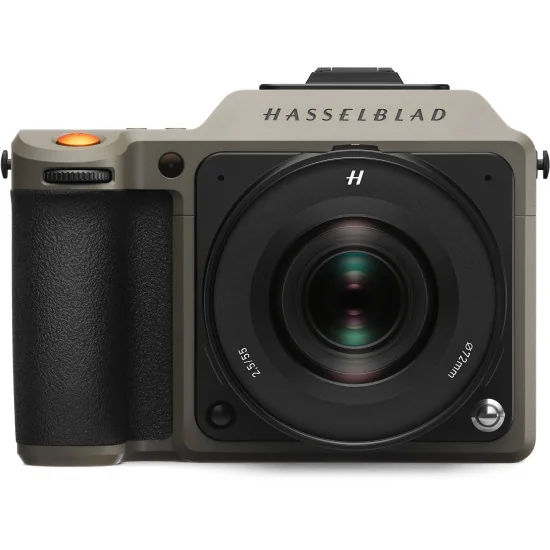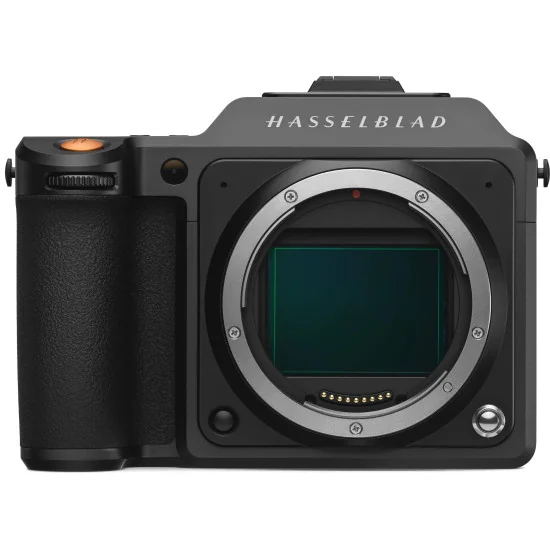
Hasselblad X2D 100C | 100MP Medium Format Mirrorless Camera Body
€7,199.00
The Hasselblad X2D 100C sets a new standard in medium format photography with its impressive 100MP CMOS sensor, offering unparalleled image...
Filter By
Price
Price
€7,199.00 - €16,999.00
Shutter Type
Shutter Type
Shutter Speed
Shutter Speed
Media type
Media type
Focus Mode
Focus Mode
Hybrid DSLR & mirrorless cameras built for pro photo + video: strong dynamic range, fast AF, solid codecs, and compact bodies that fit studio rigs, gimbals, drones, and cars.
In professional production, “DSLR & Mirrorless Cameras” is no longer a casual category. It is a toolkit for crews who switch between stills deliverables and cinema-grade video on the same call sheet: product packs in the morning, interviews at noon, social cutdowns at night. What matters is measurable performance—sensor size, bit depth, dynamic range, rolling-shutter control, media reliability, and how quickly a body integrates into rigs, audio, and monitoring.
At the premium end, medium format mirrorless bodies such as the Hasselblad line sit in a class of their own for 16-bit color workflows, careful tonal separation, and clean highlight roll-off. A reference point is the Hasselblad X2D 100C: a 100 MP sensor platform with 15 stops of dynamic range, 5-axis IBIS, and fast media support via CFexpress plus internal storage—exactly the kind of specification profile demanded by advertising and high-resolution editorial teams.
For hybrid full-frame and APS-C ecosystems, working crews typically compare Sony, Panasonic, Nikon, and Fuji on video-first metrics: 10-bit 4:2:2 internal recording, long-form thermal stability, clean HDMI pipelines for external recorders, and robust autofocus modes (phase-detection / subject tracking) that survive fast blocking. When your pipeline includes multicam matching, log gammas and predictable color science become a production variable, not a preference.
Reportage demands speed and consistency: decisive AF acquisition, responsive EVF/LCD operation, and exposure systems that hold detail under mixed lighting. Studio work flips the priorities: bit depth, color accuracy, tethering/transfer speed, and shutter behavior with strobes. Mirrorless bodies with leaf-shutter lens ecosystems can synchronize flash at very high shutter speeds, while classic focal-plane setups remain a strong fit for general-purpose studio packs. On set, crews look for bodies that keep ISO noise structure predictable, provide reliable manual focus aids (magnification, peaking), and write without buffer drama to CFexpress/SD media.
“Cinema-quality” in this segment is defined by signal integrity: 10-bit acquisition, controlled sharpening, usable log profiles, and motion that grades cleanly. Cameras offering internal All-I or efficient Long GOP codecs, plus options for external RAW over HDMI, are chosen because they reduce time in post while keeping latitude for highlight recovery. Current hybrid bodies often support open-gate capture for flexible reframing (vertical, widescreen, anamorphic extraction) without reshooting—useful for social deliverables, broadcast cutdowns, and client-requested aspect changes.
Lens flexibility is where mirrorless platforms dominate. Short flange distances make adapters practical, enabling EF/PL-style workflows when the project calls for classic glass, matched sets, or rehousing. For gimbal work, crews prioritize lenses with stable center of gravity, repeatable focus marks, and minimal focus breathing. For broadcast-style operation, the priority shifts to repeatable iris control and fast lens swaps. The key is not theory—it’s whether the camera body offers solid mount rigidity, enough clearance for follow-focus gears, and clean cabling paths for video, power, and timecode accessories.
Compact bodies shine when the rig is the constraint: single-operator gimbals, drone payload limits, suction-mounted car shots, or tight interior sets. Here the “must-have” list becomes physical: strong IBIS plus sensor readout that limits rolling shutter, full-size ports that won’t shear under strain, and battery/power strategies that don’t force constant rebuilds. In practice, the body that wins is the one that stays stable at 25/50/60p, feeds monitoring over HDMI without handshake issues, and mounts securely into a cage with predictable access to media and connectors.
If your team is selecting within “DSLR & Mirrorless Cameras,” treat it like a production system: body + lenses + media + rigging. Use medium format mirrorless options from Hasselblad when ultimate still resolution and tonal precision are the deliverable. For hybrid video-heavy work, compare Sony, Panasonic, Nikon, and Fuji around codecs, heat management, AF reliability, and lens strategy—because on a professional set, the camera is only as strong as the workflow around it.
check_circle
check_circle