- -€700.00
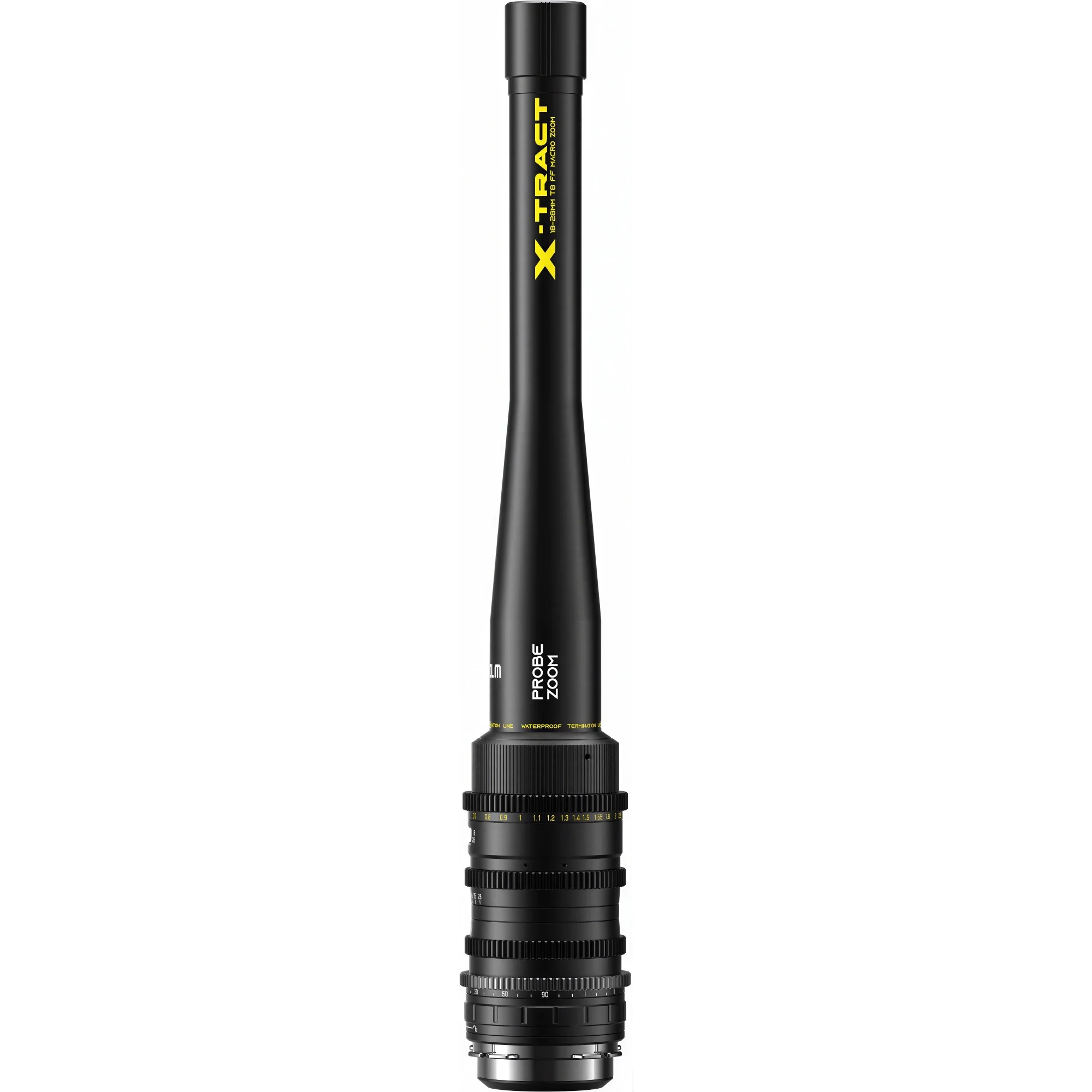
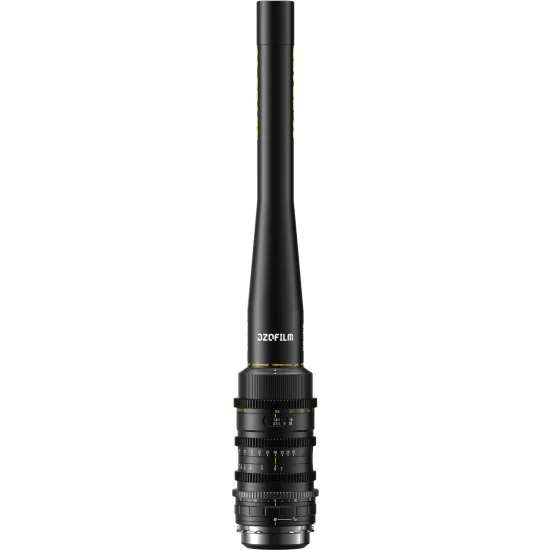
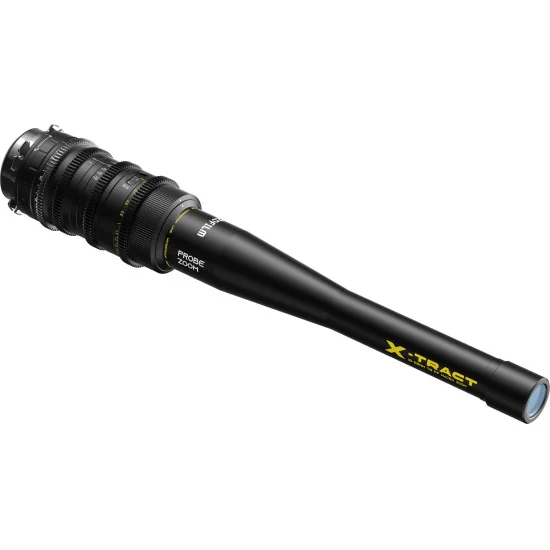
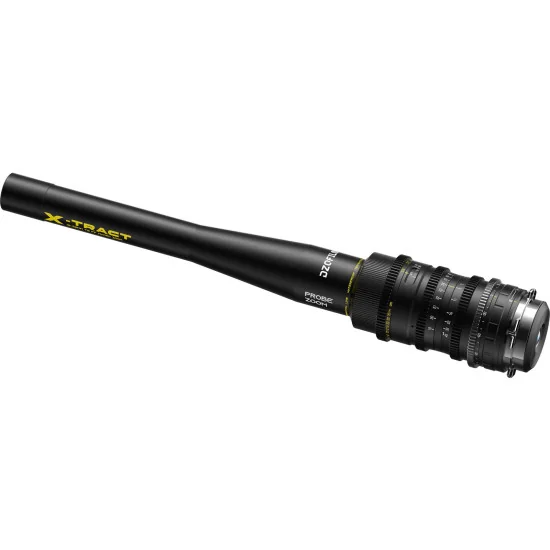
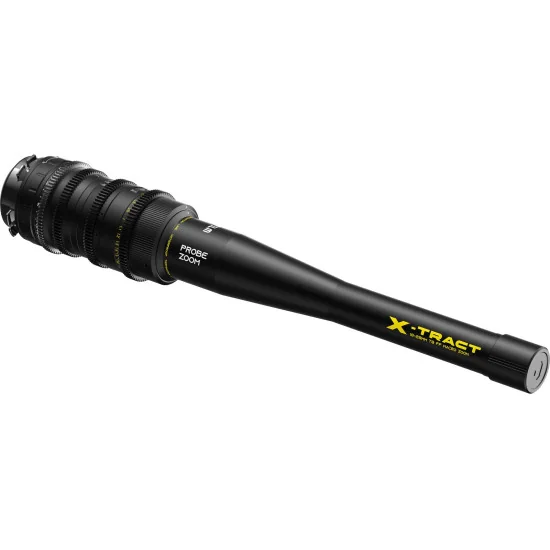
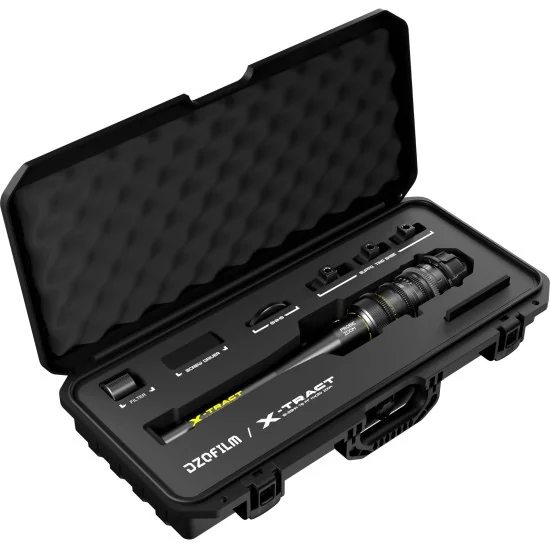
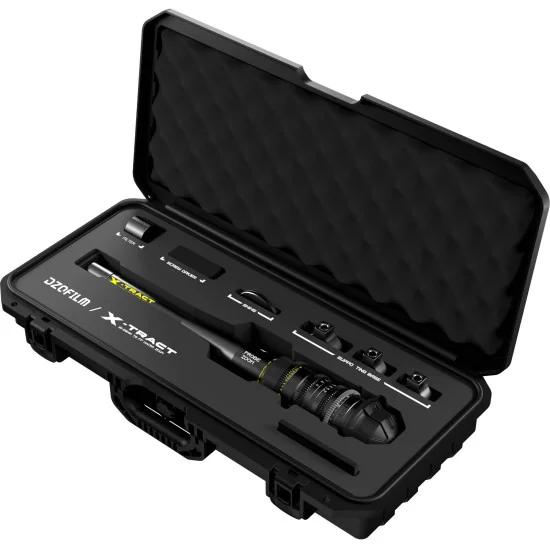
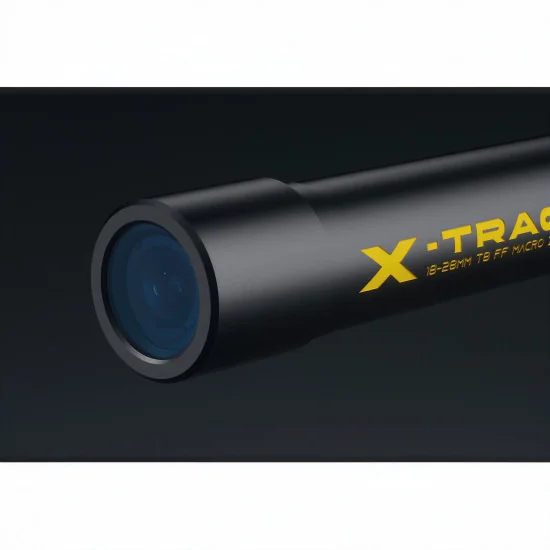
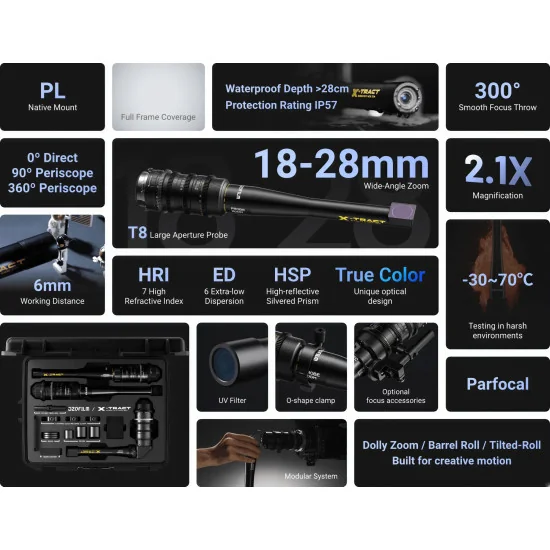
A rack focus through a probe lens has usually carried a side effect: the frame swells and shrinks as focus travels. DZOFilm measures that breathing at 39.2% on competing probes and 0.5% at 24 mm on the DZOFilm X-Tract 18-28mm T8 FF Probe Zoom Lens (0° Direct View) PL Mount. A pull from sugar grains on a spoon to the barista behind reads as a shift of attention, not a zoom. Looking straight down its slim tube, the lens frames wherever the tip points, so lining up shots is quick.
Twenty-five elements in 18 groups, seven high-index and six ED, keep distortion to ±2% and cover full-frame sensors with a 43.2 mm image circle. DZOFilm quotes 70.7% relative illumination where conventional probes manage 54.9%, so less corner shading reaches the grade. Optics are parfocal: combine the zoom ring's 100° throw with a motorised slider and a tabletop micro dolly zoom stays sharp throughout.
Minimum focus falls 6 mm in front of the glass. Zoomed to 28 mm, that yields 2.1:1 magnification, a field of roughly 17 × 11 mm, the size of a laptop key. At 18 mm, with close to 100° of view, the subject looms in the foreground while the room behind stays recognisable, a wide-angle macro look long macro primes cannot give. Picture a push inside an open gaming PC for a tech launch, a glide along tyre tread for a car spot, or steaming ramen, where the hydrophobic anti-fog front keeps vapour off the image. Focus rotates 300°, and closing the ten-blade iris from T8 to T45 takes 72°, around 14° per stop.
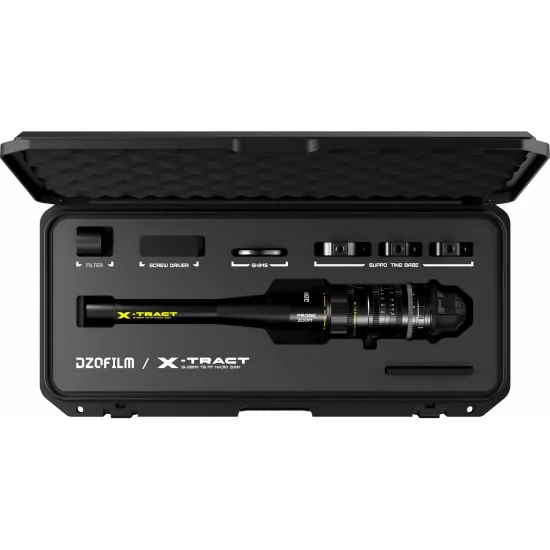
Rated IP57, the tube shrugs off dust and tolerates immersion to about 28 cm; a marked water line shows the safe depth in a splash tank. Tested from −30 °C to 70 °C, it makes a freezer room for an ice-cream commercial fair game. The aerospace aluminium barrel wears 25 µm anodising, and rear-weighted balance steadies the long tube on sliders and tripods. Focus, iris and zoom are geared at 0.8 MOD. Supplied: Y-bracket support, three support rings, shims with bolt driver and a foam-lined hard case. The compact rear clears DZOFilm Octopus and other PL adapters for E, RF or LPL bodies. Houses that book probe inserts often do better owning a direct-view macro probe lens than hiring one per job.
We ship across the EU for €20, free over €1,000.
B2B sales only, prices excl. VAT.
Official EU distribution and warranty.
Secure online payments via Stripe.
Send your enquiry via the form or email avgear@avgear.shop
| Specification | |
|---|---|
| Focal Length | 18-28mm |
| Lens Type | 0° Direct |
| Mount | PL/EF |
| Aperture | T8-T45 |
| Image Circle | ø43.2mm |
| Construction of Optics | 25 Elements in 18 Groups |
| Flange Distance | 52mm |
| Close Focus (from sensor plane) | 0.47m/1ft7in |
| Close Focus (from lens front) | 6mm |
| Zoom Ratio | 1.55x |
| Magnification factor (28mm) | 2.1X |
| Iris Control | Manual (72°) |
| Focus Control | Manual (300°) |
| Zoom Control | Manual (100°) |
| Front Dia. | ø29.6mm |
| Length | 415mm |
| Iris Blade | 10pcs |
| Gear Pitch | 0.8 Mod |
| Material | Aluminum Alloy |
| Weight(Product) | ≈1090g |

Data sheet
Specific References