edelkrone SliderPLUS v5 Compact | Camera Slider
€479.00
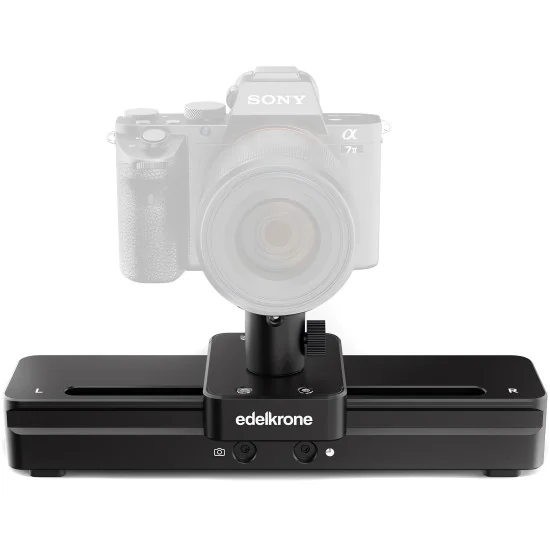
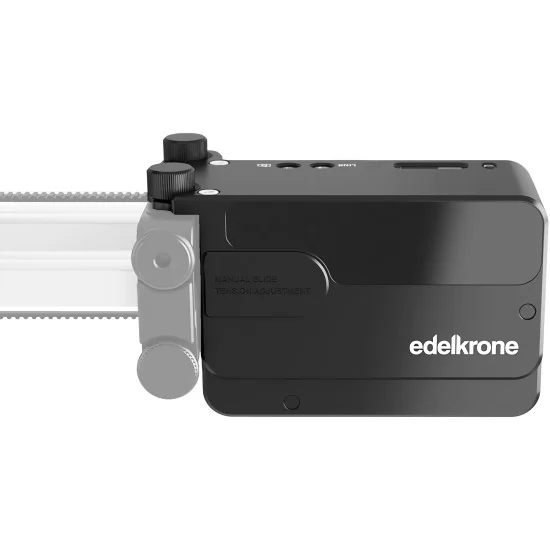
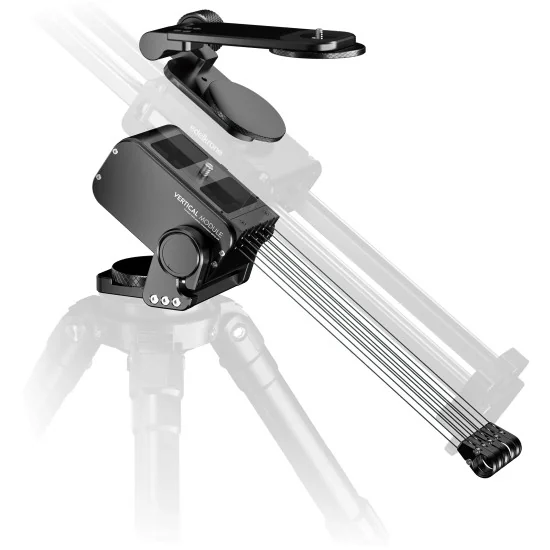
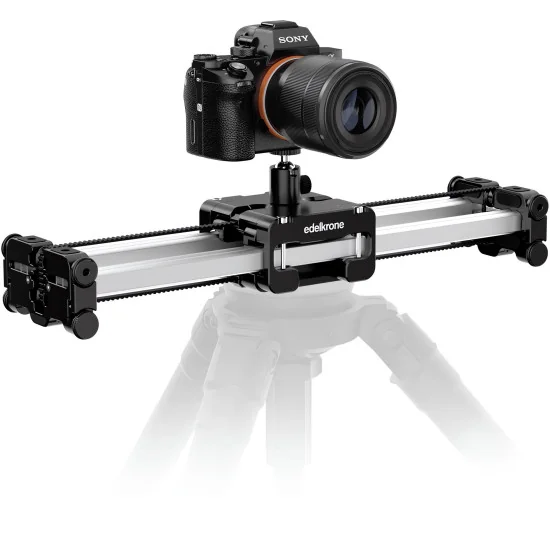
The edelkrone SliderPLUS v5 Compact redefines what's possible with camera sliders, offering unmatched portability and precision in one sleek...
Filter By
Price
Price
€479.00 - €1,349.00
Device type
Device type
Motion length
Motion length
Payload (kg)
Payload (kg)
Motorized
Motorized
Smooth camera travel for interviews, product shots and live sets. Manual or motorized moves stay repeatable, adding depth without a large crew.
When a frame needs to move with intent, a slider or dolly brings the camera off the tripod without turning the shot into handheld. A camera slider gives a precise, linear glide for push-ins, lateral moves, and reveal shots; a dolly carries the whole rig (and sometimes the operator) for longer tracking and arcs. The result is parallax, depth, and pacing that reads as “cinema” even in corporate studios and multi-camera streaming spaces. Cinema bodies from ARRI benefit the same way.
In practice, the right choice is set by a few parameters: payload (camera + head + accessories), motion length, how quickly you can level and lock the platform, and whether you need repeatability for match cuts, VFX plates, or product rotations. Options in edelkrone motion systems focus on compact travel and programmable moves, while support hardware from Libec keeps the head interface consistent when the camera jumps between tripod, slider and floor platforms.
For short-form content, a slider often replaces a second operator: a slow push-in during an interview answer, a side move across a console, or a controlled reveal of a logo on a podium. On feature sets, the same tool handles inserts and “breathing” shots between dialogue beats—subtle motion that keeps static blocking from feeling flat. What matters is stiffness and smoothness: rail geometry, bearing quality, and a carriage that stays stable under load so the horizon doesn’t drift mid-take.
Lens choice influences what the movement reads like: a 24 mm wide angle shows parallax immediately, while a 50 mm or longer lens can make a short slide feel subtle. For longer rails (around 1 m), two support points usually keep the center from sagging; compact models around 0.5 m stay easier to mount on a single tripod when space is limited. Built-in legs, a positive lock, and repeatable end-stops matter when the rig has to shift between takes without rebalancing.
Examples from the category show how compact systems stretch motion without demanding long tracks. The edelkrone SliderPLUS v5 Compact and SliderPLUS PRO v5 Compact use a moving-rail concept that extends camera travel while keeping the footprint small—useful in cramped sets, kitchens, control rooms, or tight interview corners where stands and cables eat up space.
Once you add power, the slider becomes motion control: repeatable moves at a chosen speed, shoot-move-shoot sequences for stop-motion, and slow drifts that hold attention in long-form talking head formats. The edelkrone SliderONE v5 Motorized stays compact for travel kits and tabletop work, while SliderPLUS v6 targets longer camera travel with an integrated drive, app control, and timing accuracy suited to time-based shots such as time-lapse and multi-pass plates.
Motorization also helps in live environments: you can pre-set a move and let it run quietly while the director cuts. Pairing a moving camera with BirdDog NDI video transport keeps the signal path clean when the camera position shifts, especially in compact studios where long SDI runs and floor cable paths get crowded.
A dolly starts where sliders end. Tabletop dollies create short, controllable movement on flat surfaces for food, beauty, and product close-ups; the edelkrone DollyONE v1 adds motorized curved or straight paths for small sets and repeatable motion. At the other end are full-size dollies and track systems that carry a tripod and operator, enabling long tracking moves, arcs, and smooth “walk-and-talk” coverage where a slider’s travel would be too short.
For heavier rigs, stability becomes a system: wheelbase, track level, floor surface, and head mounting. A flat-base fluid head that can migrate between platforms helps maintain the same pan/tilt feel when the camera goes from tripod to dolly to a low platform—one reason crews often mix slider/dolly movement with established support ecosystems from Libec and brands like Cartoni.
In a studio, sliders and dollies earn their keep on product tables, interview sets, and multi-camera podcasts—small moves add separation between foreground and background without re-lighting the room. On location, portability and speed matter: a compact slider that locks for transport and levels fast on uneven ground can capture controlled b-roll between interviews. For home productions, a short motorized slider plus a small tabletop dolly can cover product launches, instrument demos, and overhead craft shots with consistent motion even in tight spaces. Studio floor systems from Cartoni keep heavier rigs predictable when the camera has to travel.
To choose confidently, start with the camera package weight, then pick motion length and control method (manual or motorized). Add the interfaces that keep your rig predictable—3/8" mounting, a solid head, and reliable power. If your camera ecosystem leans toward Blackmagic Design, the same rules apply: controlled movement is about stability, repeatability, and clean signal paths, not brand mythology.
check_circle
check_circle