


New from IBC 2026 – PTZOptics Rise 4K
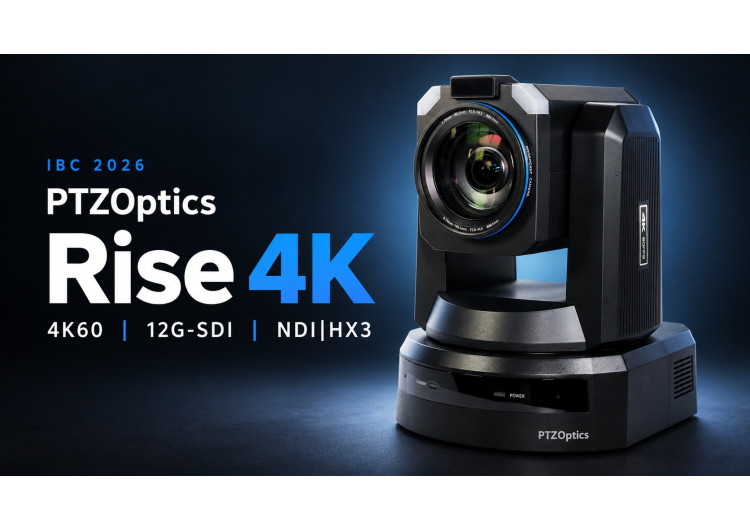
Meet Rise 4K, the broadcast PTZ camera shown at IBC 2026. Explore six features that matter on a live production.
A camera position has to earn its place in a production: usable pictures, dependable connections and control from the gallery. Making its European debut at IBC 2026 after its August announcement, the PTZOptics Rise 4K brings exposure control, stabilisation and professional audio into a remotely operated broadcast camera.
1" Sensor
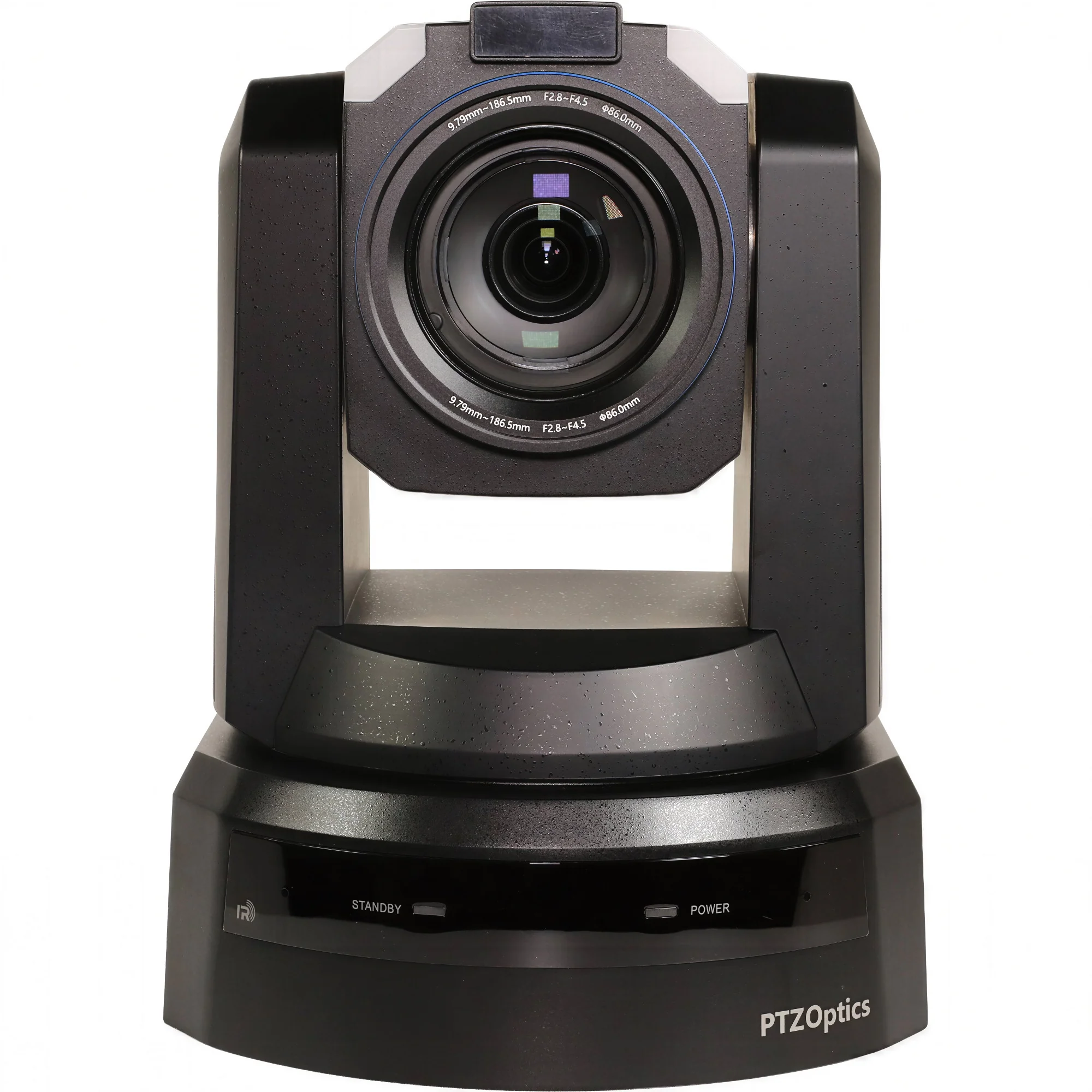
The 1-inch-type CMOS sensor has 50 million effective pixels and delivers UHD video at up to 60 frames per second. For live sport or a presenter moving across a stage, that frame rate gives the production more temporal detail. A 20× optical zoom covers establishing shots and close-ups from one mounting position, while phase-detection autofocus helps keep a moving subject sharp. Sensor resolution and video output remain separate specifications: the UHD picture is 3840 × 2160.
12G-SDI, NDI|HX3
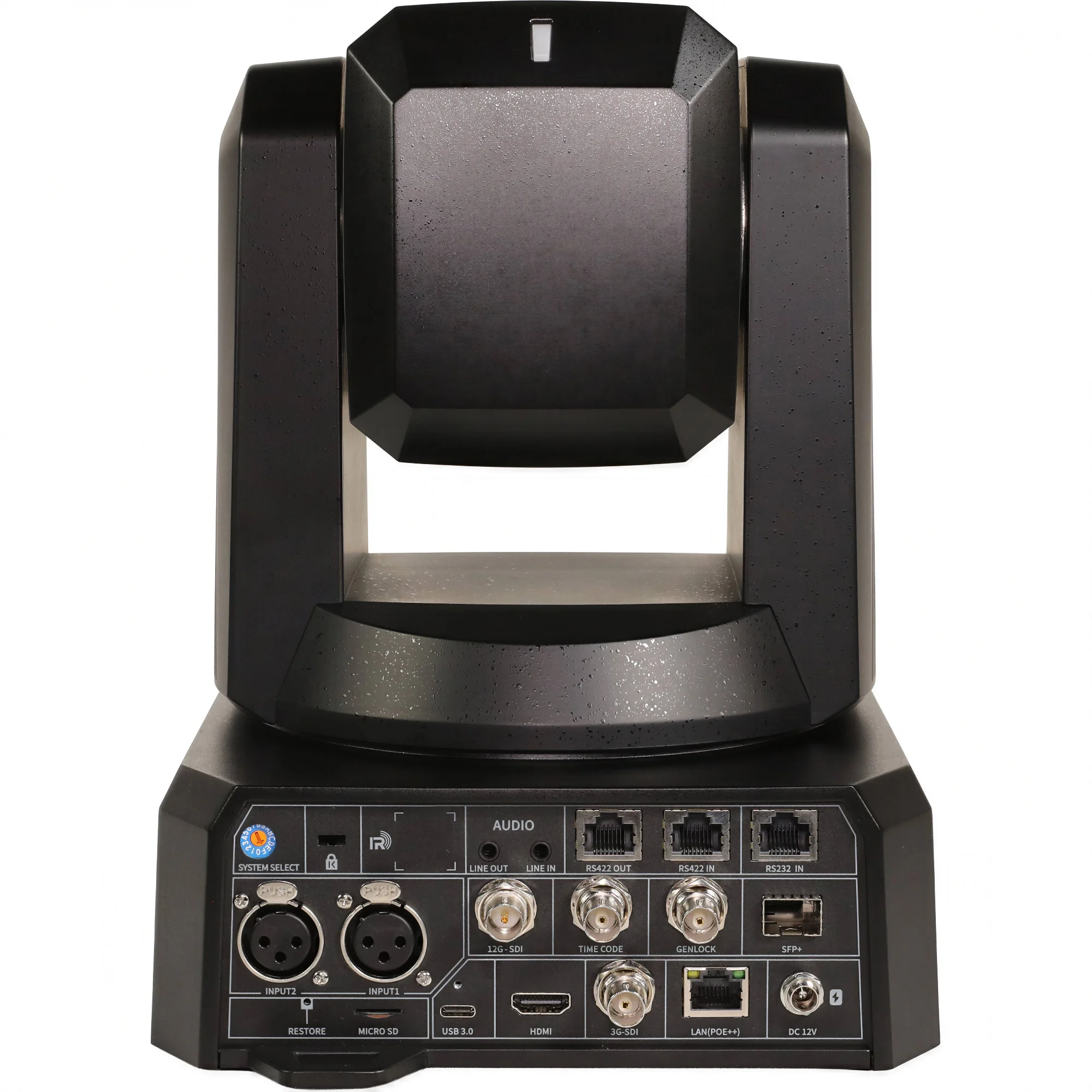
12G-SDI carries UHD up to 60p to a compatible switcher over a single coaxial connection. NDI|HX3 provides compressed video over Gigabit Ethernet for an IP production system; plan network capacity and receiver compatibility for the intended format. The separate 3G-SDI output serves HD equipment, while HDMI supports local monitoring. For a studio using a common reference, the genlock input aligns camera timing. The timecode input supplies a shared time reference for synchronising recorded material.
Built-in ND Filter
Bright windows or a well-lit stage need not dictate shutter speed. The internal ND filter offers 1/4, 1/16 and 1/64 transmission, equivalent to two, four and six stops of light reduction. That gives the operator room to retain the chosen motion rendering and aperture as illumination changes. The filter can also be switched off when the scene needs all available light.
OIS (Optical Image Stabilization)
At long focal lengths, small vibrations become conspicuous. PTZOptics equips Rise 4K with optical stabilisation to reduce their effect on the image. This matters when holding a close-up of a speaker or performer. The specified operating range is 3–8 Hz, so a rigid mounting point remains part of a reliable installation.
XLR Audio
Two XLR inputs let the camera accept professional audio at its own position. Switchable 48 V phantom power supports microphones that require it, useful for a compact interview set or a fixed studio camera. When connecting an external audio source, match levels and phantom-power settings before going live. Bringing sound into the camera also makes its audio path part of the same pre-production check as the picture.
MicroSD Recording
Onboard microSD recording adds a local recording option for lectures, interviews and event coverage. It gives a production another place to capture camera material for later use. Confirm the recording mode, card compatibility and available duration during setup. For the complete connection list and system planning, see the Rise 4K product page.
Comments
No comment at this time!
Leave your comment