


PTZ cameras with the best video quality.
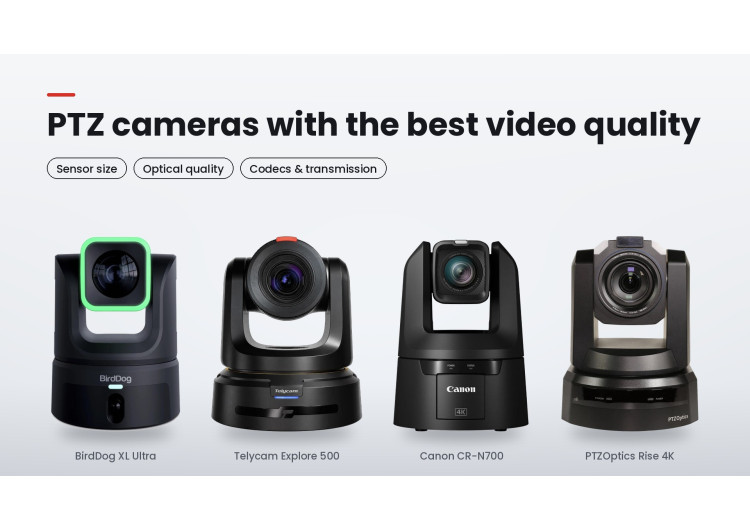
Great PTZ footage starts at the sensor. Optics and transmission do the rest. See how six 4K cameras handle all three.
Picture quality from a 4K PTZ camera is settled long before the feed reaches the vision mixer. Three things set the ceiling: how much light the sensor collects, how cleanly the lens and filters deliver it, and how much of that detail survives compression and transport. A weak link in any one of them caps the other two. Specify a studio, OB kit or streaming room with all three in view.
The first factor — sensor size.
Bigger photosites gather more signal before gain is applied. On air that means less noise in a dim keynote hall, more headroom in stage highlights and softer separation between presenter and background. For scale, a 4/3-inch sensor offers nearly twice the light-gathering area of a 1-inch one. The BirdDog XL Ultra Black is built on a 4/3-inch Sony CMOS of about 21 MP, oversampling its 4K60 output. A second, fixed 4K panoramic camera runs alongside as an independent wide source and feeds the AI tracking engine.

The 1.0-type sensor is the most common step up from small-chip heads. In the Canon CR-N500 Black it works with the DIGIC DV6 processor for UHD at 30p and roughly 1.5 lux minimum illumination, while Canon Log 3 gives editors room to grade conference or theatre recordings.
The second factor — optical quality.
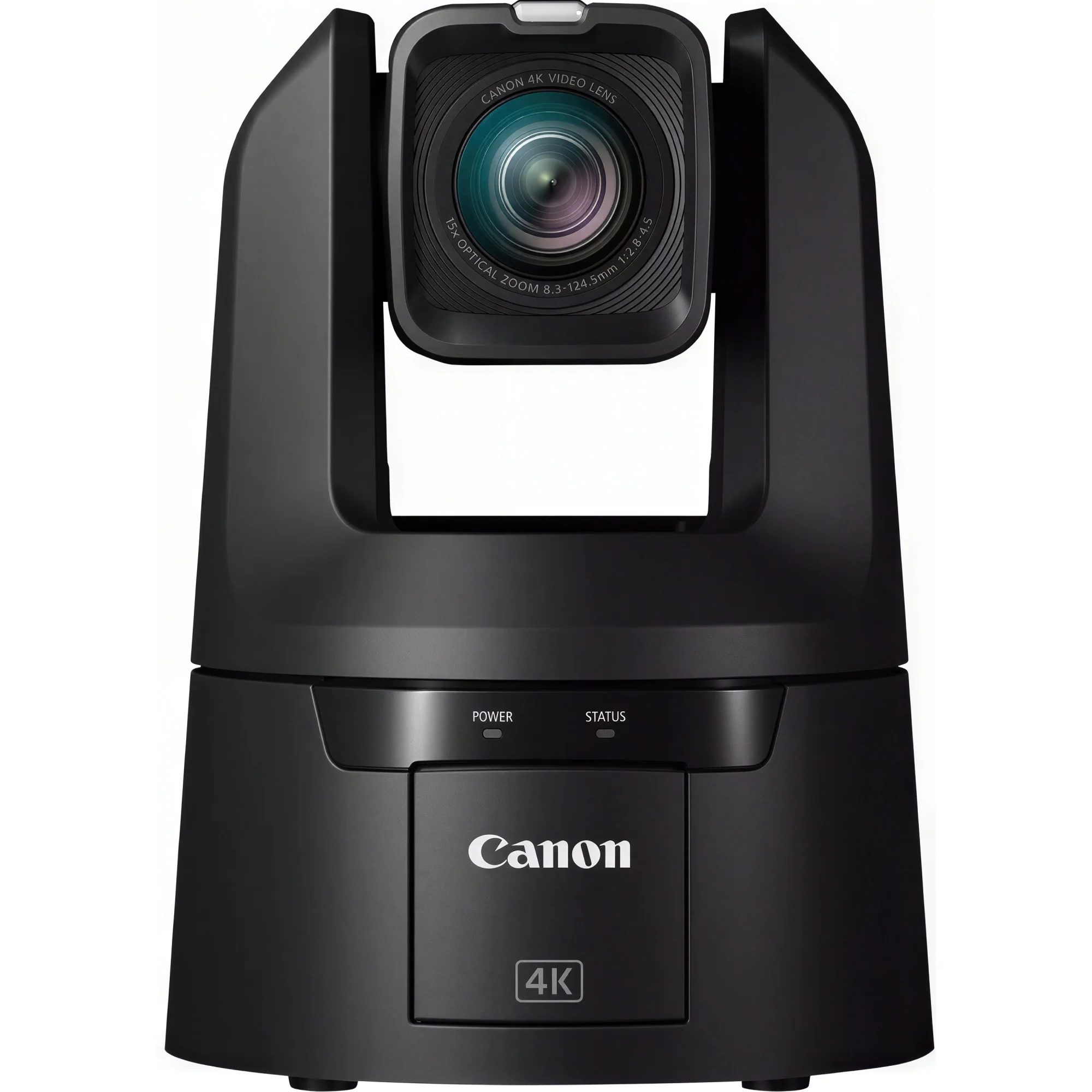
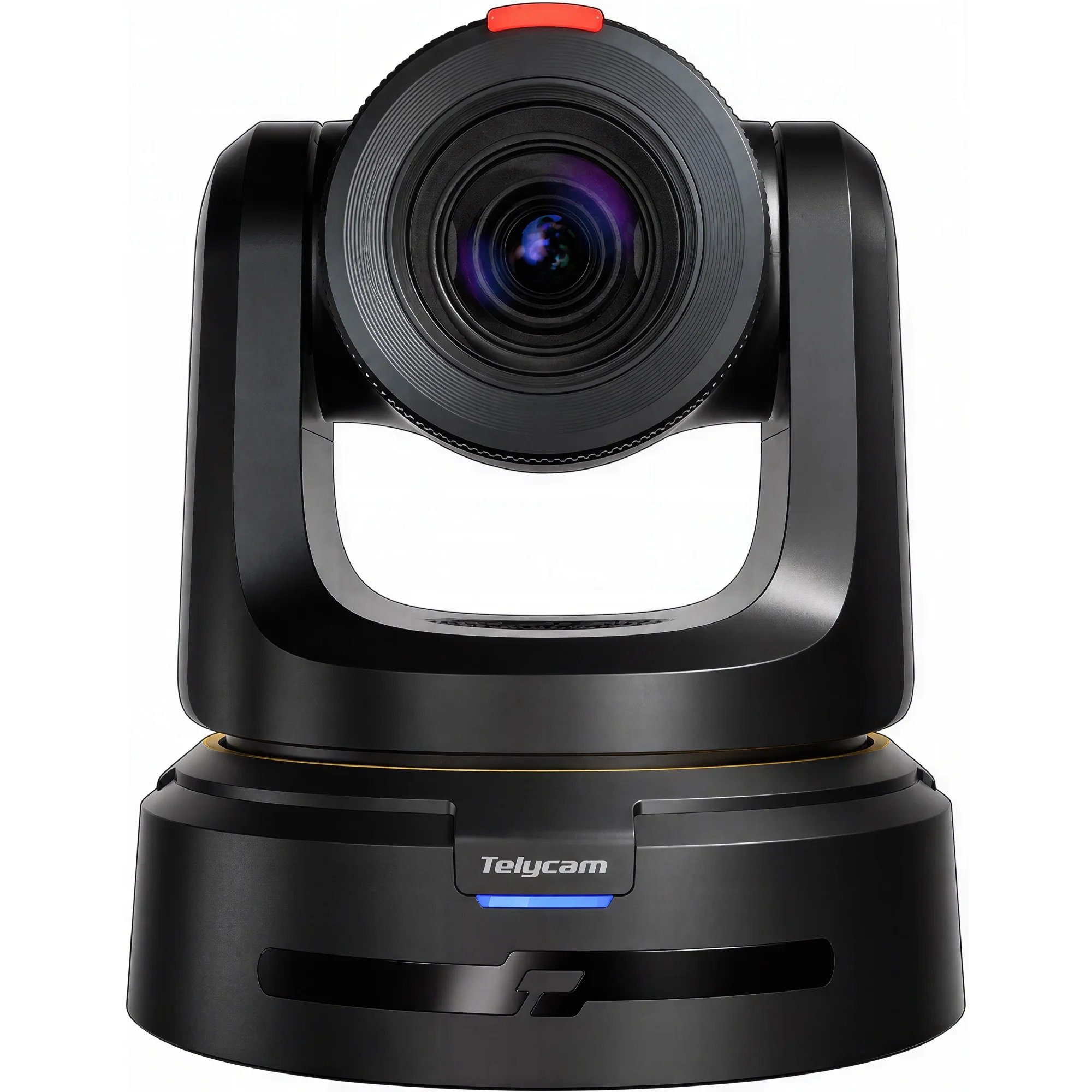
A large sensor exposes every flaw in the glass. The Telycam Explore 300 BK places an optical low-pass filter in front of its 4/3-inch chip, so moiré from LED walls and patterned sets is suppressed before it is baked into the signal. The 20x lens spans 9.79–186.5 mm at F2.8–F4.5. At the wide end, its 71° horizontal view takes in a full panel table from the back of a compact studio. A four-step ND (clear, 1/4, 1/16, 1/64) holds exposure under bright stage light without stopping down.
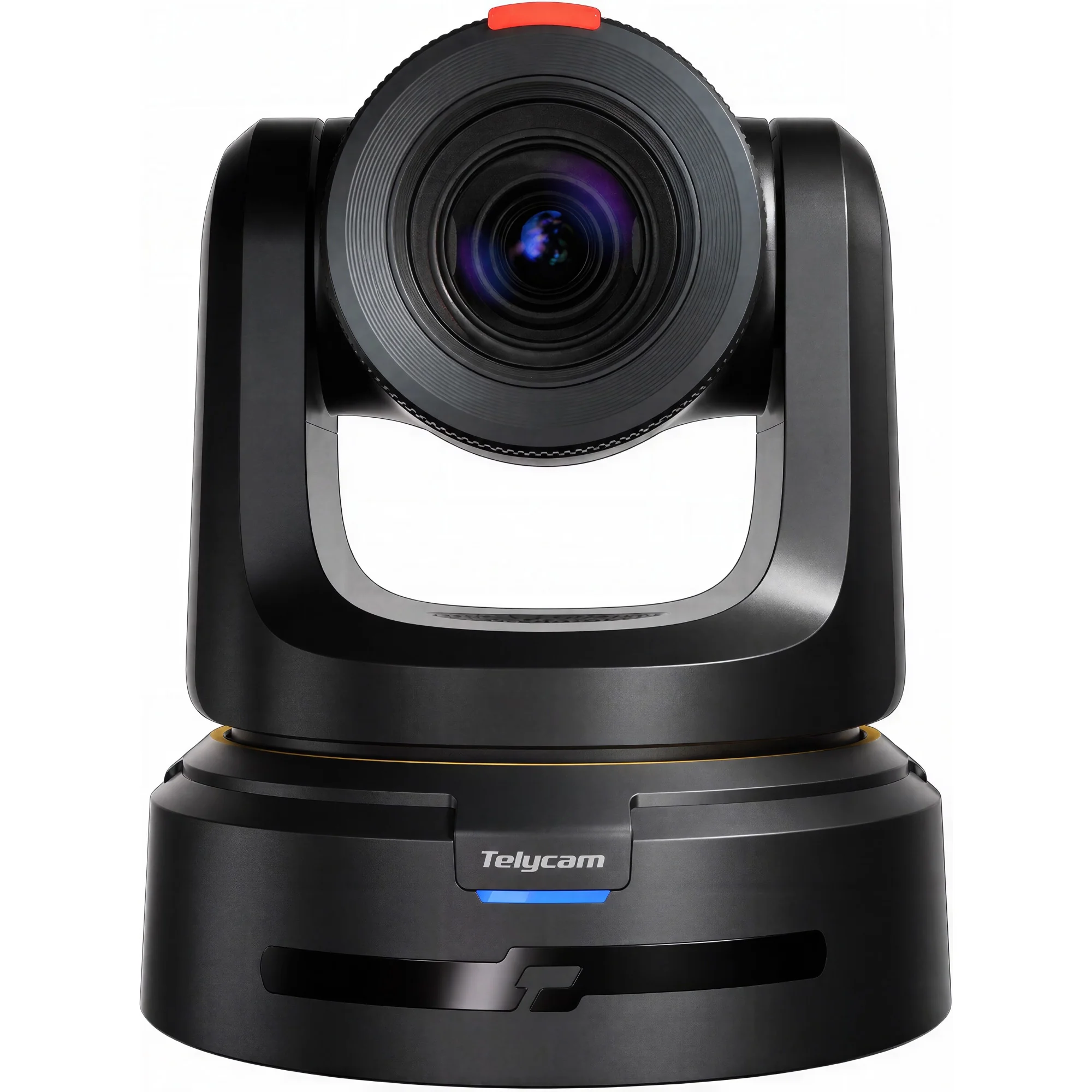
At the long end, vibration and focus hunting cost more detail than any codec. The PTZOptics Rise 4K pairs a 1-inch, 50 MP sensor with optical image stabilisation acting on 3–8 Hz vibration, plus phase-detection autofocus. A tight lectern or touchline shot stays steady on a truss or balcony rail. Pan speeds from 0.004°/s allow on-air moves the audience barely registers.
The third factor — codecs, bitrate, and transmission.
Baseband 12G-SDI carries uncompressed 4K60 over a single coax. IP video trades bandwidth for cabling convenience. The Telycam Explore 500 BK covers both, with 12G-SDI plus genlock, an SFP+ port for fibre and full-bandwidth NDI at 90–250 Mbps next to NDI HX3 at 3–120 Mbps. Full NDI belongs on a dedicated gigabit production network; HX3 is the safer choice for shared links. The BirdDog XL Ultra goes a step further and sends full NDI (SpeedHQ) and HX3 simultaneously, one for the gallery and one for a remote team.
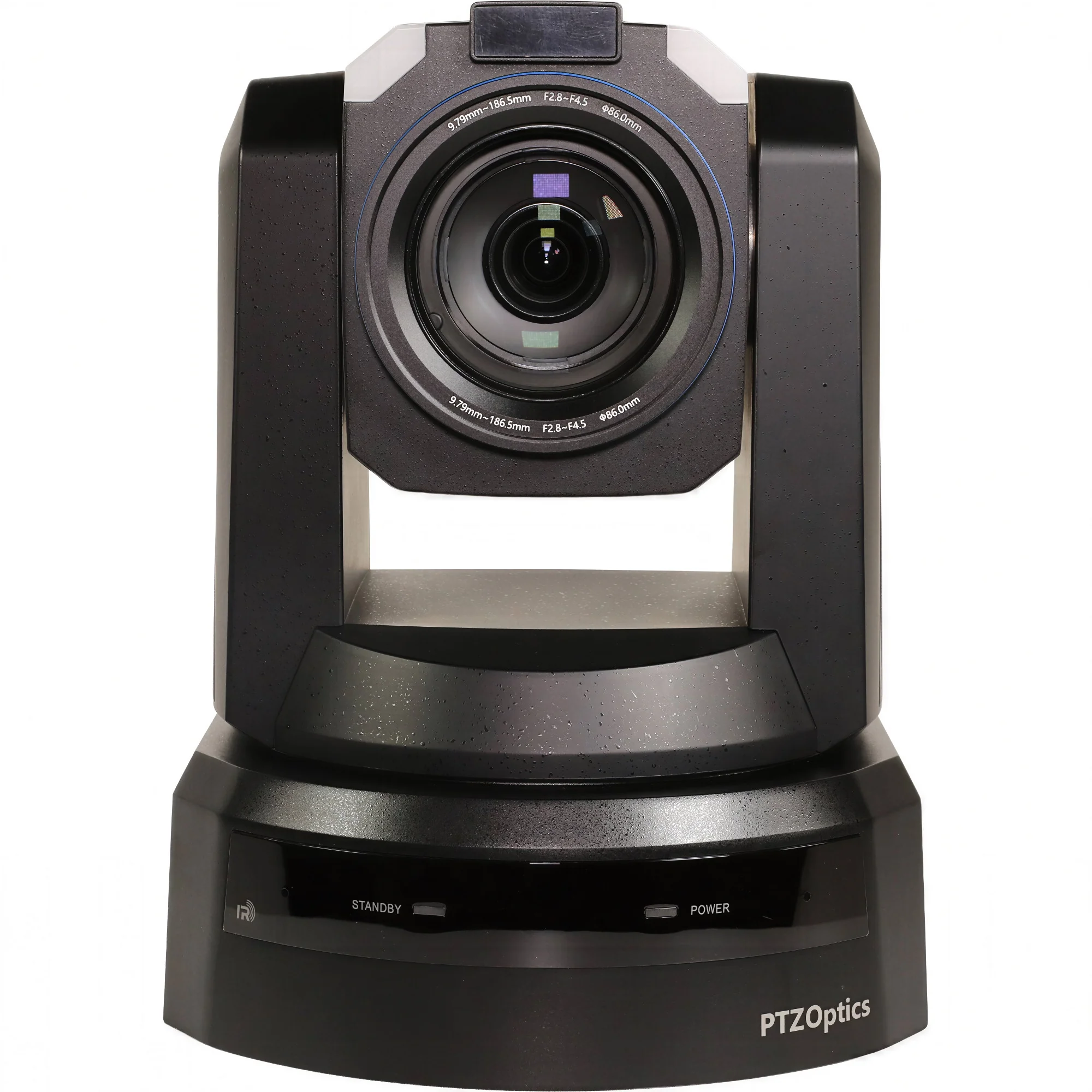
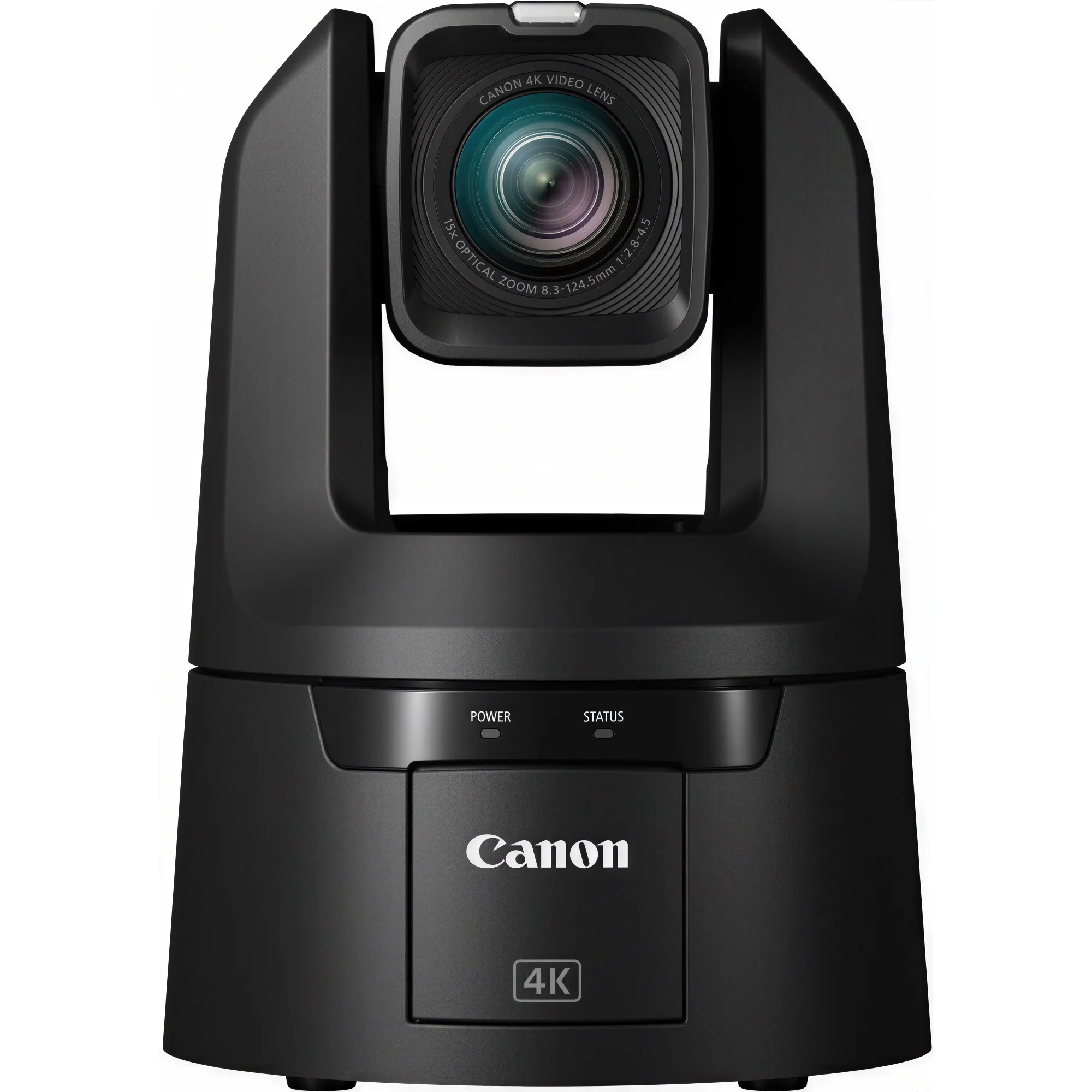
Colour sampling decides how well a feed survives keying and grading. The Canon CR-N700 Black sends 4K60 in 4:2:2 10-bit over 12G-SDI and HDMI, with PQ and HLG for HDR. Its IP streams are 4:2:0 8-bit, and 4K60 over IP needs H.265. Take the programme feed from SDI and keep NDI|HX or SRT for streaming and remote monitoring. The PTZOptics Rise 4K follows the same logic: 12G-SDI with genlock and timecode inputs for the gallery, NDI HX3 or SRT for everything else.
In short: a 4/3-inch or 1-inch sensor, an OLPF and ND on the optical path, and 12G-SDI or full NDI on the output. Those three choices separate a broadcast-grade PTZ picture from a merely sharp one.
Comments
No comment at this time!
Leave your comment