


What are the Control Options for PTZ Cameras?
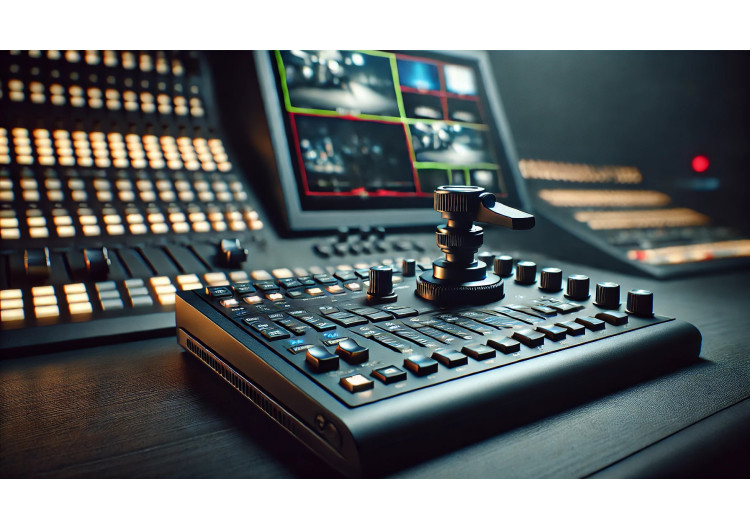
Pan-Tilt-Zoom (PTZ) cameras are indispensable tools in modern live video production, offering sophisticated control over camera movement, zoom, and focus. These cameras are particularly suitable for diverse contexts such as broadcasting, educational environments, houses of worship, and live event streaming. The efficiency of PTZ camera operation depends on choosing the right control interface, tailored to the specific requirements of each application.
1. IR Remote Control
One of the most elementary control solutions for PTZ cameras is the infrared (IR) remote control. Typically included with most PTZ cameras, an IR remote provides basic control over camera movement, zoom, and presets. Despite its utility in small-scale scenarios, IR control is constrained by limitations in range, the requirement for line-of-sight, and susceptibility to interference from other IR devices. Consequently, IR remotes are best suited for small to medium-sized environments where simplicity and ease of use are priorities.
While IR remotes are both cost-effective and user-friendly, they are suboptimal for larger, more complex installations. However, for basic setups such as small classrooms, home studios, and small-scale conference rooms, they remain a practical option. The inherent limitations, such as restricted operational range and potential signal blockage, make them inappropriate for scenarios demanding precise or distant control, such as large lecture halls or outdoor venues.
2. Serial Joystick Controllers
Serial joystick controllers provide a more robust option for controlling PTZ cameras. These controllers utilize RS-232, RS-422, or RS-485 communication protocols to ensure precise wired control of panning, tilting, and zooming functionalities. PTZOptics and Datavideo both offer high-quality serial controllers, which are ideal for fixed studio installations and scenarios that demand real-time, accurate camera manipulation. The reliance on wired communication provides a consistency and reliability that is paramount in professional live production environments.
The efficacy of serial joystick controllers is particularly apparent in multi-camera setups, where a single operator must efficiently manage several units. These controllers facilitate seamless transitions between multiple cameras and offer variable speed controls, allowing the operator to execute nuanced movements—essential for capturing dynamic events such as live sports or musical performances. Serial controllers also feature tactile, ergonomic designs, which contribute to reducing operator fatigue during extended productions, further enhancing their utility in broadcast studios and event venues.
3. IP Joystick Controllers
IP joystick controllers represent an evolution in PTZ control, leveraging network connectivity to provide greater flexibility and operational range. The PTZOptics SuperJoy, for example, supports IP, serial, and USB connectivity, allowing for multifaceted control across different configurations. Such IP-based systems are indispensable in large venues or multi-location productions where a centralized control mechanism is required.
The IP joystick controllers operate through an Ethernet network, enabling control from virtually any location with network access. This provides significant benefits, including enhanced reliability, scalability, and the ability to manage multiple cameras across a distributed network seamlessly. This is particularly advantageous in remote production settings, such as corporate campuses, where an operator may need to manage cameras in multiple buildings. Moreover, IP controllers can integrate with other networked production systems, such as switchers and audio devices, enabling comprehensive and cohesive management of the entire production environment.
Advanced features such as camera grouping and programmable presets further enhance the capabilities of IP joystick controllers. This allows operators to control several cameras simultaneously, apply synchronized movements, and streamline complex camera transitions, thereby significantly improving the efficiency of production workflows. The convergence of flexibility and reliability makes IP joystick controllers an optimal choice for modern, large-scale productions.
4. Software Control via PC/Mac
PTZ camera manufacturers such as PTZOptics and Datavideo offer proprietary software applications that provide a graphical interface for comprehensive camera control on PCs and Macs. These software tools allow for intuitive control of pan, tilt, zoom, focus, and preset functions, making them especially useful for productions involving multiple cameras. The integration of these software solutions with live streaming platforms and production software, including OBS and vMix, further optimizes the production process by enabling seamless camera switching and preset recall.
The visual nature of software-based control offers significant advantages in terms of precision and user experience. Operators can see real-time camera positions on the screen, facilitating easy adjustments and quick, precise switching between different cameras and angles. Moreover, software options often include scripting and automation capabilities, which allow for pre-programmed camera movements and sequences, reducing manual intervention and mitigating the risk of human error during live broadcasts.
For educational environments, conferences, and live entertainment, software control provides advanced capabilities that enable streamlined production management. The ability to store presets, automate sequences, and visually monitor all cameras on one interface significantly enhances the efficiency and quality of the production, making software control an indispensable tool for complex, multi-camera scenarios.
5. Web Browser Interface
A web browser interface is an accessible method for controlling PTZ cameras, available in many models from PTZOptics and Datavideo. These cameras feature built-in web servers that provide access to control settings via a standard web browser. By entering the IP address of the camera, users gain full access to control pan, tilt, zoom, and other settings through an intuitive graphical interface.
The versatility of web browser control is especially beneficial in environments where remote management and collaborative control are required. For example, in educational settings, a teacher can adjust camera settings while an AV technician manages the video feed from another location. The web interface also allows multiple users to access the camera simultaneously, which is valuable in large productions or team-based environments.
Moreover, the web browser interface provides access to advanced camera settings, such as video quality adjustments, network configurations, and exposure settings. This level of control makes it a suitable option for productions that require extensive remote management capabilities without necessitating additional hardware or specialized software installations.
6. Integration with Video Production Systems
PTZ cameras can be integrated with dedicated video production systems, such as hardware switchers and automation systems, to provide a cohesive control environment. Datavideo’s SE series video switchers include built-in camera control, enabling seamless transitions between camera feeds and direct camera adjustments from a central console. This integration enhances production efficiency by consolidating control functions, reducing the need for separate operators for each aspect of the production.
Incorporating automation systems further optimizes the workflow by enabling pre-programmed camera movements. This is particularly useful in scenarios such as worship services or lecture captures, where predictable, repetitive movements can be automated to minimize operator workload. The ability to manage multiple aspects of production from a single control point significantly reduces operational complexity, thereby enhancing the overall quality of the production.
7. NDI Control
Network Device Interface (NDI) technology provides an advanced solution for managing PTZ cameras in IP-based production environments. PTZOptics and Datavideo offer NDI-compatible PTZ cameras that can be integrated seamlessly into a networked production setup. NDI allows for the transmission of both video and control signals over a single Ethernet connection, reducing the complexity of cabling and providing greater flexibility in camera placement.
NDI’s low-latency transmission and compatibility with popular production software, including vMix, OBS, and NewTek’s TriCaster, make it highly advantageous for professional multi-camera productions. The ability to manage all aspects of production—including video switching, audio synchronization, and camera control—from a single interface streamlines operations and ensures cohesive integration of all production elements.
The simplification of setup and the cost-effectiveness of using a single Ethernet cable for video, audio, and control signals make NDI an ideal choice for large-scale productions that require flexibility, scalability, and efficient resource utilization. The use of NDI also facilitates remote production workflows, enabling distributed teams to manage camera functions without being physically present at the production site.
8. Voice and Automated Control
Voice and automated control options are among the latest advancements in PTZ camera technology. PTZOptics has pioneered voice-activated control systems, enabling users to execute basic commands—such as panning, tilting, and zooming—using voice input. In addition, AI-powered automated tracking systems are increasingly being implemented to follow subjects autonomously, a feature that is particularly beneficial for lecture capture, fitness classes, and other contexts where continuous tracking of a moving subject is required.
Voice control offers a hands-free solution that is advantageous in situations where the operator is multitasking or where manual control is impractical. For instance, during a lecture, the presenter can adjust the camera without leaving the podium, facilitating smoother transitions. Automated tracking using AI algorithms further enhances the functionality of PTZ cameras by eliminating the need for constant manual adjustments, thereby freeing the operator to focus on other production elements.
The use of machine learning for facial and motion recognition ensures that automated tracking systems are highly effective in maintaining focus on subjects, providing a professional, consistent visual output without human intervention. This makes automated control a valuable feature for educational institutions, corporate training environments, and live events that require minimal staffing.
Choosing the Right Control Option
The selection of an appropriate PTZ camera control solution is contingent upon the specific requirements of the production environment. For smaller venues or simpler applications, an IR remote or serial joystick may suffice. In contrast, more advanced needs—such as multi-site productions or remote control—may necessitate IP joystick controllers or NDI technology, which provide greater flexibility and integration capabilities.
Software control and mobile applications are well-suited for dynamic environments where portability and versatility are paramount. These methods facilitate intuitive control, offer advanced features like scripting, and allow for easy integration with other production tools. Automation and AI-based control options, meanwhile, are particularly advantageous in scenarios where the objective is to reduce human intervention while maintaining professional quality, such as lecture capture or automated live event streaming.
Brands like PTZOptics and Datavideo offer an extensive range of control solutions that cater to varied production needs. Understanding the nuances of each control method and evaluating the unique requirements of your production will enable you to choose the most appropriate, flexible, and reliable solution. Whether through precise joystick control, the convenience of mobile apps, or the sophistication of AI-driven automation, the optimal PTZ control mechanism will significantly enhance the quality and efficiency of your production.
The control options for PTZ cameras encompass a wide spectrum, from basic IR remotes to sophisticated IP-based and AI-driven solutions. Each method offers distinct advantages and limitations, and the key to successful implementation lies in understanding these differences and aligning them with production requirements. PTZOptics and Datavideo are at the forefront of providing versatile, high-quality control options that cater to the evolving demands of contemporary live video production.
Selecting the appropriate control solution is pivotal for ensuring smooth, uninterrupted broadcasts that maximize creative potential and minimize technical challenges. Whether managing a small-scale event or a complex, multi-camera production, a well-chosen PTZ camera control system is instrumental in delivering a professional, engaging viewing experience. By carefully assessing the available options and the specific demands of your production environment, you can ensure that your PTZ cameras function with precision and efficacy, yielding optimal results for your audience.
Comments
No comment at this time!
Leave your comment