


Overview of Canon PTZ cameras
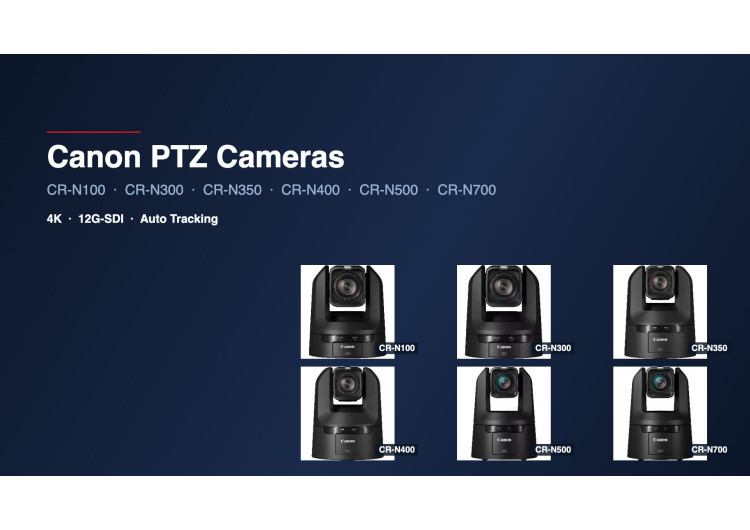
Canon's CR-N100 to CR-N700 PTZ cameras compared on sensor size, 4K frame rate, signal output and audio handling for production teams.
Canon's CR-N line covers a wide stretch of professional needs, from a single-room corporate setup to a multi-camera broadcast gallery. Six models share the same control logic, the same firmware family and the same auto-tracking philosophy, yet each one targets a specific budget bracket and a specific production reality. This overview walks through what separates them on the floor — sensor size, frame rate, signal path, audio handling — and where each model earns its keep. Production houses comparing units for a fleet rollout will see how the jump from CR-N100 to CR-N700 mirrors the jump from a corporate AV room to a live broadcast control room. The intent is to help a technical buyer pair the right body with the right venue and avoid paying for connectivity that will never get wired.
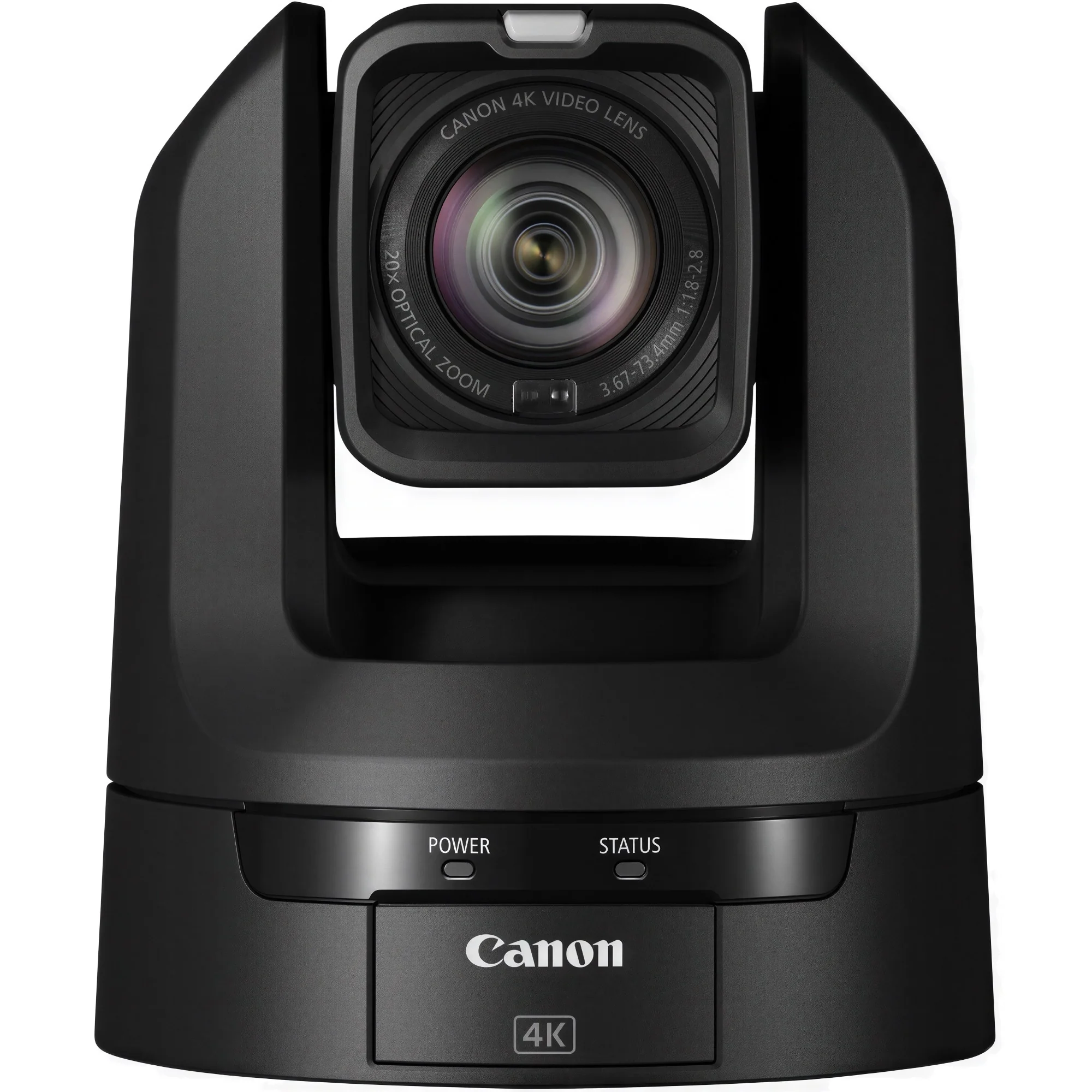
CR-N100, CR-N300 – 1/2.3" sensor, 4K 30p
The Canon CR-N100 is the entry point of the family and the model that most often lands in classrooms, training rooms and lecture theatres. It pairs a 1/2.3-type CMOS sensor with Canon's DIGIC DV6 processor and outputs 4K UHD at 30p, which is enough for hybrid lecture capture, Teams or Zoom rebroadcast and unattended room capture. A 20x optical zoom backed by image stabilisation lets a single unit cover the lectern, the audience and a wide establishing shot without a second body in the room. Pan and tilt run as slowly as 0.2°/s, a figure that matters when the camera is doing slow reveals during a performance and not just snapping between presets.
Focus comes from Hybrid AF, which sits a contrast-detection layer on top of phase-detection and adds an external distance sensor. The combination tracks presenters who walk towards or away from the lens more reliably than contrast AF alone, and it holds up in the dim back-of-house lighting that often surrounds a lit stage. Connectivity on the CR-N100 is deliberately tight — HDMI out, IP streaming, NDI|HX, plus support for the RC-IP100 controller and Canon's Remote Camera Control Application. There is no SDI on this body, which is the line that separates it from the CR-N300 and a deliberate signal that this camera is meant for IP-first venues.
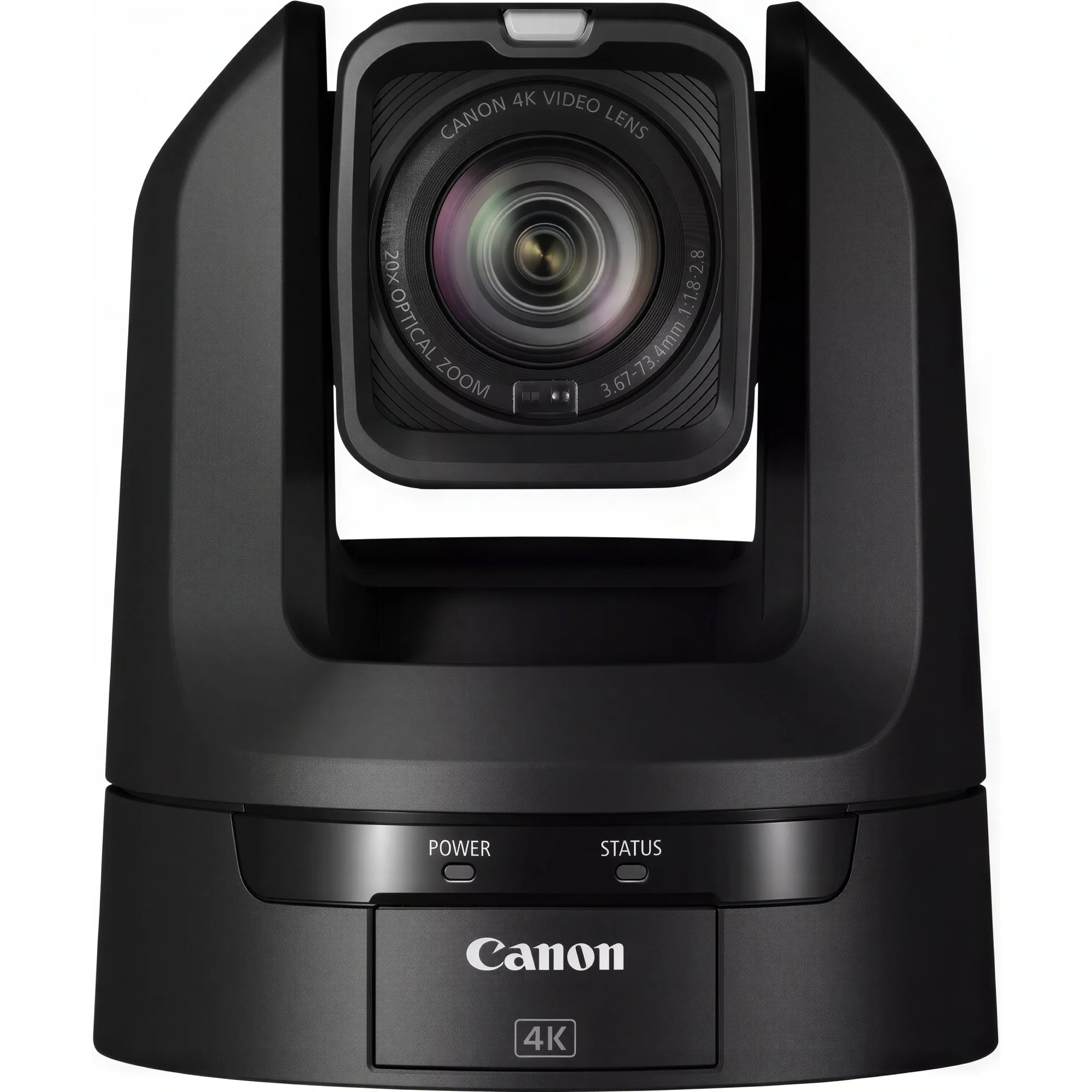
The Canon CR-N300 shares the sensor, processor and 20x zoom block of the CR-N100, but the rear panel tells a different story. A 3G-SDI output sits next to the HDMI port, which lets the camera feed an existing broadcast switcher directly without a converter in the rack. Built-in Wi-Fi handles wireless camera control rather than video transport — useful for ceiling-mounted units in venues where pulling a control cable would mean opening a ceiling — and the protocol list now covers NDI|HX, RTMP, RTP/RTSP, RTMPS, SRT, FreeD and Canon's XC Protocol over the wired network for the actual video feed. That collection makes the CR-N300 a practical choice for a house of worship that streams to multiple platforms simultaneously and also feeds an in-house IMAG screen.
The 20x optical zoom on the CR-N300 covers a 35mm-equivalent focal range of 29.3 to 601 mm, which is the practical translation of "wide enough for the front pew, tight enough for the lectern microphone." Hybrid AF behaves the same as on the CR-N100, with the same external distance sensor, and both models accept the same Auto Tracking App RA-AT001 in Lite form for face-detection following during talks, panels and worship services. For a corporate AV team standardising on a single camera family, the CR-N100 covers small rooms while the CR-N300 covers the auditoriums and overflow halls that need SDI tie-ins.
CR-N350 – 1/2.3" sensor, 4K 60p
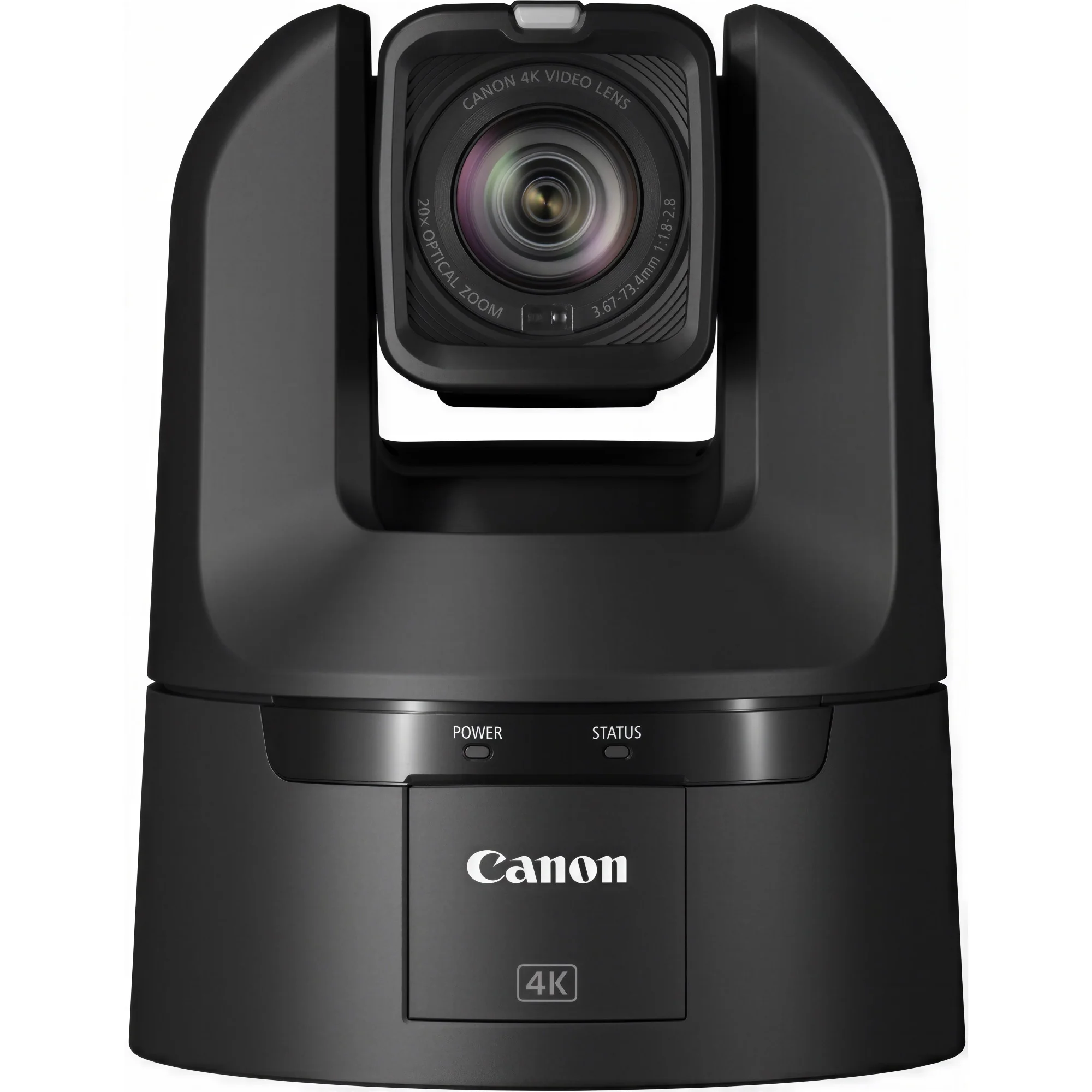
The Canon CR-N350 is the first model in the line that delivers 4K UHD at 60p, which is the frame rate sports producers and live-event directors need for clean slow-motion replays and smooth motion on LED walls. The sensor stays at 1/2.3-type, so light-gathering matches the CR-N300, but the higher frame rate combined with HDR imaging changes what the camera can do in a venue with mixed lighting. Stage spots that would clip on a CR-N300 hold detail in highlights and shadows on the CR-N350, which matters in theatres and in school halls where the lighting plot was not built around the cameras.
Optics extend to a 20x optical zoom in 4K with a 40x digital extension in Full HD, a useful tool for picking out a speaker from the back of an auditorium without committing the budget to a 1-inch-sensor body. The enhanced pan and tilt drive unit gives auto-tracking a smoother feel during fast presenter movement, and the camera supports simultaneous widescreen and vertical streaming feeds from one unit — relevant for hybrid events that push the same content to a stage screen and to a TikTok or Reels audience at the same time. Protocol support covers NDI|HX, SRT, FreeD, RTP/RTSP, RTMP/RTMPS, Canon XC Protocol and Standard Communication, so the CR-N350 plugs into both legacy broadcast control gear and contemporary IP-first plants without an adapter layer in between.
CR-N400 – 1/2.3" sensor, 4K 60p, 12G-SDI and XLR
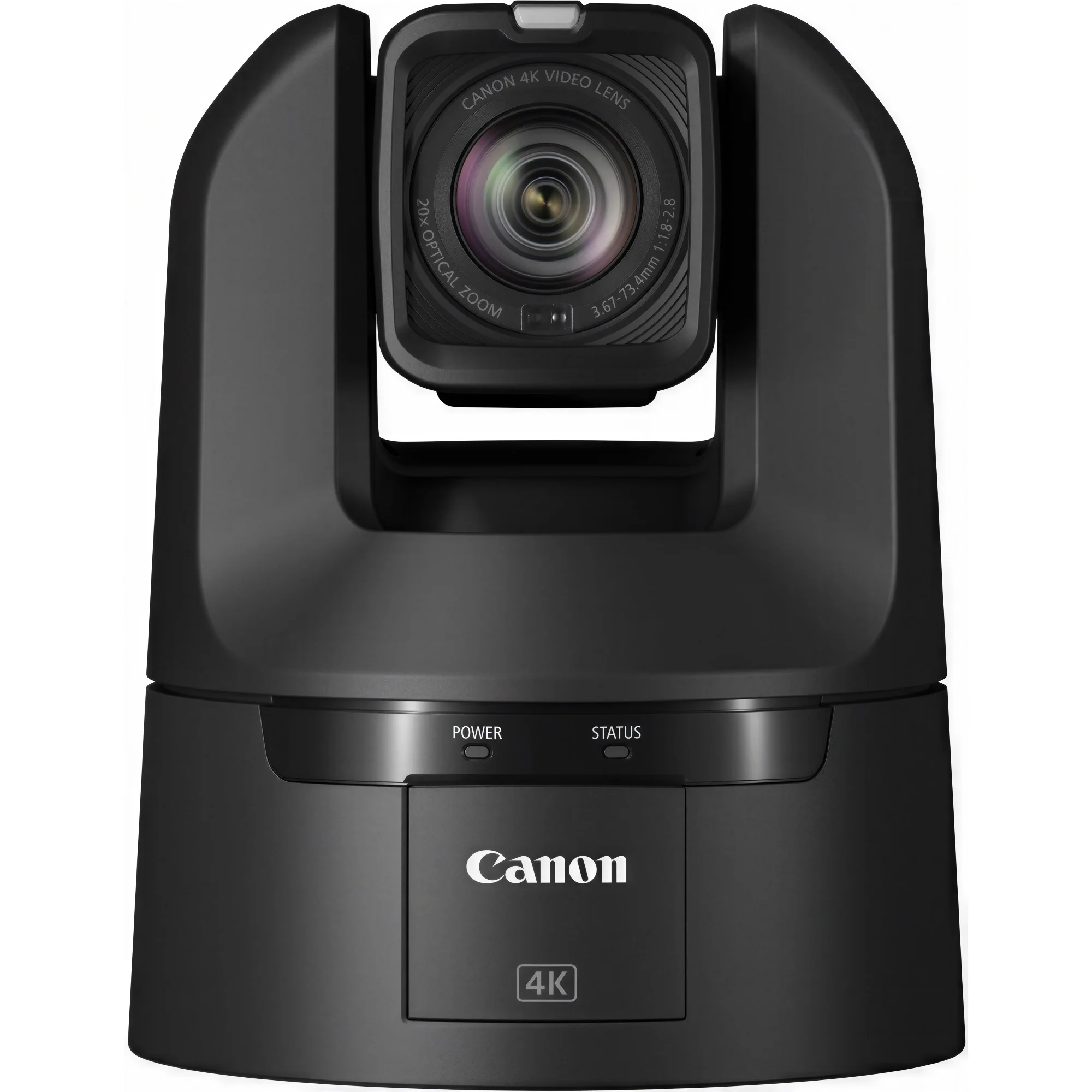
The Canon CR-N400 takes the 4K 60p HDR foundation of the CR-N350 and adds the signal infrastructure a live broadcast truck actually uses. The body carries 12G-SDI output, which means a single coaxial run delivers 4K 60p to the switcher without the four-wire quad-link approach that older 3G-SDI plants require. Time Code input and Genlock sync the CR-N400 to the rest of the camera fleet for clean cuts, dissolves and multiviewer alignment, and a pair of XLR inputs lets the camera carry its own ambient or speaker microphone feed back to the gallery without a separate audio path.
Behind the lens, the DIGIC DV7 processor handles the HDR pipeline, and the auto-tracking system gains face and head detection that survives fast presenter movement better than a contrast-only follow. The 40x digital zoom extension in Full HD is the longest in the lineup that still uses a 1/2.3-type sensor, which makes the CR-N400 a sensible robotic body for stadium upper-bowl positions and large auditorium back-of-house mounts. The Camera Colour Matching Application aligns the CR-N400 with other Canon cameras in the fleet — a relevant feature when a director cuts between a CR-N400 robotic and a manned C70 or C300 Mark III on the same broadcast. For producers replacing third-generation SDI PTZs with a single 12G-capable body, this is the model that pays back the rack rebuild.
CR-N500 – 1" sensor, 4K 30p, XLR
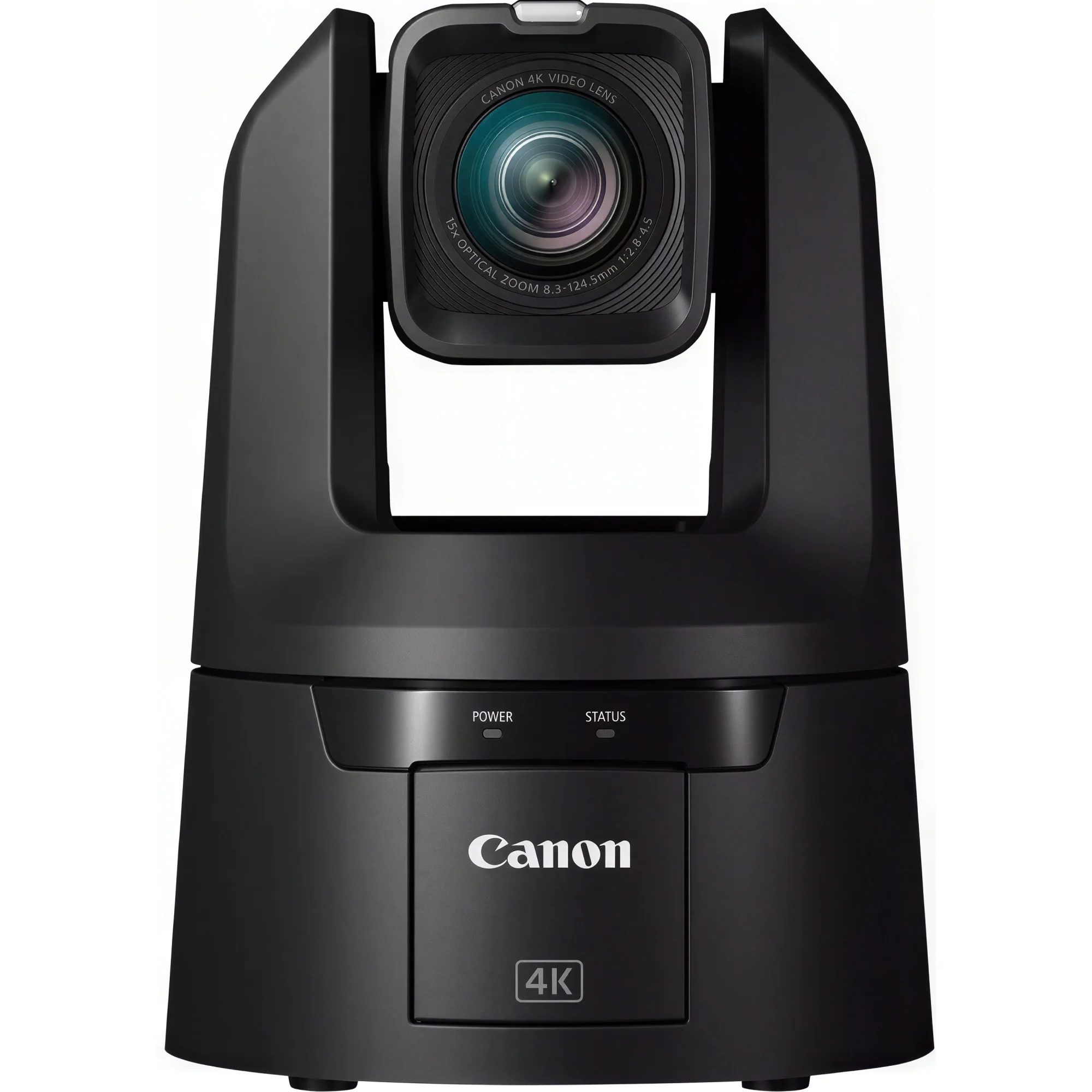
The Canon CR-N500 is the first model in the family with a 1.0-type CMOS sensor, and the leap is most visible in low light. Minimum illumination drops to 1.5 lux, which lets the camera hold usable colour and noise levels in dimly lit houses of worship, museum interiors, evening sports halls and small theatre productions where the lighting designer cannot or will not raise the level for the cameras. The DIGIC DV6 processor pairs with the larger sensor to deliver 4K UHD 30p, and oversampled HD processing produces a clean Full HD 60p output for venues that still finish in 1080.
The 15x optical zoom covers a 35mm-equivalent range of 25.5 to 382.5 mm, a wider angle than the CR-N300 and CR-N400 at the cost of telephoto reach. That trade is the right one for studio talk-show floors, mid-sized council chambers and lecture theatres where the camera lives within ten metres of the subject. Canon's Dual Pixel CMOS AF replaces the Hybrid AF block found further down the range and tracks presenters with the same logic the EOS Cinema bodies use. Connectivity covers HDMI, 3G-SDI, NDI|HX, RTMP/RTMPS, RTP/RTSP, SRT, FreeD and the XC Protocol, and a pair of XLR audio inputs lets the camera carry stage microphones back to the gallery on the same return as the video. Compatibility extends to the RC-IP1000, the RC-SK5 joystick controller and the RC-IP100, plus the Remote Camera Control Application, so a single operator can drive a multi-camera rig from one console.
CR-N700 – 1" sensor, 4K 60p, 12G-SDI and XLR
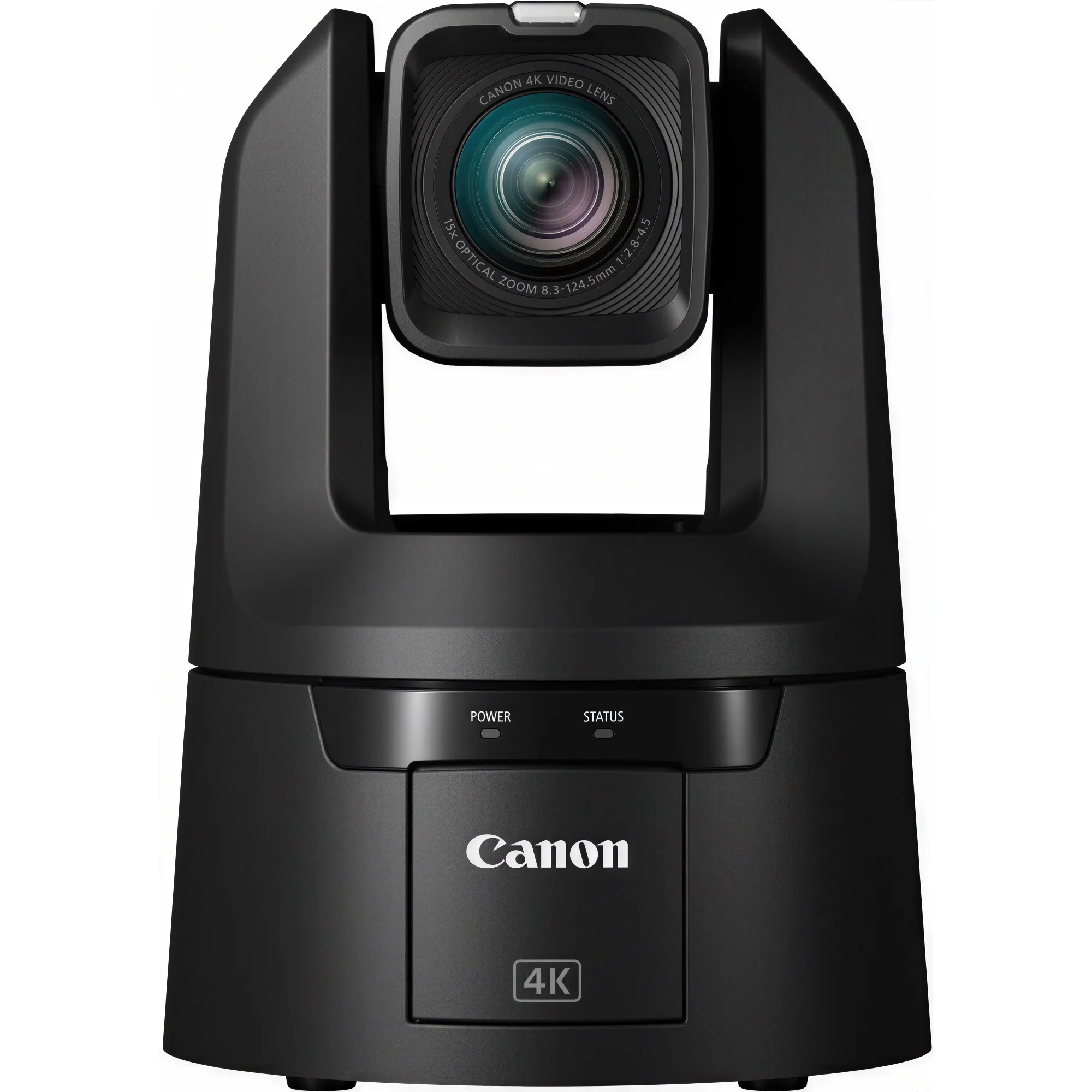
The Canon CR-N700 sits at the top of the line and pairs the 1.0-type CMOS sensor of the CR-N500 with the DIGIC DV7 processor of the CR-N400. The combination delivers 4K UHD at 60p with up to 4:2:2 10-bit output over both 12G-SDI and HDMI, and the same 60p signal travels over IP for plants that have committed to NDI or SRT contribution. For a broadcast production house that needs robotic cameras to cut alongside ENG handhelds without a colour-grade penalty, the CR-N700 is the model that holds up under shot-to-shot scrutiny.
Focus uses Canon's Dual Pixel CMOS AF with EOS iTR AF X, the same head- and body-recognition technology that ships on the EOS R-series mirrorless and the C-series Cinema bodies. In practice, that means the CR-N700 holds focus on a presenter who turns away from the lens, walks behind a lectern and steps back into frame — a level of subject persistence the lower models cannot match. The 15x optical zoom extends to a 30x digital reach in Full HD, and Canon's Image Stabilizer holds the shot when the venue floor moves. HDR options cover both PQ and HLG, and Canon Log 3 plus Wide Dynamic Range custom picture settings let a colourist match the CR-N700 to manned Canon Cinema cameras in post. The crop function lets one camera deliver two simultaneous feeds — for example, a wide stage and a tight presenter cut — which is useful when the venue has one cable run and two output destinations.
Protocol support covers SRT, NDI|HX, RTMP/RTMPS, RTP/RTSP, Canon XC, Standard Communication and FreeD, so the CR-N700 drops into a virtual-studio pipeline with metadata intact for tracking. Dual XLR audio inputs and Genlock complete the broadcast picture. For television studios, live event producers and streaming operations standardising on a single robotic body for high-end work, the CR-N700 is the camera that does not need a feature footnote when it cuts next to a C400 or C500 Mark II.
Choosing between the CR-N models
The pattern across the line is straightforward once the sensor and signal differences are mapped. The 1/2.3-type bodies — CR-N100, CR-N300, CR-N350, CR-N400 — give a corporate, education or worship venue a long telephoto reach for a sensible budget, with the CR-N400 reaching into broadcast-grade signal handling through 12G-SDI and Genlock. The 1.0-type bodies — CR-N500 and CR-N700 — give a production house the low-light performance and the focus persistence that broadcast and theatrical work demands, with the CR-N700 delivering 4K 60p 10-bit for the most exacting cuts. All six models share the same control protocols, the same RC-IP controller compatibility and the same Auto Tracking App support, which means a venue can mix tiers across positions — a CR-N700 on the main stage, a pair of CR-N400s for sidelines, a CR-N100 in a green-room interview position — and run the entire rig from a single console. That is the operational case for the line, and it is the one that pays back over a multi-year fleet cycle.
Comparison of Canon CR-N PTZ cameras
| Specification | CR-N100 | CR-N300 | CR-N350 | CR-N400 | CR-N500 | CR-N700 |
|---|---|---|---|---|---|---|
| Sensor size | 1/2.3" | 1/2.3" | 1/2.3" | 1/2.3" | 1" | 1" |
| Max output resolution | 4K UHD (3840 × 2160) 25/30 fps | 4K UHD (3840 × 2160) 25/30 fps | 4K UHD (3840 × 2160) 50/60 fps | 4K UHD (3840 × 2160) 50/60 fps | 4K UHD (3840 × 2160) 25/30 fps | 4K UHD (3840 × 2160) 50/60 fps |
| Image processor | DIGIC DV6 | DIGIC DV6 | DIGIC DV7 | DIGIC DV7 | DIGIC DV6 | DIGIC DV7 |
| Optical zoom | 20x | 20x | 20x | 20x | 15x | 15x |
| Digital zoom (Full HD) | — | — | 40x | 40x | — | 30x |
| HDR | No | No | Yes | Yes (PQ / HLG) | No | Yes (PQ / HLG) |
| Autofocus system | Hybrid AF | Hybrid AF | Hybrid AF | Hybrid AF with face / head detection | Dual Pixel CMOS AF | Dual Pixel CMOS AF with EOS iTR AF X |
| Auto Tracking | Yes (RA-AT001 Lite) | Yes (RA-AT001 Lite) | Yes (RA-AT001 Lite) | Yes (RA-AT001 Lite) | Yes (RA-AT001 Lite) | Yes (RA-AT001 Lite) |
| HDMI output | Yes | Yes | Yes | Yes | Yes | Yes |
| SDI output | — | 3G-SDI | 3G-SDI | 12G-SDI | 3G-SDI | 12G-SDI |
| IP / NDI | NDI|HX, RJ-45 | NDI|HX, RJ-45 | NDI|HX, RJ-45 | NDI|HX, RJ-45 | NDI|HX, RJ-45 | NDI|HX, RJ-45 |
| USB output | Yes | Yes | Yes | Yes | — | — |
| Streaming protocols | NDI|HX, RTP/RTSP | NDI|HX, RTMP, RTMPS, RTP/RTSP, SRT, FreeD, Canon XC | NDI|HX, RTMP, RTMPS, RTP/RTSP, SRT, FreeD, Canon XC | NDI|HX, RTMP, RTMPS, RTP/RTSP, SRT, FreeD, Canon XC | NDI|HX, RTMP, RTMPS, RTP/RTSP, SRT, FreeD, Canon XC | NDI|HX, RTMP, RTMPS, RTP/RTSP, SRT, FreeD, Canon XC, Standard Communication |
| Control protocols | Canon XC, NDI, RS-422 | Canon XC, NDI, RS-422 | Canon XC, NDI, RS-422 | Canon XC, NDI, RS-422 | Canon XC, NDI, RS-422 | Canon XC, NDI, RS-422 |
| Wi-Fi (control only) | — | Yes | — | — | — | — |
| Genlock | — | — | — | Yes | — | Yes |
| Time Code | — | — | — | Yes | — | Yes |
| Audio input | Mini-jack 3.5 mm | Mini-jack 3.5 mm | Mini-jack 3.5 mm | Mini-jack 3.5 mm, XLR | Mini-jack 3.5 mm, XLR | Mini-jack 3.5 mm, XLR |
| Network connection | Ethernet | Ethernet | Ethernet | Ethernet | Ethernet | Ethernet |
| PoE / PoE+ | Yes | Yes | Yes | Yes | Yes | Yes |
| Tally light | Yes | Yes | Yes | Yes | Yes | Yes |
| Min pan / tilt speed | 0.2°/s | 0.2°/s | 0.2°/s | 0.2°/s | 0.2°/s | 0.2°/s |
| 10-bit 4:2:2 | — | — | — | Yes | — | Yes |
| Canon Log 3 / Wide DR | — | — | — | — | — | Yes |
| Min illumination | — | — | — | — | 1.5 lux | 1.5 lux |
| Compatible controllers | RC-IP100, RC-IP300, Remote Camera Control App | RC-IP100, RC-IP300, Remote Camera Control App | RC-IP1000, RC-IP300, RC-IP100, RC-SK5, Remote Camera Control App | RC-IP1000, RC-IP300, RC-IP100, RC-SK5, Remote Camera Control App | RC-IP1000, RC-IP300, RC-IP100, RC-SK5, Remote Camera Control App | RC-IP1000, RC-IP300, RC-IP100, RC-SK5, Remote Camera Control App |
Comments
No comment at this time!
Leave your comment