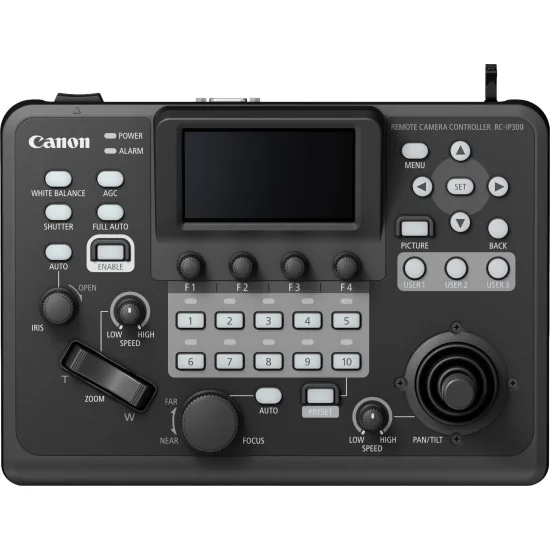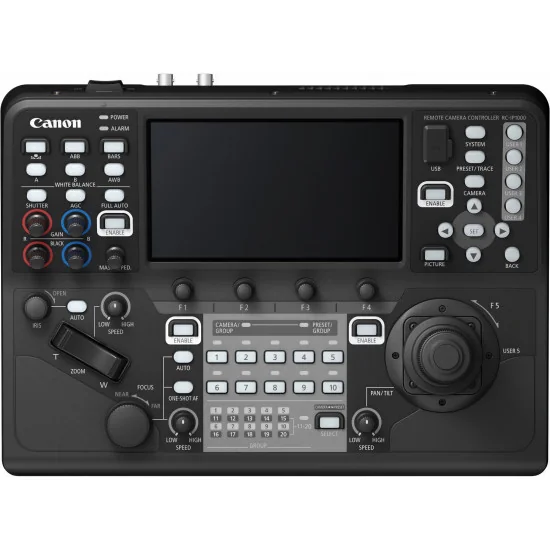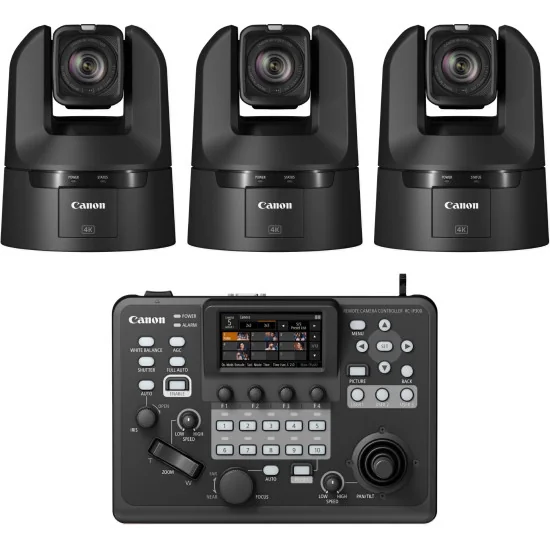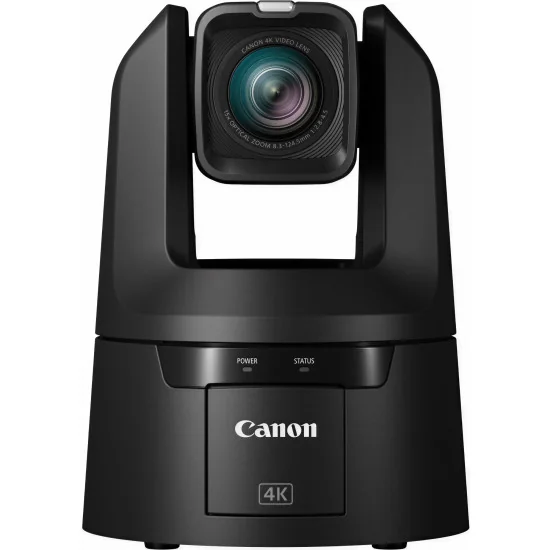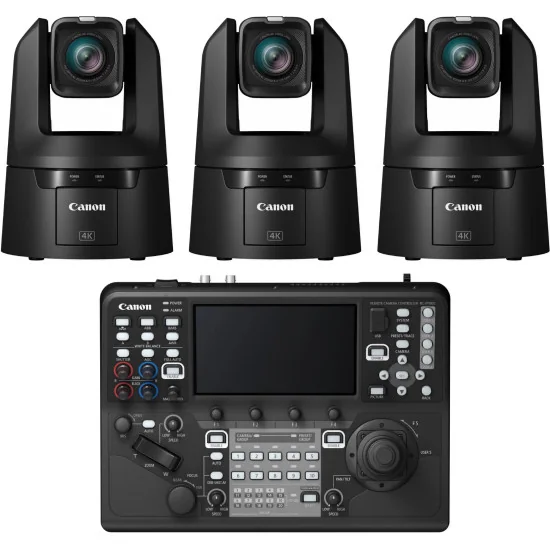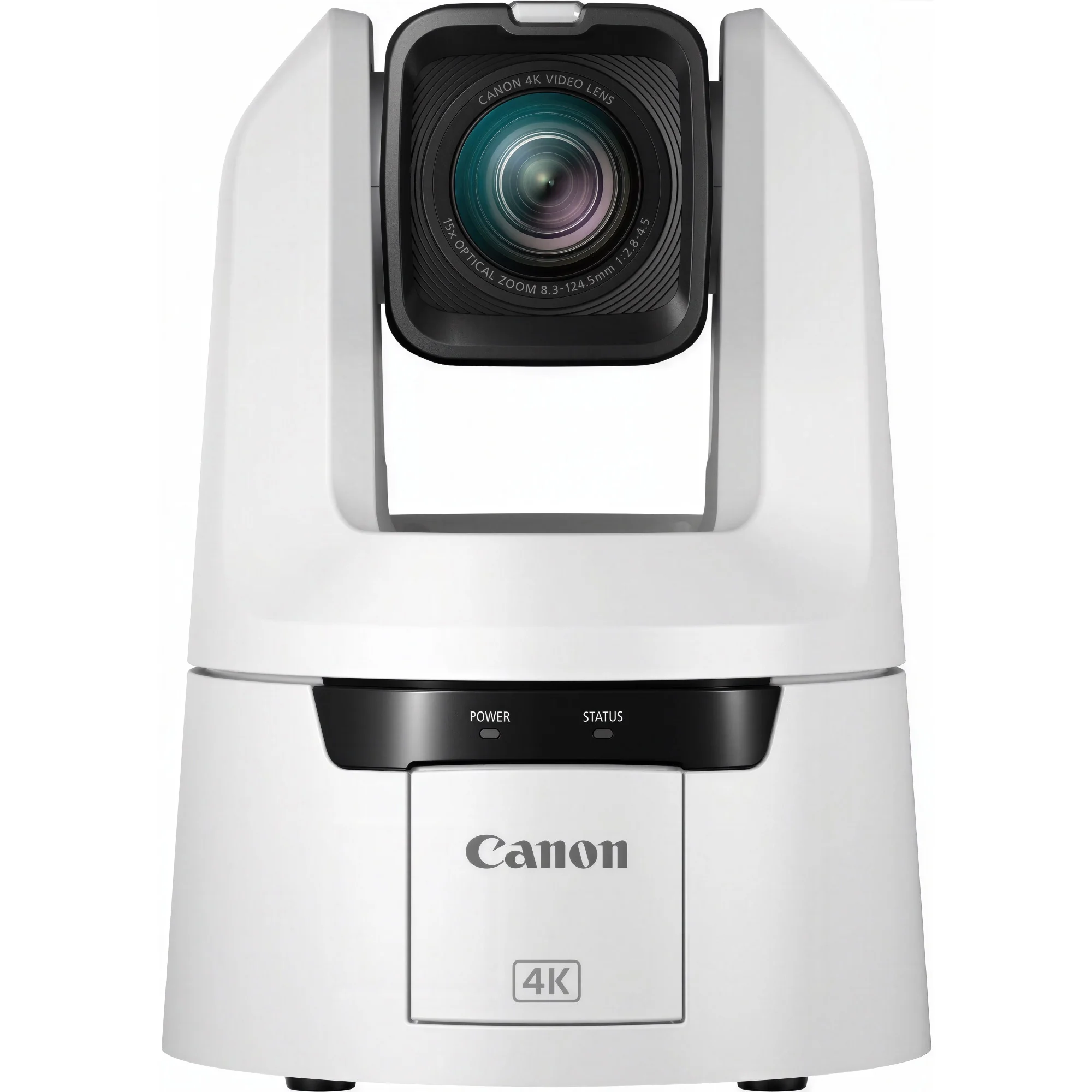
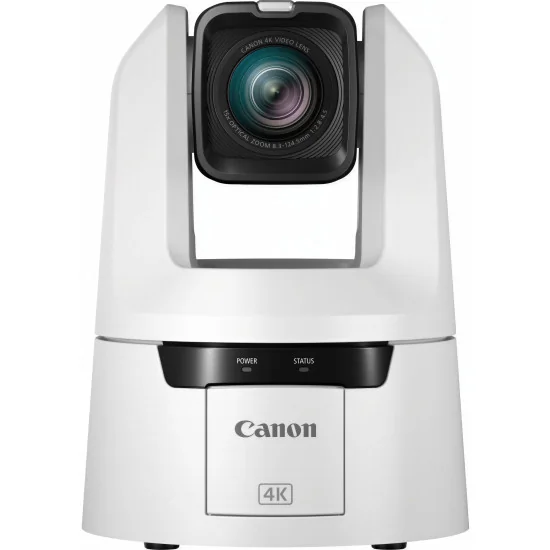
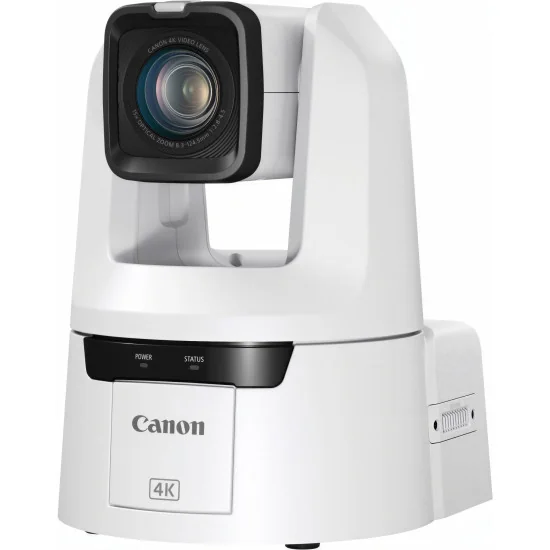
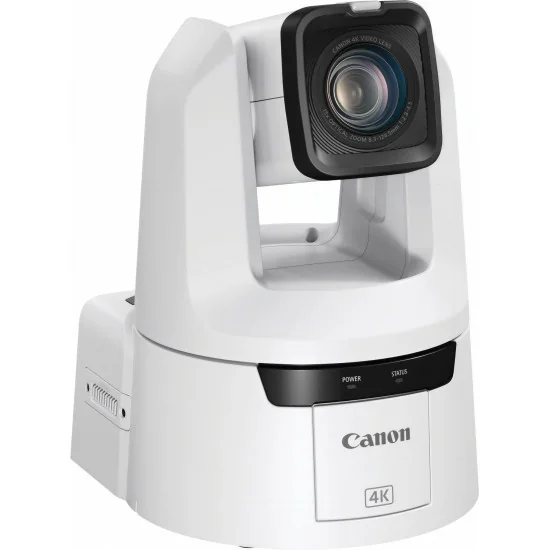
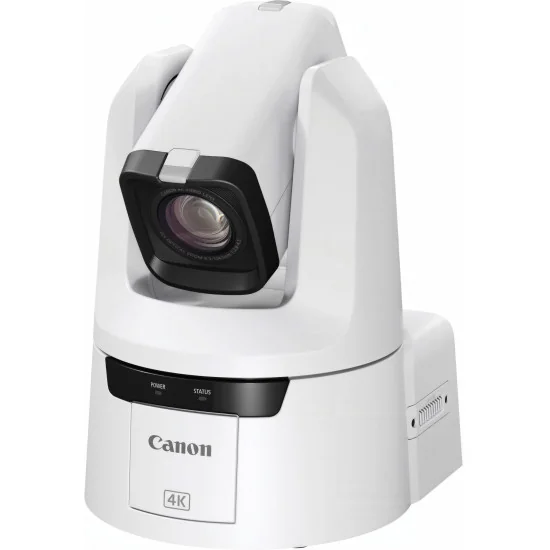
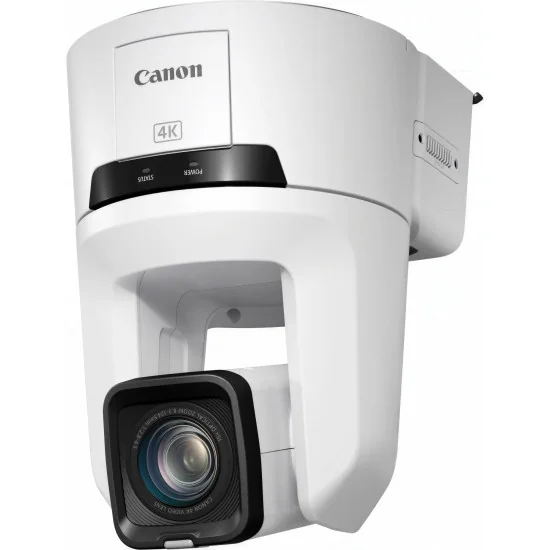
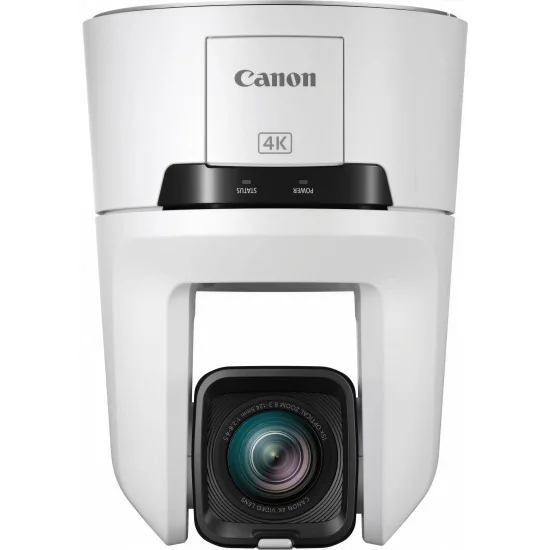
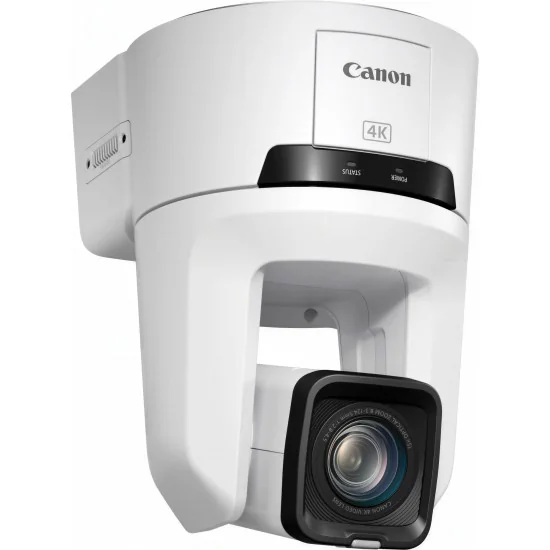
Canon put its deep-learning EOS iTR AF X autofocus into a PTZ head for the first time with the Canon CR-N700 White, the titanium-white edition of its flagship indoor 4K PTZ camera. Around that focus engine Canon pairs a 1.0-type CMOS sensor, roughly 8.29 megapixels effective, with its DIGIC DV7 processor, which together output UHD up to 59.94p in 4:2:2 10-bit. It suits broadcast studios, live-event galleries and streaming teams that cut remote angles against their main cameras.
Detection order is what makes the difference on a live show. EOS iTR AF X searches for eyes first, then faces, then heads, so a panellist who turns to a co-host stays sharp instead of handing focus to the set behind. Underneath sits Dual Pixel CMOS AF, backed by contrast detection as a second method. Operators can pick Face Priority or Face Only, or tap a subject for Touch AF in RCCA, the Remote Camera Control Application. Manual pulls stay accurate too, because the Dual Pixel Focus Guide confirms sharpness on screen. One Shot AF arrived with firmware 1.6.0: it focuses once on command and then stays put, which suits a lectern shot that must never hunt.
The 15x zoom spans 8.3–124.5 mm at f/2.8–4.5, or 25.5–382.5 mm in full-frame terms. Its 18 elements are arranged in 14 groups and include double-sided aspherical and super-UD glass. Horizontal coverage runs from 73° down to 5.7°. From the side of a conference hall, that means the whole stage on one preset and a single speaker's face on the next. Reach doubles to 30x in Full HD. An optical-shift stabiliser steadies long focal lengths on a flexing truss, and a motorised glass ND turret (1/4, 1/16, 1/64) lets the nine-blade iris stay open in bright rooms. Minimum illumination is about 2.5 lux (50 Hz, 21 dB gain); below that, Night Mode slides the IR-cut filter aside for a monochrome infrared image.
We ship across the EU for €20, free over €1,000.
B2B sales only, prices excl. VAT.
Official EU distribution and warranty.
Secure online payments via Stripe.
Send your enquiry via the form or email avgear@avgear.shop
Colour matching gets similar attention. Canon Log 3 is offered alongside HLG, PQ, Canon 709 and the BT.709 Wide DR curve, so the head can join an HDR programme or be graded next to Cinema EOS material. Since firmware 1.6.0, every preset can hold its own Custom Picture settings, which removes re-shading between a backlit stage position and a warmer interview corner. For third-party main cameras there is the Camera Colour Matching Application, a free Canon download. It calculates a 3D LUT from a chart shot on both units, previews it on waveform and vectorscope, then sends it to the camera over IP. Finer Clear Scan steps help keep LED walls free of banding.
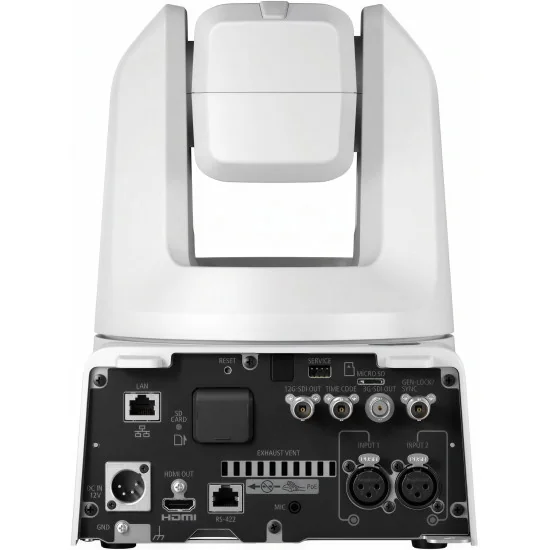
Four video paths are on the rear panel. Both 12G-SDI and the HDMI Type A socket deliver 2160p up to 59.94 fps in 4:2:2 10-bit. A separate 3G-SDI output serves HD monitoring or an older router, and both BNCs embed audio plus VITC/LTC timecode. Genlock (also usable as sync out), timecode in/out and RS-422 on RJ45 complete the broadcast side. Over the network the camera streams NDI|HX (NDI 6 compatible since firmware 1.6.0) and SRT with encryption and adaptive bitrate, plus RTMP/RTMPS and RTP/RTSP. Canon's own controllers and apps talk to it through the Canon XC protocol. RTMP and SRT reconnect on their own after a dropout. IP video is 4:2:0 8-bit, and 50p or 59.94p needs H.265 decoding at the receiving end. FreeD reports pan, tilt and zoom to as many as four destinations for AR graphics engines. For sound, two XLR sockets supply 48 V phantom power and a 3.5 mm mic jack takes a lavalier receiver, so lectern or desk audio travels inside the video signal.
Two functions make a single position work harder. With the crop function, the operator marks as many as two Full HD areas inside the 4K picture and routes the selected one as a main or secondary output. A podium close-up and the stage wide can then come from one head. Firmware 1.7.0, released on 15 October 2026, makes that crop available on IP streams too. The same update switches on the SD slot for internal recording in MXF-based XF-AVC or MP4, up to 4K 60p at 600 Mbps on SDXC cards. Recording can be started from an RC-IP1000 desk, from Canon's control apps or straight from a browser pointed at the camera. Media mode then plays clips back or pushes them to an FTP server, so the editor gets a clean ISO of every angle the morning after.
The head pans through ±170° and tilts between −30° and +90°, at 0.1° to 100° per second on both axes, with 100 presets shown as thumbnails in the camera interface and in RCCA. A preset can move by duration rather than by speed, the picture can freeze while the head moves, and Trace replays a recorded camera move. Auto Tracking Lite has been built in since firmware 1.4.0 and picks the subject by itself. Sold separately, Canon's RA-AT001 licence lets the operator choose the target by hand. It also brings ten sensitivity levels, 21 subject-size steps, Auto Framing and, from October 2026, Registered Face Tracking for up to seven people ranked by priority. A preset recall can now start or stop tracking. Streaming company Video Destination ran CR-N700 heads with this application at an AFL combat-sports event, in spots a camera operator could hardly reach, while the crew concentrated on switching.
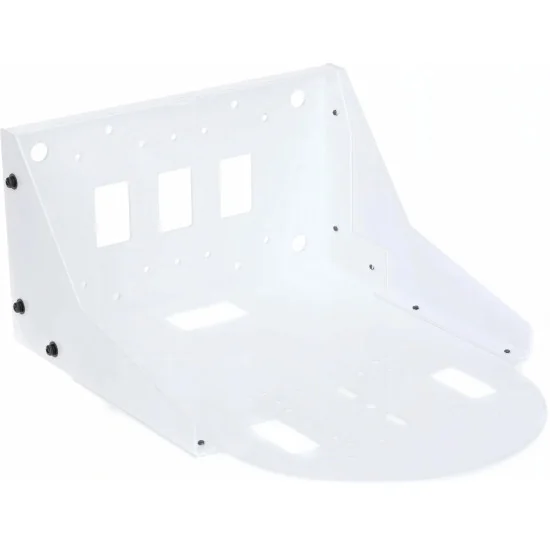
On a capable switch, one network cable is enough. The camera draws power from PoE++ (IEEE 802.3bt, Class 5, about 37.4 W at the camera); ordinary PoE or PoE+ ports will not start it, and a 12 V DC input covers other sites. In the box sit the WL-N01 infrared remote, a mounting bracket and a pair of safety wires. With noise rated at NC 30 or lower and an indoor operating range of 0 to 40 °C, the drive stays discreet beside an interview sofa, while the white housing disappears against pale studio ceilings. Before you order, our specialists will look at your switch power budget and controller line-up with you. They can also work out whether the tracking licence will pay its way on your usual jobs with the Canon CR-N700 White.
Upgrade your content with a new firmware update available August 2025
Download the latest firmware and take advantage of newly added Auto Tracking App RA-AT001* features. Auto Framing features include Multi-Person Framing, that detects and includes multiple people in the frame, while Face Direction Framing and Sit/Stand Framing deliver natural composition for a single person in frame. Additionally, RTMP/SRT auto reconnection and improved camera control from the iOS app is now included.
*Free Auto Tracking App RA-AT001(Lite) available via FW, 1.1.0 or later. A paid license is necessary for full functionality of auto tracking.
| Feature | Auto Tracking Application (Lite) | Auto Tracking Application |
|---|---|---|
| Tracking subject | Auto-select only | Auto-/manual select possible |
| Tracking sensitivity | Fixed | Adjustable from 1 to 10 levels |
| Tracking subject display size | Can be set at two levels | Can be set at five levels |
| Tracking target display position | Fixed at center | Can be set to any area |
| Auto Framing | — | Multi-Person Framing, Face Direction Framing, Sit/Stand Framing |
| Priority display area | — | Can be set |
| Fixed angle of view | — | Can be set |
| Save tracking settings | One only | Up to five can be saved/recalled |
Specifications
| Camera | |
|---|---|
| Image Sensor | Type 1.0 (1.0 in.) single-plate CMOS sensor |
| Effective Pixels | approx. 8.29 megapixels (3840 x 2160) |
| Lens | 15x optical zoom, 9-bladed iris diaphragm |
| Optical Zoom | 15x optical zoom (30 x with advanced zoom) |
| Digital Zoom | 20x digital zoom |
| Focal Length | 8.3 – 124.5 mm, f/2.8 – 4.5, 35mm equivalent focal length: approx. 25.5 (W) – 382.5 mm (T) |
| Angle of View | Horizontal: 73.0 (W) – 5.7° (T) Vertical: 45.2° (W) – 3.2° (T) |
| Minimum Subject Illumination | Approx. 3.0 lux (with 59.94 Hz frame frequency, 1/60 sec. shutter speed, 59.94P frame rate, and 21 dB gain) Approx. 2.5 lux (with 50.00 Hz frame frequency, 1/50 sec. shutter speed, 50.00P frame rate, and 21 dB gain) |
| Shutter Speed | 1/3 – 1/2000 sec. (specific values depend on the frame frequency and frame rate) |
| Iris | Manual/Automatic aperture |
| Gain | -6.0 dB - 36.0 dB |
| ND Filter | Built-in (Off, 1/4, 1/16, 1/64), motor operated |
| Night Mode (IR Cut Filter Off) | Yes |
| Optical Low-Pass Filter | Yes |
| White Balance | AUTO (AWB), Set A, Set B, preset settings (daylight: 5,600 K, tungsten lamp: 3,200 K), color temperature setting (2,000 K – 15,000 K), Manual |
| Focus | Focus mode: Manual, AF-boosted MF, Continuous AF, Face AF, Tracking AF type: Dual Pixel CMOS AF, Contrast AF Detection: Face Detection, Eye Detection |
| Minimum Focusing Distance | 1 cm at wide end, 60 cm across entire zooming range |
| Gamma | BT.709 Normal, BT.709 Wide DR, BT.709 Standard, Canon Log 3, Canon 709, PQ, HLG |
| Pan and Tilt | Pan operation range: Horizontal ±170° Pan operation speed: 0.1° – 100°/sec. Tilt operation range: Vertical -30° – +90° Tilt operation speed: 0.1° – 100°/sec. |
| Server | |
| Video Output Format: SDI | [12G-SDI] 3840 x 2160: 59.94P/29.97P/23.98P/50.00P/25.00P (4:2:2 10 bit) 1920 x 1080: 59.94P/59.94i/29.97P/29.97PsF/23.98P/50.00P/50.00i/25.00P/25.00PsF (4:2:2 10 bit) 1280 x 720: 59.94P/50.00P (4:2:2 10 bit) 720 x 576: 59.94i/50.00i (4:2:2 10 bit) [3G-SDI] 1920 x 1080: 59.94P/59.94i/29.97P/23.98P/50.00P/50.00i/25.00P (4:2:2 10 bit) 1280 x 720: 59.94P/50.00P (4:2:2 10 bit) 720 x 576: 59.94i/50.00i (4:2:2 10 bit) |
| Video Output Format: HDMI | 3840 x 2160: 59.94P/29.97P/23.98P/50.00P/25.00P (4:2:2 10 bit) 1920 x 1080: 59.94P/59.94i/29.97P/23.98P/50.00P/50.00i/25.00P (4:2:2 10 bit) 1280 x 720: 59.94P/50.00P (4:2:2 10 bit) 720 x 576: 59.94i/50.00i (4:2:2 10 bit) |
| Video Output Format: IP | [Frame frequency 59.94 Hz] 3840 x 2160, 1920 x 1080, 1280 x 720, 640 x 360: 59.94 fps, 29.97 fps, 14.99 fps, 5.00 fps (4:2:0 8 bit) [Frame frequency 29.97 Hz] 3840 x 2160, 1920 x 1080, 1280 x 720, 640 x 360: 29.97 fps, 14.99 fps, 5.00 fps (4:2:0 8 bit) [Frame frequency 50.00 Hz] 3840 x 2160, 1920 x 1080, 1280 x 720, 640 x 360: 50.00 fps, 25.00 fps, 12.50 fps, 5.00 fps (4:2:0 8 bit) [Frame frequency 25.00 Hz] 3840 x 2160, 1920 x 1080, 1280 x 720, 640 x 360: 25.00 fps, 12.50 fps, 5.00 fps (4:2:0 8 bit) [Frame frequency 23.98 Hz] 3840 x 2160, 1920 x 1080, 1280 x 720, 640 x 360: 23.98 fps, 11.99 fps, 5.99 fps (4:2:0 8 bit) *59.94 fps/50.00 fps is only when H.265. – JPEG has one pattern fixed depending on the frame frequency (format is fixed and cannot be selected) Resolution: 1280 x 720 59.94/29.97 Hz: 14.99 fps, 50.00/25.00 Hz: 12.50 fps, 23.98 Hz: 11.99 fps |
| Video Output Format: USB | No |
| Video Transmission Protocol | Canon XC, RTSP/RTP, NDI|HX, RTMP/RTMPS, Standard Communication (Serial), Standard Communication (IP), SRT, FreeD |
| Preset | Number of presets: Max. 100 (including home position) |
| Interface | |
| Communication Control | LAN, Wi-Fi, Serial, IR |
| Network Terminal | LAN x 1, RJ45, 1000Base-T |
| SDI OUT Terminal | 12G-SDI OUT Terminal BNC jack (output only) x 1, 0.8 Vp-p/75 Ω, SMPTE ST 2082, 2081, 424, 425, 292, 259, 299, 272 compliant Embedded audio, Time code (VITC/LTC) 6G-SDI OUT Terminal No 3G-SDI OUT Terminal BNC jack (output only) x 1, 0.8 Vp-p/75 Ω, SMPTE ST 424, 425, 292, 259, 299, 272 compliant Embedded audio, Time code (VITC/LTC) |
| GEN-LOCK Terminal | BNC jack (also serves as the SYNC OUT terminal) |
| TIME CODE Terminal | BNC jack (for both input/output) |
| HDMI OUT Terminal | HDMI connector (Type A), both video and audio are output only |
| RS-422 Terminal | RJ45 connector x 1 |
| Audio INPUT 1/INPUT 2 Terminals | XLR 3-pin jack (balanced) ((1) shield, (2) hot, (3) cold), two lines Sensitivity (MIC): -60 dBu (manual volume center, -18 dB full scale) Sensitivity (LINE): +4 dBu (manual volume center, -18 dB full scale) Supply Voltage: 48 V DC (Bias resistance: 6.8 kΩ) |
| MIC Terminal | ϕ 3.5 mm stereo mini-jack (unbalanced; supports plug-in power) Sensitivity (MIC): -72 dBu (manual volume center, -18 dB full scale) Sensitivity (LINE): -10 dBV (manual volume center, -18 dB full scale) Supply Voltage: 2.4 V DC (Bias resistance: 2.2 kΩ) |
| USB Terminal | No |
| Physical Features | |
| Operating Environment | Temperature 0°C – +40°C (+32°F – +104°F) Humidity 10% – 90% (without condensation) |
| Power Supply | PoE: PoE++ power supply via LAN connector (IEEE802.3bt compliant) – PoE and PoE+ cannot be used External power source: 12 V DC |
| Power Consumption | PoE++ Input: Approx. 37.4 W/1.2 A max. (body only) DC Input: Approx. 36.7 W/3.5 A max. (body only) * Class 5 (40.0 W required) for power supply devices |
| Dimensions (W x H x D) | Approx. 200 x 269 x 208 mm (excluding protrusions) |
| Weight | Approx. 4.4 kg (9.7 lbs) [Body Only] |
| Noise | NC 30 or less |

Data sheet
Specific References