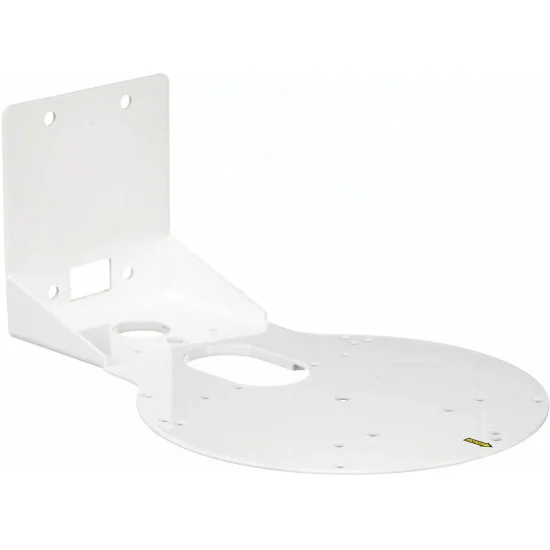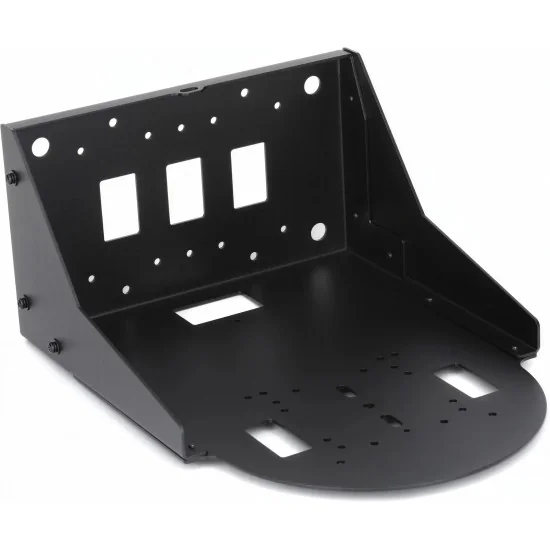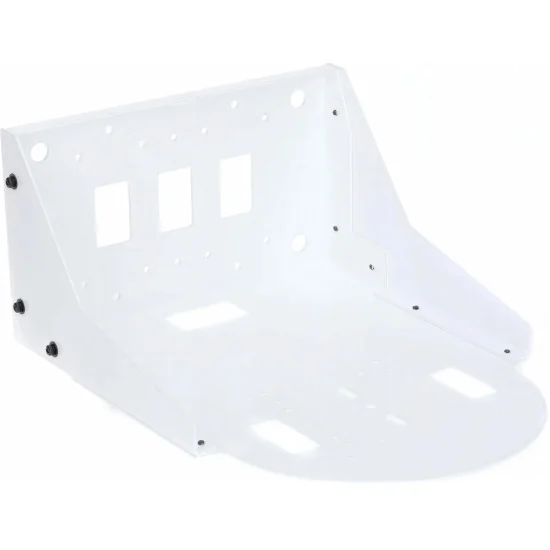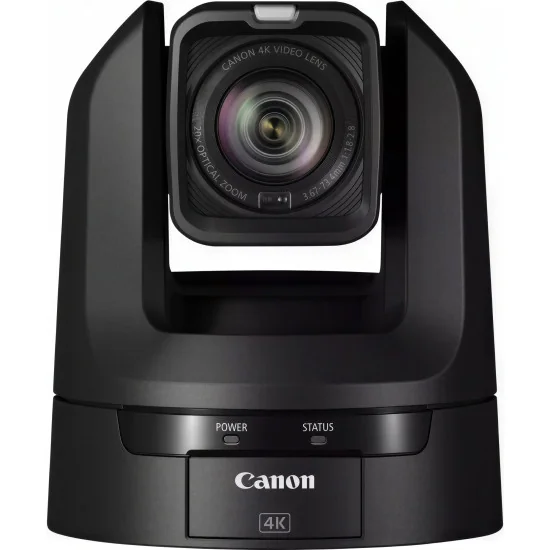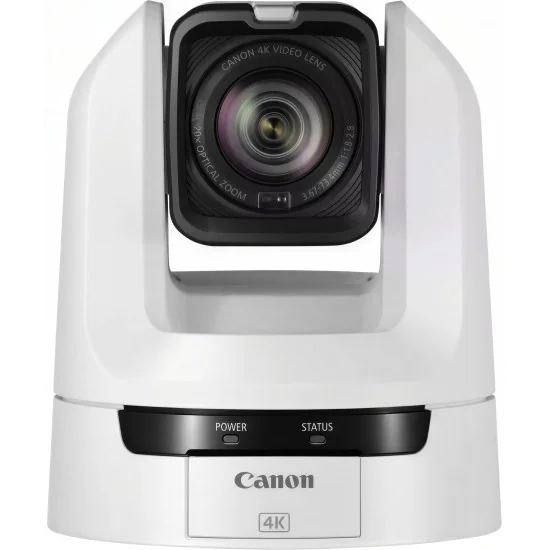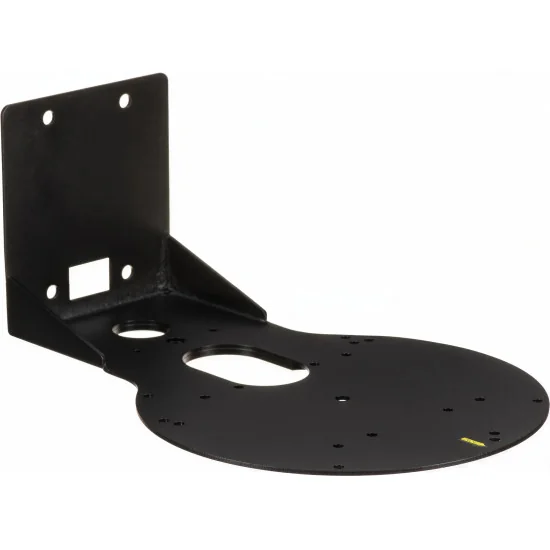
Canon A-SWD5WB2 (B)-CR Wall Mount Black
€300.00
Fixed camera positions often decide how clean a PTZ installation feels after the cabling is hidden and the room is handed over. Canon A-SWD5WB2...
Few names carry the same technical weight in professional video as Canon. Whether a production house is rolling cinema cameras on a feature set, equipping a multi-camera sports gallery, or installing a discreet remote rig in a corporate auditorium, Canon optics and image-processing engines tend to be somewhere in the signal chain. For operators who buy on the basis of reliability, serviceability and predictable colour science, the brand has become a long-term technology partner rather than a single line on a purchase order.
Canon traces its roots back to 1937 in Tokyo, when a small team set out to engineer a Japanese-built 35 mm rangefinder camera capable of competing with the best European optics of the era. Decades of investment in lens design, sensor research and digital imaging followed, and by the 1980s Canon had moved into broadcast lenses, ENG/EFP zooms and studio glass that became standard issue across major television networks. The same lens DNA — fluorite elements, low-dispersion optics, precision focus and zoom mechanics — now sits inside the modern PTZ range, which is why footage from a small remote head can integrate convincingly with material shot on a Cinema EOS or XF camcorder. For a production house weighing capital expenditure against long product life cycles, that engineering continuity translates directly into return on investment.
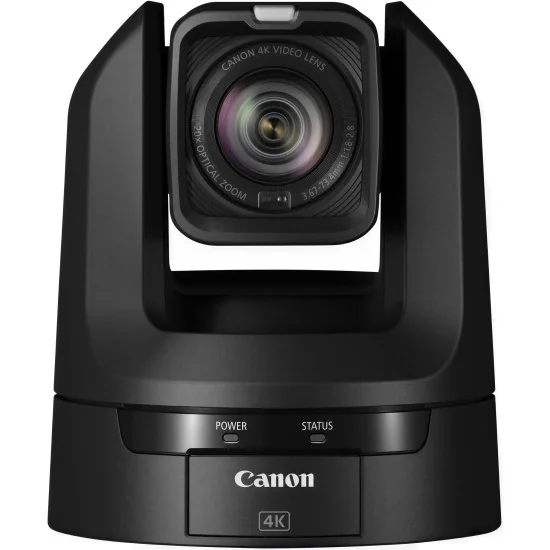
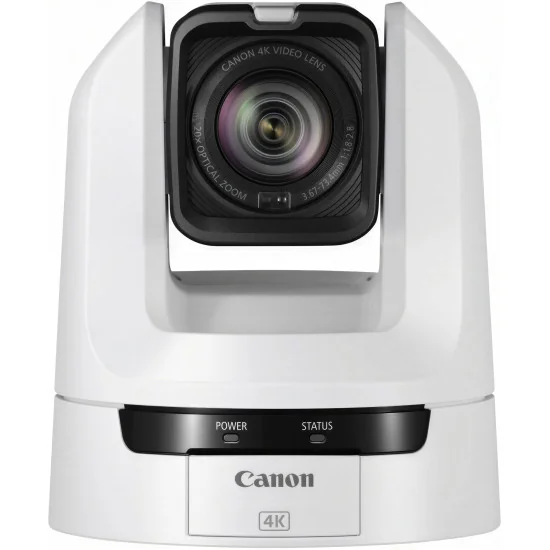
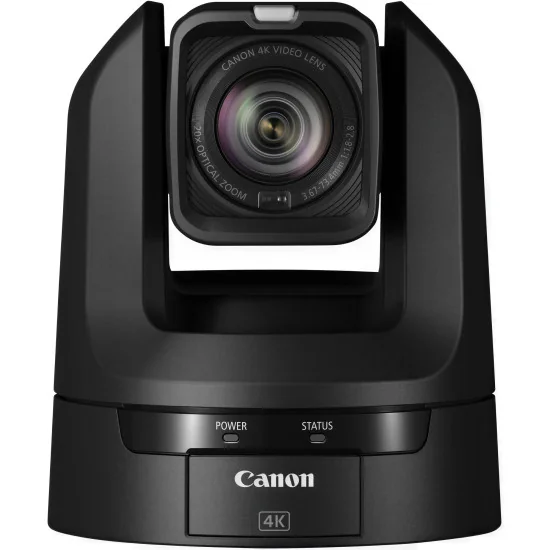
The Canon PTZ family covers every realistic budget tier, from entry remote heads to broadcast-grade bodies. The Canon CR-N100 is the most accessible model, built around a 1/2.3-inch UHD CMOS sensor, a 20x optical zoom (29.3–601 mm in 35 mm equivalent) and the DIGIC DV 6 processor. It records 4K UHD at 29.97p with 4:2:2 10-bit colour, supports NDI|HX and SRT out of the box, and includes free Auto Framing modes — Multi-Person, Face Direction and Sit/Stand — that solve the lone-operator problem in classrooms, meeting rooms and small studios. The Canon CR-N350 moves up to 4K UHD at 60p courtesy of the DIGIC DV 7 engine, retains the 20x optical zoom (40x in Full HD with Advanced Zoom), and adds HDR acquisition in HLG and PQ alongside Canon Log 3. Its 3G-SDI output (1080p60), HDMI and IP outputs over PoE++ make it a sensible choice for hybrid IP/SDI facilities.
The Canon CR-N400 shares the same 4K60p chassis but introduces a 12G-SDI port, so a single coax run can carry full-bandwidth 4K to an OB van or studio router without external converters. It runs the same DIGIC DV 7 silicon, the 20x optical zoom and Hybrid AF combining phase-difference and contrast detection. For installations chasing image quality over reach, the Canon CR-N500 swaps to a 1.0-inch CMOS sensor paired with a 15x optical zoom and Canon's Dual Pixel CMOS AF, delivering noticeably cleaner low-light frames and the kind of smooth focus pulls broadcasters expect on close-ups. At the top of the range, the Canon CR-N700 combines the 1.0-inch sensor, DIGIC DV 7, a 15x optical zoom equivalent to 25.5–382.5 mm and deep-learning Dual Pixel AF, then ties it to 12G-SDI, HDMI and IP outputs all capable of 4K60p in 4:2:2 10-bit. Region-of-interest crop, Optical Image Stabilization and a quiet pan/tilt mechanism push it into broadcast control rooms, live sport and high-end studios.
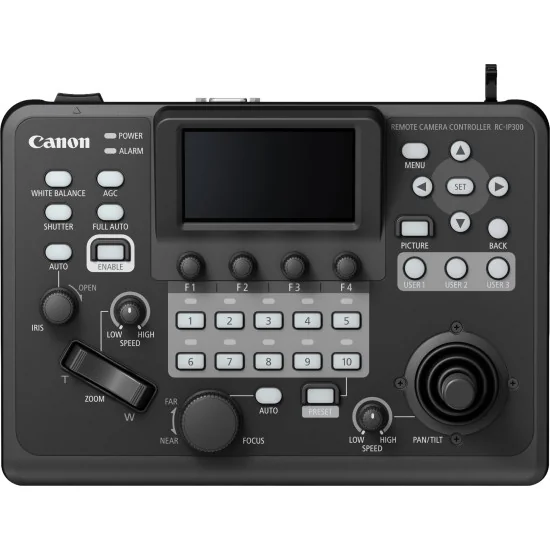
A camera fleet is only as good as the desk driving it, and the Canon RC-IP300 sits at the practical centre of that conversation. It manages up to 200 cameras over IP, exposes a 3.5-inch touch panel for live previews, touch focus and a 2x2 or 3x3 multiview, and ships with twelve user buttons, eight dials, a control lever and zoom rocker with adjustable reaction rate. Operators get assist tools that broadcast engineers actually use — Waveform, Vectorscope, focus guide for Dual Pixel cameras, and programmable trace recordings — plus support for Canon's Auto Tracking (RA-AT001) and Auto Loop (RA-AL001) add-on applications. Power runs over PoE (IEEE802.3af) or the included AC adapter, so it drops cleanly into an existing IP fabric. For larger productions or PCR environments, the RC-IP300 complements the flagship RC-IP1000 and the compact RC-IP100, giving integrators a graduated control philosophy rather than a single point of failure.
The reason Canon PTZ kit keeps appearing on tenders for live-event work is the protocol stack. Every CR-N body speaks the proprietary Canon XC protocol for secure private-network control, plus NDI|HX2, SRT for lossy public links, RTMP/RTMPS for direct CDN handoff, RTP/RTSP for monitoring, FreeD for AR/VR tracking integration, and Standard Communication for legacy environments. That breadth removes the need for protocol bridges in mixed facilities and makes Canon a natural fit for sports galleries chasing low-latency contribution, corporate AV teams pushing simultaneous Teams and YouTube feeds, and broadcasters pairing remote heads with vMix, TriCaster or Grass Valley switchers. Add Crop Frame on the CR-N700, CR-N400 and CR-N350 — letting an operator pull a clean 1080p feed from inside a 4K frame — and a single camera can effectively double as a tight and wide source during live capture.
Buying a Canon PTZ rarely stays a single-camera decision. The XC protocol, the Multi-camera Management App that scales to 200 endpoints, and the shared menu structure between CR-N bodies and Cinema EOS C70, C300 Mark III, C500 Mark II, C400, C80 and C50 cameras mean a production house can build a coherent toolkit: PTZ heads for fixed positions, Cinema EOS bodies for hand-held and dolly shots, the XF605 for ENG runs, and a single colour science across all of them. Stream Deck Mini, Mk.2, XL and Pedal integration through the RC-IP300 brings third-party hardware into the same control environment without bespoke middleware, and Canon's CarePAK service plans address the uptime question that matters most to facility owners. For a business buying on a five- to seven-year horizon, that ecosystem depth is what turns a PTZ purchase into a platform decision — and why Canon CR-N100, CR-N350, CR-N400, CR-N500, CR-N700 and the RC-IP300 tend to stay in service well past their initial deployment date.