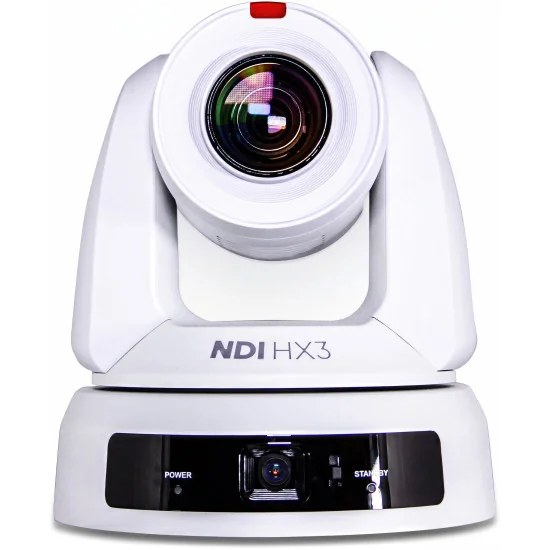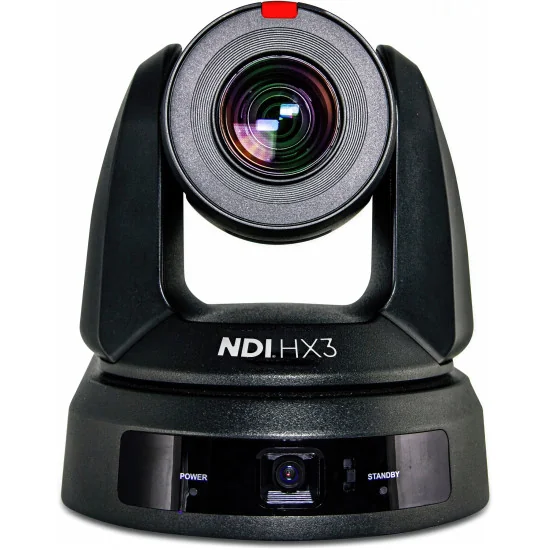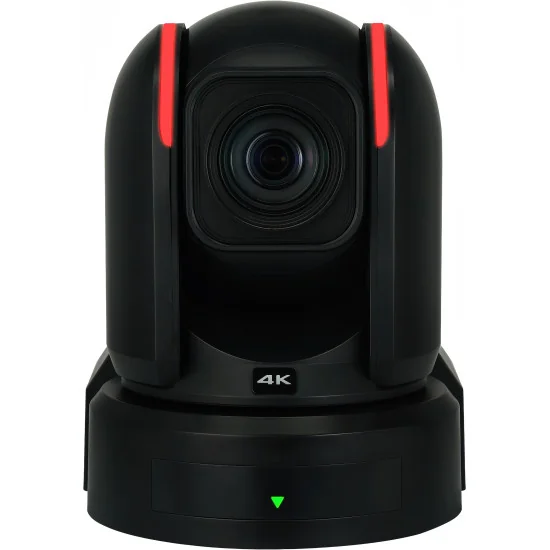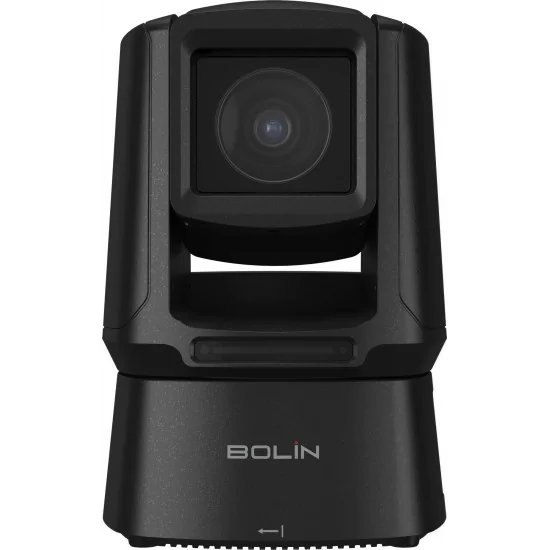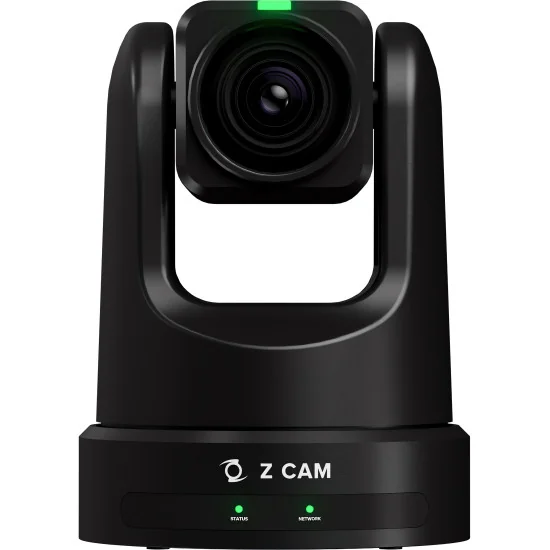
Z-CAM P2-R1N 24x Zoom PTZ Camera
€2,499.00
Z-CAM P2-R1N 24x Zoom is a network-native PTZ camera for studios that need real optical reach without giving up a large sensor look. The 24x...
Filter By
Brand
Brand
Price
Price
€2,499.00 - €6,295.00
Sensor Size
Sensor Size
Optical Zoom
Optical Zoom
Max Output Resolution
Max Output Resolution
Video Output
Video Output
Audio Input
Audio Input
Audio Output
Audio Output
Control protocol for PTZ cameras
Control protocol for PTZ cameras
Network Connection
Network Connection
PTZ cameras deliver repeatable framing and multi-protocol video transport for studios, live events, broadcast, and streaming—often with one operator controlling several camera heads.
PTZ cameras (pan/tilt/zoom) provide stable coverage from fixed positions where an operator is costly, impractical, or unsafe—ceiling grids, truss, rear balcony, FOH positions, lecture halls, and studio corners. For professional streaming and television workflows, the advantages are concrete: repeatable framing via presets, predictable motion, and transport flexibility across SDI, HDMI, USB, and IP video.
Across modern installations, vendors cover different priorities: PTZOptics focuses on broadcast/stream-friendly control and tracking options, while Bolin Technology targets hybrid IO and network-first pipelines used in studios and integrator builds. A practical model reference is the PTZOptics Move 4K 12X-4K-GY-G3, combining UHD 4K60 imaging, multi-output connectivity, and integrated tracking modes suited to presenter-led productions.
Streaming rarely stays inside one protocol. A production-grade PTZ camera supports parallel paths: baseband to a switcher, IP for monitoring and contribution, and USB for UC or record-only endpoints. Built-in encoders with H.264 and H.265/HEVC reduce uplink pressure; SRT adds packet recovery and optional encryption over unstable networks; RTSP remains common for local distribution and confidence feeds.
For LAN production, NDI|HX3 is widely used to move camera signals with low latency at efficient bandwidth, typically via H.264/H.265. This is where BirdDog often appears in IP-forward environments that prioritize network discovery, routing flexibility, and fast deployment for multi-camera shows.
Multi-camera PTZ deployments succeed or fail on cabling and discovery. PoE+ can carry power, control, and IP video on a single Ethernet run, which reduces rigging time and keeps ceiling installs clean. In SDI-centric rooms, prioritize cameras that keep SDI live while IP streams run in parallel for monitoring, remote preview, and secondary feeds. The Bolin N2-220X is a strong example of “hybrid-ready”: simultaneous HDMI/3G-SDI/USB alongside IP streaming (including NDI|HX3 and SRT), so one camera can serve switcher, recorder, and network viewers at the same time.
Remote PTZ control is about determinism: the same joystick move should land on the same framing, every time. Many cameras support VISCA over serial and VISCA over IP, often alongside Pelco-D/P and ONVIF. For training rooms, houses of worship, and corporate studios, DataVideo is frequently selected for predictable control behavior and stable integration with switchers and recorders. The DataVideo PTC-140 is a practical Full HD reference with 20× optical zoom, SDI/HDMI plus IP streaming, and a preset workflow that supports repeatable blocking.
One operator can cover a panel, worship service, sports commentary, or corporate town hall when presets are planned like cues. Look for high preset counts (often 255+), fast recall, and low mechanical noise so moves don’t distract in quiet rooms. Tally indication reduces operator mistakes when several PTZ heads are active.
Auto-tracking becomes valuable when it respects production rules: lock to a presenter, ignore background motion, and stay inside defined zones. On-board tracking reduces system complexity—no extra tracking PC, fewer failure points, and faster setup for temporary events. The Telycam Vision+ SE SDI WH adds one-touch tracking and FreeD PTZF data output for AR/VR engines and virtual set binding, and Telycam options are often considered when virtual production metadata matters alongside baseband output.
A high-utility PTZ head is a multi-format camera: baseband outputs (3G-SDI or 12G-SDI on higher tiers) feed switchers with predictable latency; HDMI handles local monitoring; IP covers contribution and multi-view; USB brings the same camera into conferencing or capture endpoints. For enterprise classrooms and large AV rollouts, Lumens is commonly evaluated for install-oriented consistency, while SDI-first studios may keep IP as a secondary distribution and monitoring layer.
In practice, a compact studio workflow often uses an A-camera feeding SDI/HDMI to the switcher, with IP (NDI|HX3 or SRT) reserved for monitoring and remote contribution. Pair that with a reverse-angle PTZ and standardize exposure and color using each camera’s web UI to keep skin tones consistent across preset moves and lighting transitions.
check_circle
check_circle