


edelkrone SliderPLUS v6 – a compact slider with massive capabilities
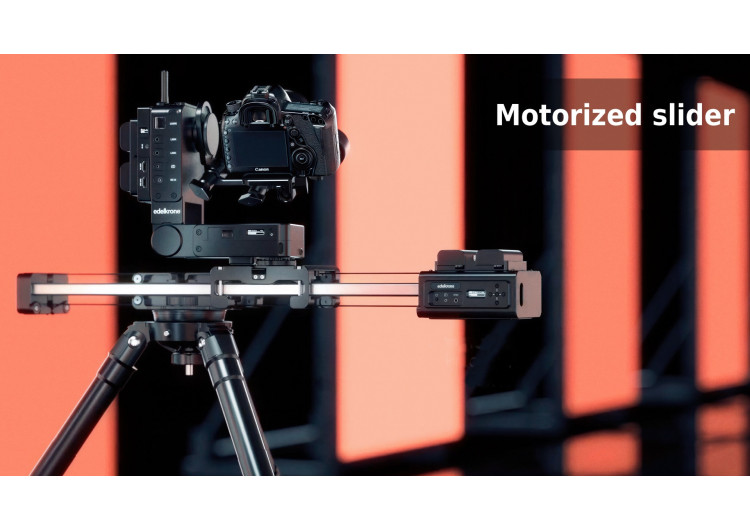
The edelkrone SliderPLUS v6 packs motorized precision into a compact 3.3 kg body. Pair it with pan-tilt heads and motorized tripods for full motion control.
The edelkrone SliderPLUS v6 represents a significant shift in how production teams approach camera movement for dynamic storytelling. This motorized slider combines precision engineering with broad application potential, making it a go-to tool for professionals who demand both technical excellence and adaptability on set. Whether you're capturing cinematic movements for commercials, establishing shots for documentaries, or smooth parallax effects in time-lapse sequences, the SliderPLUS v6 delivers consistent results without compromising portability.

The core strength of this platform lies in its fundamental engineering approach. At 77 cm (30.3 inches) in length, 9.5 cm (3.7 inches) in width, and 6.5 cm (2.6 inches) in height, the unit weighs just 3.3 kg (7.3 pounds), making it easy to carry for location work. The double-distance rail system represents a key engineering achievement—the rails themselves move along with the camera, effectively doubling the travel distance. This means you can achieve a 90 cm travel distance when mounted on a tripod, or 45 cm when operating on the ground. The horizontal motor delivers motion from a minimum of 0.6 mm per second up to 60 mm per second, providing the range needed for everything from imperceptible rack focus accompaniment to deliberate, purposeful camera movement.
What separates the SliderPLUS v6 from general-purpose sliders is the mechanical precision underlying every movement. The stepper motor system achieves minimum step increments of 0.444 micrometers—a level of accuracy that enables macro videography, complex multi-shot sequences, and VFX work requiring pixel-accurate repeatability across multiple takes. This translates to consistent results when executing time-lapse sequences, stop-motion animation, or visual effects shots where the camera must occupy identical positions across separate recording passes.
Power flexibility addresses real-world shooting requirements. The slider accepts standard NP-F batteries (bracket included), Canon LP-E6 batteries (bracket sold separately), AC/DC adapters, or integration with the edelkrone Power Module for multi-device setups. This approach eliminates the need to maintain separate battery inventories and keeps your power strategy unified across devices on set. The integrated 3.3 kg unit is machined entirely from CNC aluminum, ensuring durability without excess weight that would complicate rigging or transport.
The physical design reflects practical production experience. Foldable legs allow compact storage and transport, while manual hand-guided control enables quick positioning without powering up the motor—essential for rapidly setting initial framing. The 5-way navigation button with integrated onboard screen provides direct control without requiring mobile connectivity, and a safety lock prevents unintended motion during setup transitions. The unit features a 3/8"-16 mounting port on the bottom for securing to tripods or other supports, with a corresponding 3/8"-16 screw mount on top for attaching your camera or additional modules.
Motorized slider – plan your camera movements with full precision
The motorized operation distinguishes this slider from manual alternatives when executing complex motion sequences. Keypose programming allows you to define camera positions and motion parameters, then execute repeatable movements with absolute consistency. This capability becomes indispensable during multi-camera production, where maintaining identical blocking across takes ensures smooth editing transitions. Commercial production frequently demands this precision—a slider movement that replicates exactly across three takes provides edit flexibility that manual operation cannot guarantee.
The payload specifications reveal the engineering philosophy behind the system. On a tripod, the slider supports 22.5 kg (49.6 pounds) at 30 cm (11.8 inches), 15.9 kg (35 pounds) at 60 cm (23.6 inches), and 9 kg (19.8 pounds) at the maximum 90 cm (35.4 inches) travel distance. On the ground, it handles 22.5 kg (49.6 pounds) consistently across the full travel range. These specifications address real camera packages—a cinema camera body with stabilized glass lens and follow focus system falls comfortably within these parameters. Documentary teams capturing interviews can position a cinema camera with a stabilized zoom lens confidently on the slider without mechanical strain.
The practical applications span numerous production contexts. In interview-driven documentary work, subtle slider movement during subject responses adds visual interest without distracting from dialogue. The 0.6 mm per second minimum speed executes these micro-movements invisibly, adding production value while maintaining focus on the subject. Commercial production relies on the slider for product reveals—a slow push-in across a polished product surface, executed with smooth acceleration, has become visual shorthand for quality and attention to detail. Real estate videography benefits from the continuous movement capability combined with precision, allowing property walkthroughs that feel dynamic rather than static.
Time-lapse production on the SliderPLUS v6 reveals another dimension of utility. The CNC-precision motor ensures that even across 500-frame time-lapse sequences, each frame position maintains accuracy, preventing the stuttering or drift that compromises hyperlapse work. Landscape and architectural videography frequently employs this capability—a sunrise timelapse where the camera subtly travels along a structure creates an immersive environment establishment that static timers cannot match. Combined with the heavier payloads supported on tripods, professional cinema lenses remain viable throughout the entire motion range.
The continuous loop motion feature enables shooting scenarios where the camera path needs repetition without manual intervention. Music video production often requires multiple takes of identical camera movements—achieving this manually across ten takes leads to inevitable variations that complicate post-production assembly. The slider records your motion intentions through keypose programming and executes them identically every time, allowing you to concentrate on other production elements like lighting adjustments or actor direction.
VFX-focused shooting scenarios benefit substantially from the motion repeatability of the edelkrone SliderPLUS v6. Green screen work frequently requires multiple passes of camera movement while talent performs different actions or holds different props. The slider reproduces its camera path across these takes without deviation, simplifying compositing work where the background plate and foreground elements must align precisely. Macro videography—close-focus work on small objects—depends on this precision. The combination of accurate positioning and smooth motion at minimal speeds allows macro subjects to remain in critical focus while the camera transitions between positions.
Remote control and multiple motion options
Connectivity to the edelkrone App provides remote operation and programming capabilities without additional hardware. iOS receives full application support, while Android functionality remains more limited—a consideration if your production process centers on Android tablets. The Bluetooth connectivity allows operation from several meters away, useful for positioning yourself beside a subject during interview work or monitoring framing while attending to lighting adjustments.
Beyond Bluetooth integration, a wired link port enables direct connection to other edelkrone modules, building out sophisticated multi-axis systems. The architecture prioritizes modularity—add components based on your project requirements rather than purchasing integrated systems you might never fully utilize. A documentary crew needing horizontal slider motion doesn't also need pan-tilt capability, so the slider operates independently. When a commercial production requires synchronized horizontal movement with camera rotation, connecting a compatible pan-tilt head through the link port brings those capabilities online without fundamental system redesign.
The motion options extend beyond simple linear translation. Stop-motion animation capability enables frame-by-frame slider advancement compatible with manual shutter control on compatible cameras. This opens the slider to a different production domain entirely—claymation, object animation, and practical effects work all benefit from micro-incremental slider movement coordinated with shutter commands. Streaming and live production environments benefit from the programmable motion routines—establishing shots with subtle slider movement add production sophistication to live streams without requiring complex real-time direction.
The physical control remains responsive and immediate. When you need to reposition the camera quickly without powering up the motor system, manual hand-guided control provides this option. This hybrid approach—motorized precision when needed, manual dexterity when speed matters—addresses the reality that production work involves both deliberate planning and spontaneous adjustments. The 5-way navigation button allows local control of motorized motion without mobile app dependency, providing backup operation if your wireless connection becomes unreliable or your device battery depletes.
HeadPLUS PRO v3 – add Pan-Tilt motion to a simple path
The edelkrone HeadPLUS PRO v3 transforms the SliderPLUS v6 from a single-axis slider into a multi-axis motion control platform. This motorized pan-tilt head provides 360-degree rotation in both pan and tilt directions, with ultra-quiet stepper motors operating at one-tenth the noise level of comparable equipment. The v3 improvements over previous generations include 2x faster pan-tilt response, doubled battery longevity, extended Bluetooth range, and 10x finer positioning precision.
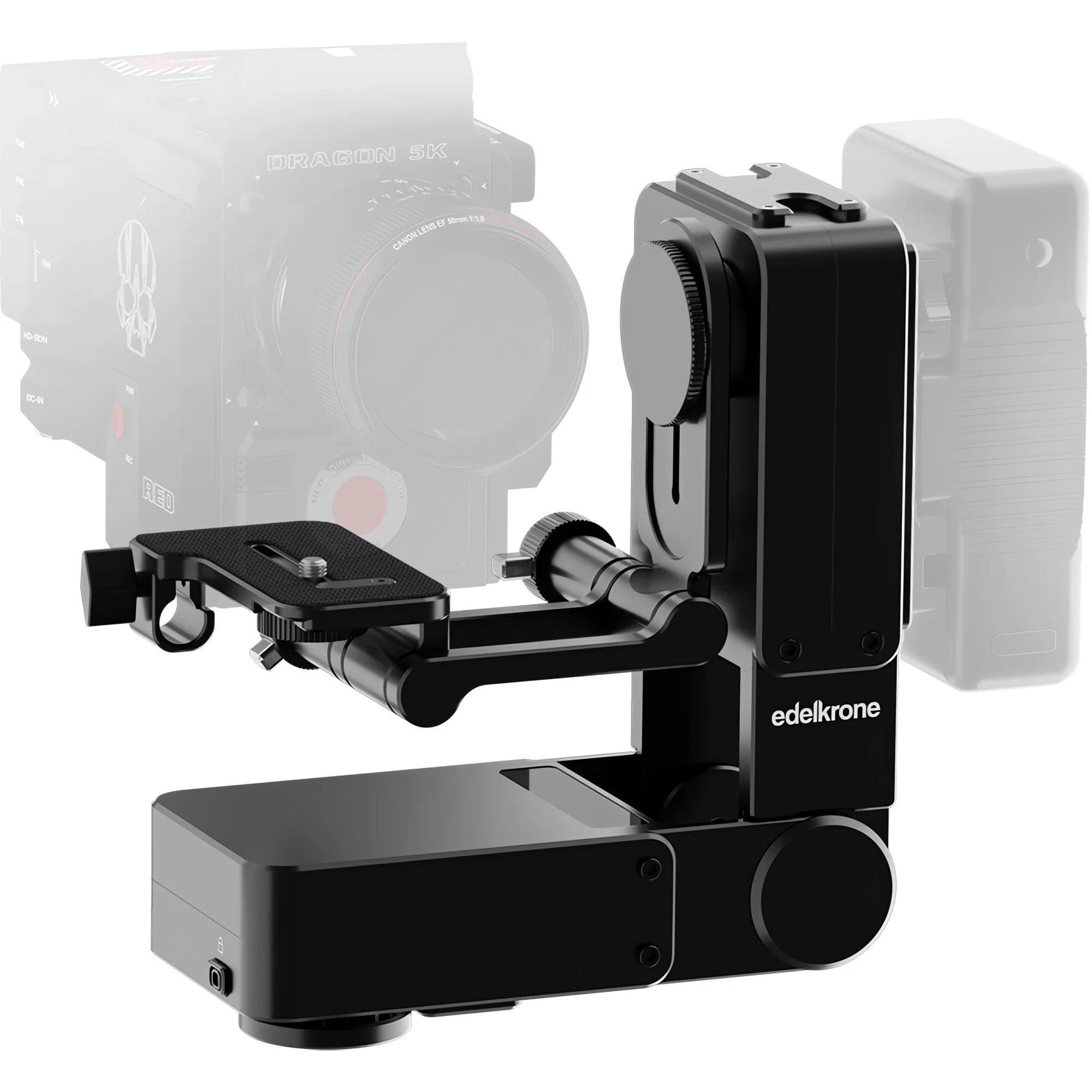
The technical specifications address the demands of professional multi-axis control. The HeadPLUS PRO v3 supports a 9 kg (19.8 pounds) payload, accommodating cinema cameras with large format lenses. At 3.3 kg (7.3 pounds), the head adds modest weight to the slider assembly while enabling two additional axes of motion. The ultra-quiet operation becomes significant in sound-dependent production—interviews captured while a pan-tilt head reframes the camera on multiple axes no longer suffer from mechanical noise infiltrating the audio track. Traditional pan-tilt heads introduce audible whining; the HeadPLUS PRO v3 operates silently enough that sound mixers won't request the camera freeze during dialogue recording.
The point tracking mode introduces a notable capability unavailable on conventional heads. Using inverse kinematic calculations—pure mathematical positioning without image processing—the HeadPLUS PRO v3 can lock the camera onto a specific three-dimensional point in space while the slider moves along its horizontal axis. This means your camera can follow a subject across the frame while simultaneously gliding horizontally across the set, all executed through coordinated pan and tilt adjustments. The head automatically calculates the required pan and tilt angles at each slider position to maintain the target point at the desired frame location. This capability streamlines production work that would otherwise require manual camera adjustment or post-production stabilization.
Auto-calibration in point tracking mode removes the setup burden traditionally associated with professional motion control. Previous systems required technicians to manually input calibration data before tracking could function reliably. The HeadPLUS PRO v3 performs this calibration automatically, reducing setup time and eliminating user error in positioning parameters. A production team can incorporate tracking shots into their shooting schedule without allocating additional prep time for technical configuration.
The motorized capability opens significant creative options in streaming and live production contexts. A fixed point tracking routine—camera locked onto a subject while the slider reframes laterally—provides the visual language of professional multi-camera production. Corporate video production, interview-based content, and music performance capture all benefit from the smooth, coordinated motion that two axes provide. The foldable bracket for vertical video operation enables social media-focused production directly from the same equipment—reorient the camera to portrait mode and the HeadPLUS PRO v3 accommodates the different mounting geometry.
Power management on the HeadPLUS PRO v3 mirrors the SliderPLUS v6 philosophy. It accepts NP-F batteries, Canon LP-E6 batteries, V-mount batteries, Gold mount batteries, or AC/DC adapters, simplifying the logistics of managing power across your motion control platform. The doubled battery life in v3 compared to v2 reduces the frequency of battery swaps during production, a meaningful operational improvement on longer shooting days. The Bluetooth connectivity and app integration carry the same philosophy—control the pan-tilt head from your mobile device or use physical buttons for direct operation when wireless connection isn't available.
The CNC aluminum and stainless steel construction mirrors the durability standard established by the slider. The assembly handles the mechanical stresses of repeated pan-tilt cycles without wear that would degrade precision over time. Production facilities that operate equipment across extended projects, not just individual shooting days, benefit from this engineering approach—the head maintains its precision characteristics throughout years of production work.
Vertical Module v2 – additional vertical movement
The edelkrone Vertical Module v2 adds a third axis to the motion control equation, enabling vertical camera movement that complements horizontal slider motion and pan-tilt adjustments. This module uses a patented tension wire approach rather than motorized vertical movement, an engineering choice that delivers multiple practical advantages.
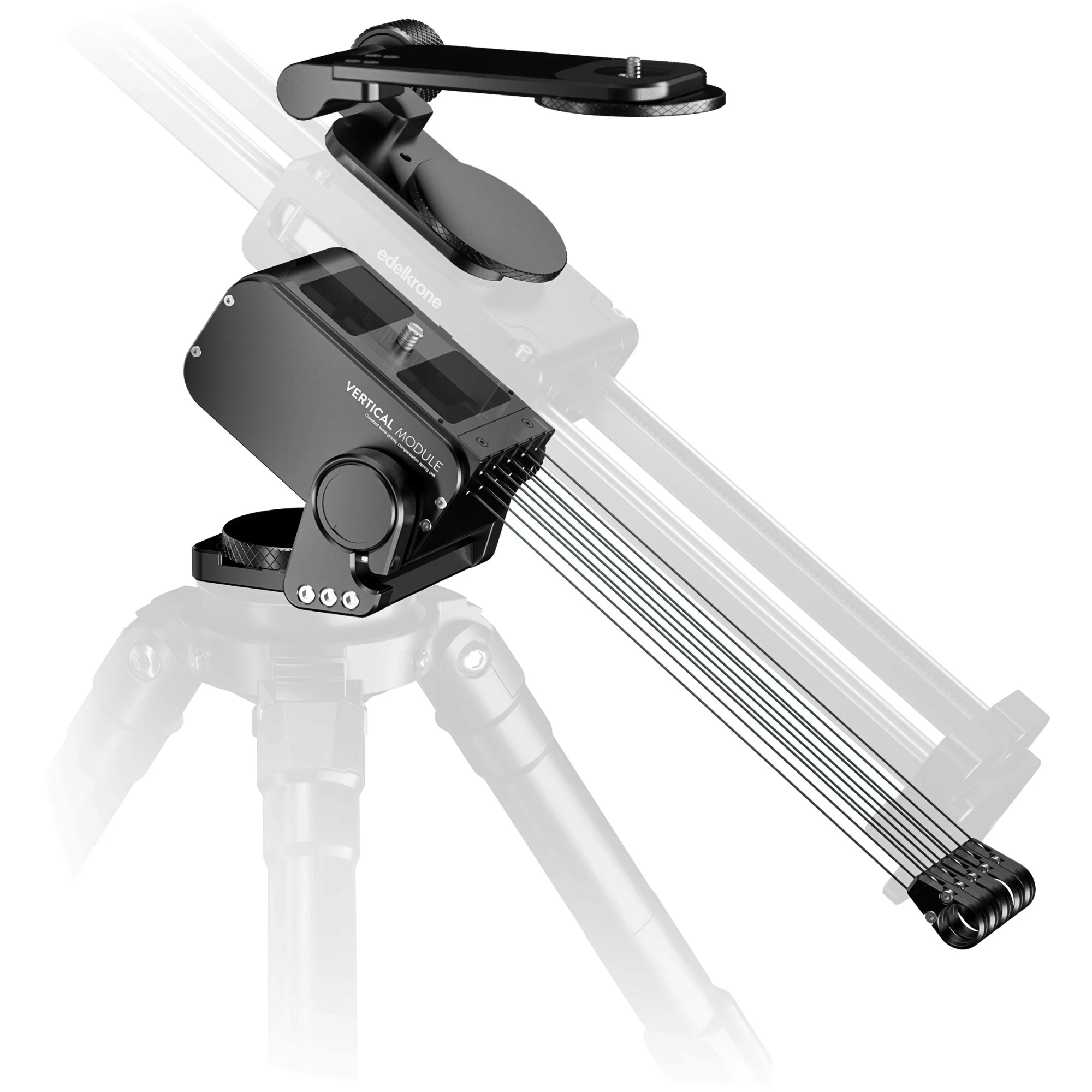
The tension wire system provides silent, rapid, and power-efficient vertical adjustment. Five tension wires accommodate different camera weight configurations, allowing you to select the appropriate wire set for your specific payload. The total vertical lift capacity reaches 5.2 kg (11.5 pounds), sufficient to handle a lightweight cinema camera body or compensate for the weight of the HeadPLUS PRO v3 (2.6 kg / 5.7 pounds) plus additional camera accessories (2.6 kg / 5.7 pounds). The v2 improvements over v1 include a stronger body construction, more comfortable handles, and a larger L-bracket for more stable mounting geometry.
The angle adjustment operates in 10-degree increments from fully horizontal (0 degrees) through vertical (110 degrees), providing positioning flexibility without requiring motorized adjustment between increments. Documentary and interview production benefits from this capability—rapidly shift the camera from horizontal framing to slightly tilted composition without motorized delay. Time-lapse sequences where the camera needs to transition from horizontal to elevated perspective over dozens of frames can execute this adjustment manually, then engage the motorized slider for smooth horizontal movement as the vertical angle holds steady.
The patented counterbalancing approach eliminates the audio signature associated with motorized vertical movement. Live production and sound-sensitive recording work can incorporate vertical repositioning without introducing mechanical noise into the audio track. Music video production frequently benefits from the silent vertical adjustment—reframing from low angle to high angle between performance takes happens without audible evidence in the recording. The power efficiency of the tension wire approach extends operational time without battery drain, an advantage in all-day production schedules where power management affects shot selection and schedule viability.
The Vertical Module v2 connects to the SliderPLUS v6 through its standard 3/8"-16 mounting port, integrating directly into the motion control platform. Production setups benefit from the modularity—a project requiring only horizontal slider motion leaves the vertical module in the kit, reducing transport volume and setup time. When vertical movement becomes necessary on a subsequent project, installation takes minutes rather than requiring equipment substitution.
Architectural and real estate videography derive significant value from three-axis movement capability. A building exterior shot that combines horizontal slider movement with subtle vertical adjustment and pan-tilt reframing produces environmental context that single-axis motion cannot achieve. The viewer perceives sophisticated camera control when three axes operate in choreographed coordination, elevating the perceived production value of the content.
Add Tripod X PRO to create a unique, multi-axis camera setup
The edelkrone Tripod X PRO introduces a fourth axis to the motion control system—motorized height adjustment. This specialized tripod integrates into the broader edelkrone ecosystem, providing vertical camera movement that complements the horizontal slider motion and pan-tilt capabilities of other modules.
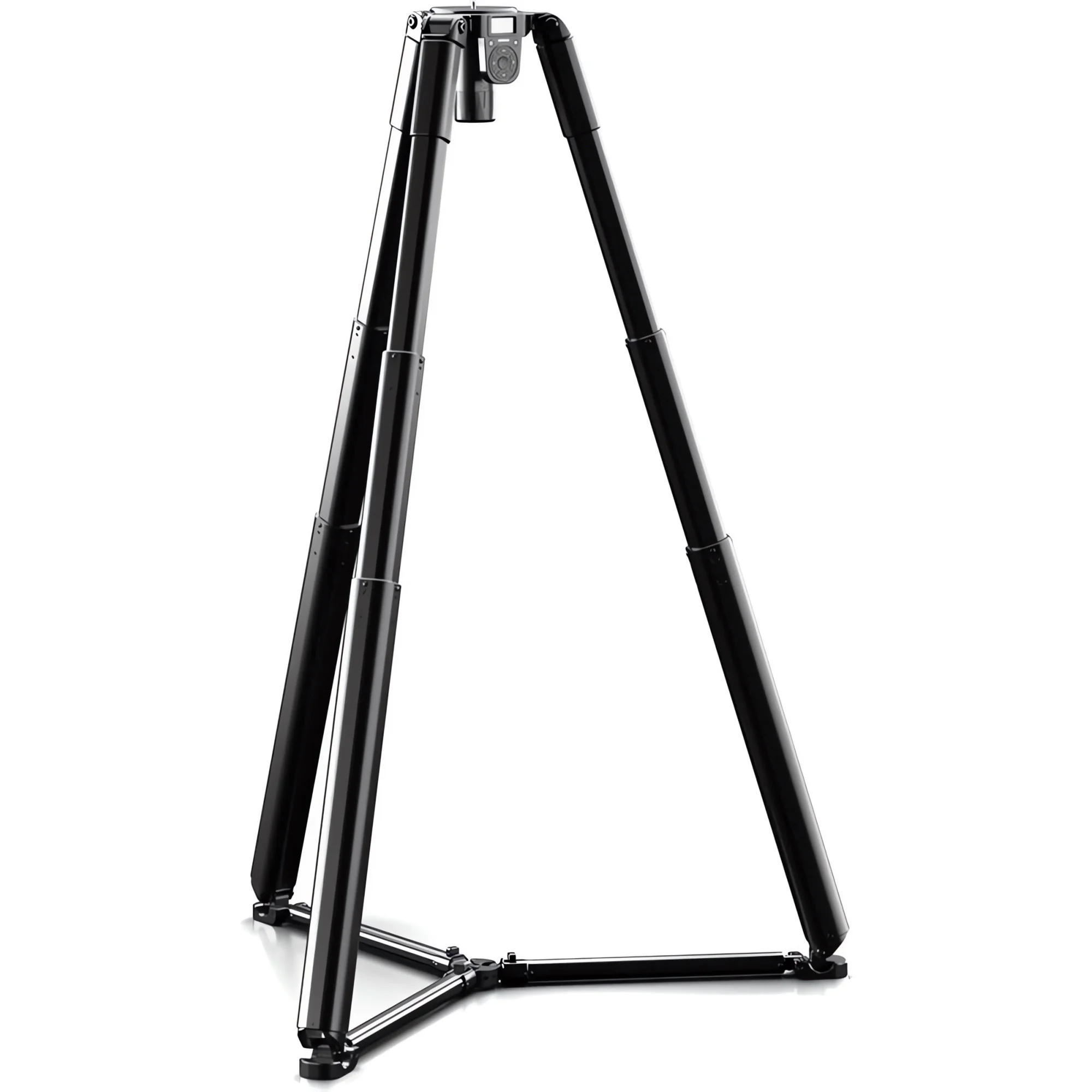
The Tripod X PRO specifications address the structural demands of supporting multiple motorized modules. Height adjustment ranges from 34 cm (13.4 inches) minimum to 148 cm (58.3 inches) maximum, accommodating everything from low-angle product videography to overhead shots of expansive environments. The tripod supports 20 kg (44 pounds) lifting capacity and 30 kg (66 pounds) total carrying capacity, sufficient to handle a SliderPLUS v6 system (3.3 kg) topped with a HeadPLUS PRO v3 (3.3 kg) plus a full-size cinema camera package with stabilized lens and follow focus (12-14 kg). The weight of the tripod itself registers at 9 kg (19.8 pounds), a reasonable mass for equipment that must support sophisticated multi-axis motion.
The motorized height adjustment operates at approximately 120 cm per minute (47 inches per minute), providing smooth vertical reframing without sacrificing operational speed. The 12V 3.0Ah power tool battery (included with charger) supplies the energy for vertical movement, adopting a standard format that simplifies battery management on sets already utilizing power tool batteries. The maximum noise level of 60 dB at 1 meter—measured at full speed with maximum load—remains acceptable for sound recording scenarios where motorized tripod noise doesn't infiltrate dialogue or ambient sound tracks.
The auto self-leveling feature prevents frame tilt as the tripod extends and retracts. Unleveled tripod legs introduce mechanical creep into height adjustment; the tripod gradually tilts as it rises, requiring manual correction during height changes. The Tripod X PRO eliminates this through automatic compensation, maintaining frame level throughout the vertical adjustment range. Documentary and interview production benefit from this precision—establishing shots that involve both height adjustment and camera repositioning maintain consistent framing throughout the transition.
The press-n-release smart spreader provides foot-operated control of leg spread angle. Operators can rapidly adjust the tripod footprint without stooping or manually spreading legs, a convenience factor that accumulates meaningfully across long shooting days involving frequent position changes. The 3/8"-16 stud on top accepts standard tripod head adapters and edelkrone modules, providing compatibility with existing equipment or enabling custom assembly of motion control configurations.
The three-section leg design prioritizes transport. Folded legs reduce the tripod footprint substantially, fitting into standard production equipment cases alongside cameras and lenses. Location work to remote shooting environments—documentaries filmed in challenging terrain, commercial shoots at distant locations—benefit from portable yet capable support structure. The tripod opens four-axis motion scenarios where the slider provides horizontal translation, the Vertical Module provides tilt, the HeadPLUS PRO v3 provides pan rotation, and the Tripod X PRO provides vertical height adjustment—all operated in choreographed sequence through app control.
Corporate video production frequently employs this multi-axis approach. Establishing shots of large facilities benefit from four-axis motion—the camera starts low and wide, rises vertically while panning across the facility, then slides laterally while maintaining elevated framing. This produces sophisticated environmental context that communicates scale and complexity. Music video production uses similar techniques—during performance footage, the tripod raises the camera while the slider moves horizontally and the pan-tilt head reframes the subject, creating dynamic framing that maintains focus on talent while revealing stage context.
The integration of the Tripod X PRO into a broader multi-axis system requires planning but remains uncomplicated. The SliderPLUS v6 mounts on top of the tripod through the standard 3/8"-16 connection, with the slider then supporting the HeadPLUS PRO v3, which in turn carries your camera. The wired link connections between modules allow coordinated motion through app control—all four axes execute their programmed movements in synchronized sequences. The edelkrone architecture prioritizes this kind of modular integration, allowing production teams to assemble capabilities matched to specific project requirements rather than purchasing monolithic equipment unsuited to adaptable production work.
Streaming and live production facilities benefit from permanent or semi-permanent installation of this four-axis system. Virtual production backgrounds, interview setups, and performance venue coverage all gain production sophistication through coordinated multi-axis camera control. The motorized height adjustment of the Tripod X PRO enables shot transitions that manual re-rigging cannot achieve smoothly, essential for live contexts where every transition remains visible to the audience.
The combined system—SliderPLUS v6, HeadPLUS PRO v3, Vertical Module v2, and Tripod X PRO—represents the most sophisticated motion control configuration available within the edelkrone ecosystem. Yet each component operates independently, allowing production teams to deploy subsets of this system based on project scope. A documentary crew filming interviews uses the slider alone. A commercial production requiring sophisticated product reveals adds the pan-tilt head. A music video incorporating environmental context adds the vertical module and tripod. This modular philosophy ensures that investment in edelkrone equipment remains relevant across diverse production scenarios, not locked into a single use case. The precision, quiet operation, and power flexibility that characterize each component combine into a motion control platform capable of executing shots that previously required dedicated motion control specialists or expensive robotic equipment.
Comments
No comment at this time!
Leave your comment