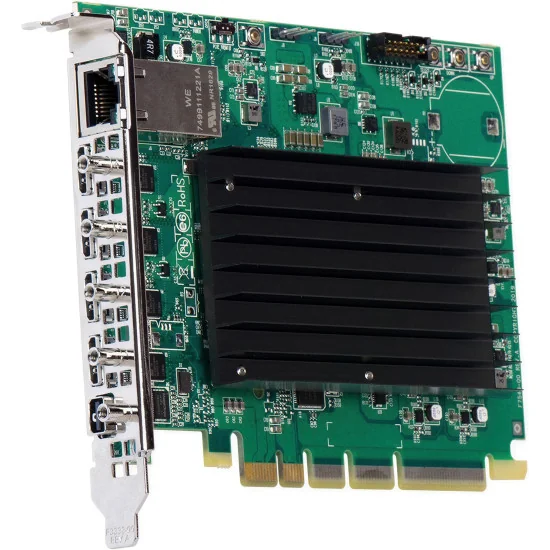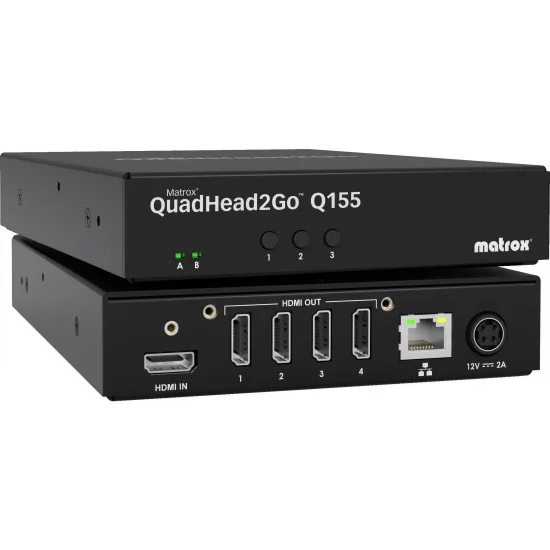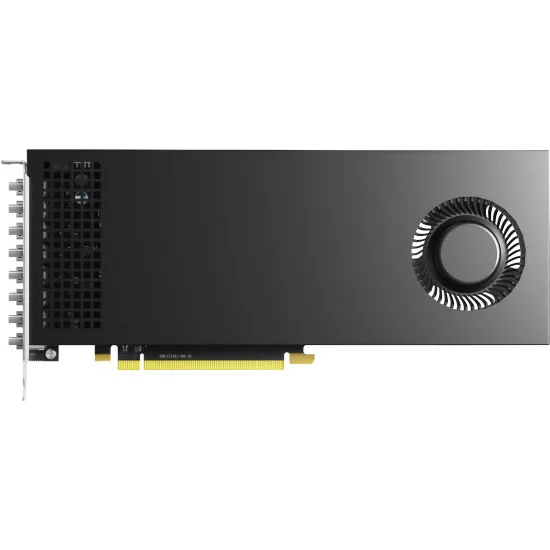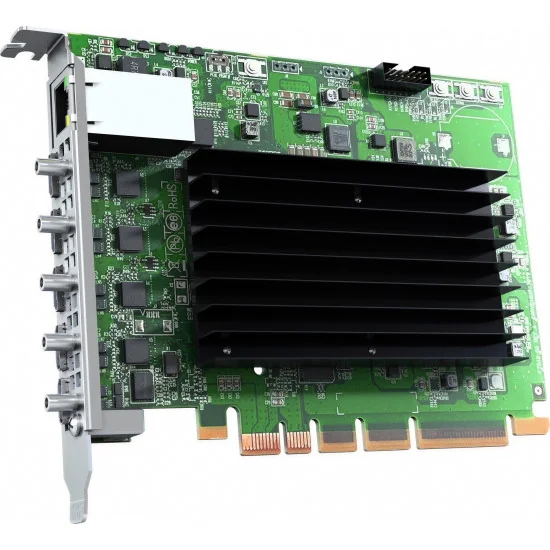
Matrox QuadHead2Go Q155 4K HDMI Multi-Monitor Controller PCIe Card
€1,249.00
Matrox QuadHead2Go Q155 Card turns a single HDMI feed into four precisely mapped outputs for video walls where you need repeatable geometry and...
Matrox Video sits at the intersection of broadcast engineering and ProAV integration: AV-over-IP transport, multi-display compute, and video wall building blocks that stay predictable in 24/7 environments. For teams running live production control rooms, OB support spaces, streaming hubs, corporate studios, museums, stadium signage, or security operations, Matrox is often selected when you need repeatable signal behavior, clean synchronization, and tools that scale beyond a single PC.
Matrox traces its origins back to 1976 in Québec, with a long-term focus on turning complex video I/O into dependable hardware and software. That “interfaces between compute and video” DNA shows up today in Matrox Video’s portfolio: standards-driven IP conversion (including IPMX and SMPTE ST 2110 where relevant), purpose-built appliances for video walls, and software utilities that reduce commissioning time when the clock is running during an install or a broadcast changeover. If you want a deeper company overview, start at the Matrox Video homepage.
In IP distribution and remote production, Matrox is strongly associated with the Maevex Series. A typical Maevex deployment is “capture → encode → move over standard networks → decode,” while keeping latency low enough for operators, presenters, and technicians to trust the feed. For example, Maevex 6100 appliances handle 4K and Full HD channels over IP, with H.264 encoding/decoding options and multi-protocol streaming support (including SRT, plus other common contribution protocols depending on model). This fits lecture capture rooms that need secure distribution, corporate studios pushing multiple program feeds, or production companies routing clean monitoring video to many endpoints without rebuilding the entire plant.
When your project leans into open-standards IP infrastructures, Matrox also offers converter/encoder-decoder families such as ConvertIP, bridging IPMX/ST 2110 to HDMI/SDI/HDBaseT options (model dependent). That matters for venues and broadcast-adjacent ProAV sites that need to keep existing displays, switchers, and endpoints, while moving distribution onto 1G–25G networks.
Matrox video wall projects usually combine capture/processing with reliable output density. The Mura IPX Series sits in that “bring sources in, process them, and distribute them” layer: PCIe capture plus IP encode/decode options depending on the card variant, with support for high-density decoding (up to multiple 4K streams or many HD streams, model dependent). This is useful in SOC/NOC environments where you need multiple live sources visible at once, in command centers where operators need consistent refresh behavior, or in live event back-of-house where the wall doubles as a multi-viewer.
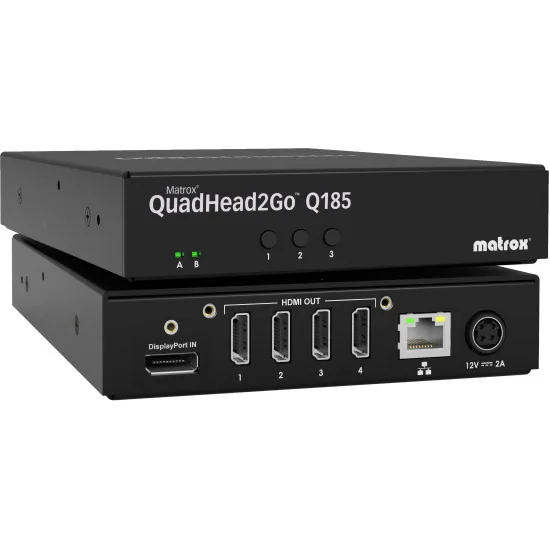
For the physical wall layout and splitting a single high-resolution input across displays, the QuadHead2Go family (requested: QuadHead2G Series) is built to drive up to four Full HD outputs from one input signal, with input support reaching 4Kp60 and even very large canvases (up to 8K × 8K, depending on configuration). It’s available as an appliance or PCIe card, which lets integrators choose between a system-independent “inline” approach or an internal card in a controller PC.
Multi-monitor control is where Matrox becomes very practical for integrators: stable EDID behavior, predictable mapping, and fast deployment across repeated installs. QuadHead2Go Q155 class devices are used for video walls in retail flagships, broadcast set extensions, corporate lobbies, and touring systems where you want a clean split of one canvas into four synchronized outputs, with options such as bezel management and rotation (project needs vary). This is also a solid fit when a media server, signage player, or a live production output must feed several displays without adding GPU complexity to the source machine.
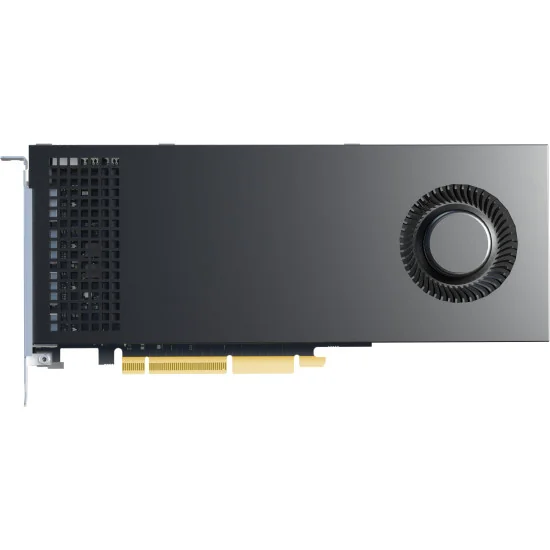
For in-chassis multi-display density and synchronized outputs, Matrox offers the Luma Pro Series graphics cards. Depending on the model, you can target quad or octal output counts, with modern DisplayPort connectivity and resolutions that reach into 8Kp60 HDR territory (model dependent). These cards are commonly specified for control rooms, simulation spaces, visualization suites, and large-format signage where tearing, drift, or inconsistent sync quickly becomes visible.
On the software side, Matrox supplies two tools that matter during commissioning and day-to-day operations. PowerWall Software helps plan, discover, and deploy video wall layouts for QuadHead2Go installations, including rotation and bezel adjustments. For desktop and display management on Windows with Matrox graphics hardware, PowerDesk supports configuration tasks such as stretched vs independent desktops, cloning, and display arrangement controls. Together, these utilities reduce the “trial-and-error” time that often drags down multi-display delivery schedules.
If your buying criteria include 4K60 distribution over IP, multi-display density with synchronization, and straightforward deployment for video walls, Matrox Video is a brand worth shortlisting—especially when the installation must stay maintainable after handover, not only on day one.