


What is color processing and what does it affect?
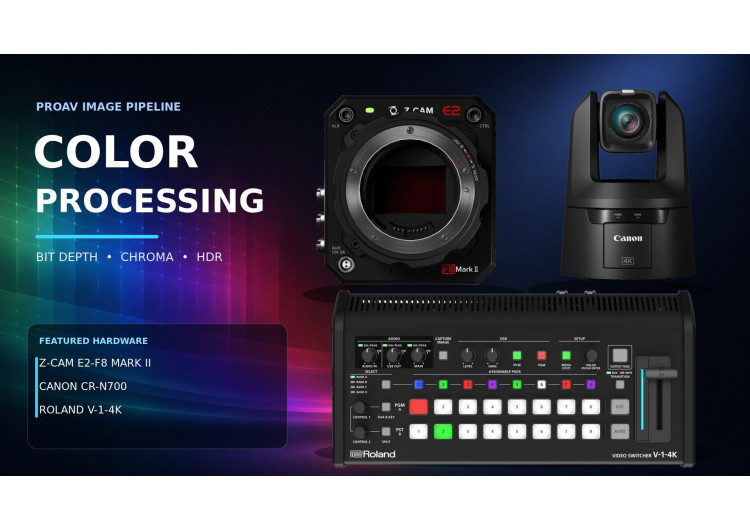
Bit depth is only part of color processing. See when higher precision matters across cameras, mixers, recorders and displays.
Color processing is often reduced to a label such as 8-bit, 10-bit or 4:2:2. Those figures matter, but none describes the complete image path. A camera must turn the electrical response of its sensor into values that a recorder, mixer, encoder and display can interpret. Every conversion affects how faithfully skin tones, saturated stage lighting, gradients and keyed edges survive production.
For a technical buyer, the useful question is therefore not simply “does this camera have high color processing?” It is where the signal is processed, at what precision, in which color space and what happens at the next device. A 10-bit camera feeding an 8-bit mixer does not produce a 10-bit programme path. Equally, a well-exposed 8-bit signal sent directly to air can be entirely fit for purpose when no demanding color correction follows.
What is color processing in a camera?
Color processing in a camera is the chain of calculations that converts sensor data into a viewable or recordable image. A single-sensor camera does not receive a finished RGB pixel at every photosite. It first measures filtered light through a colour filter array. The image processor then performs black-level and shading correction, demosaicing, white-balance multiplication, color-matrix conversion and tonal mapping. Noise reduction, sharpening and highlight handling also influence perceived color because they change the boundaries and texture around colored detail.
The selected image profile determines another large part of the result. A Rec.709 profile maps the scene into a familiar SDR picture intended for immediate monitoring or transmission. A logarithmic profile preserves more scene information for later grading, while HLG or PQ maps the signal for HDR distribution. These are not cosmetic presets. They alter how code values are allocated between shadows, midtones and highlights, and they define how downstream equipment should interpret the image.
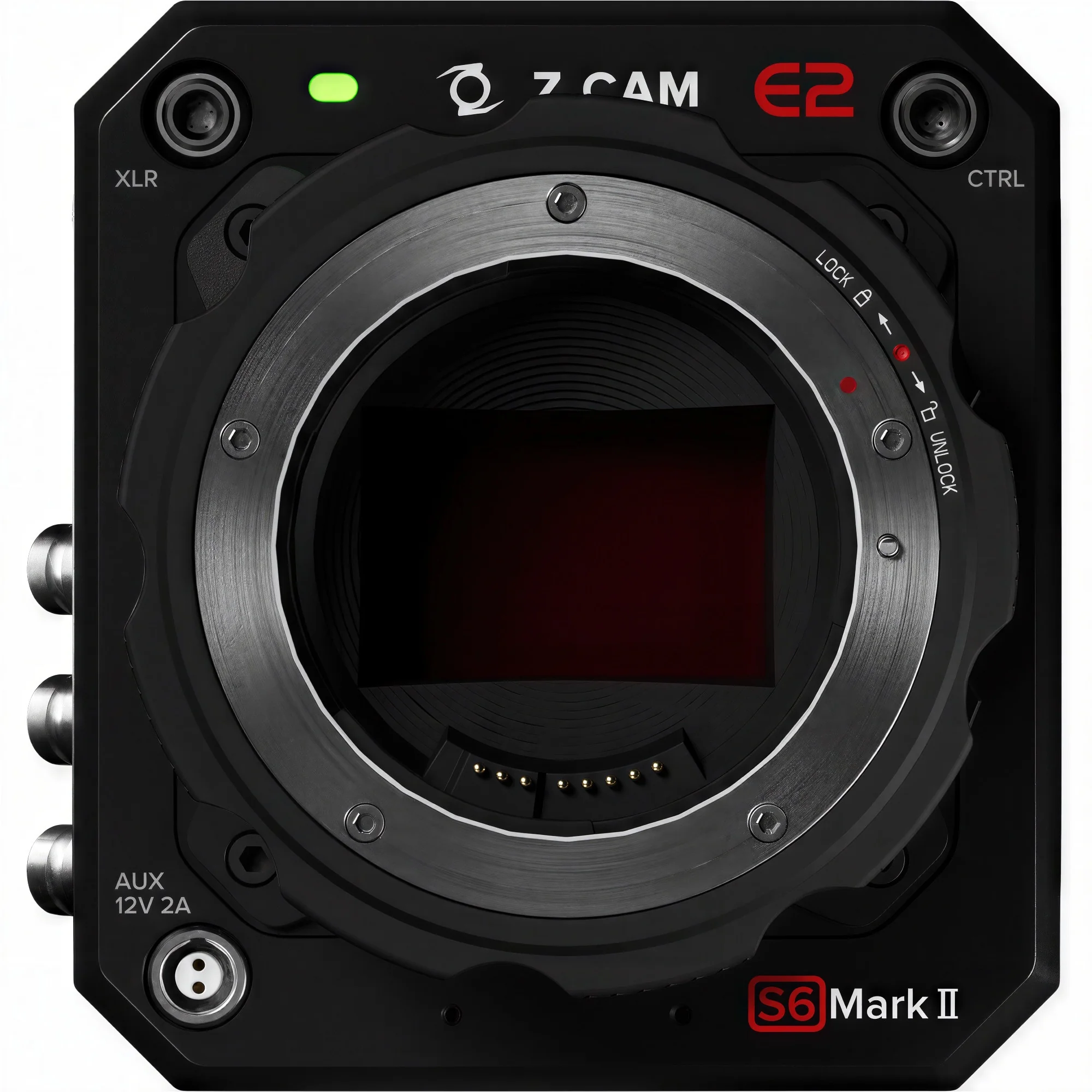
The Z-CAM E2-S6 Mark II NDI illustrates the distinction between processing controls and recording format. Its camera controls include gamma, matrix and 12-axis hue/saturation correction, while Z-Log2, Rec.709 and HLG serve different delivery paths. Internally, H.265 can retain 10-bit 4:2:0 data; the HDMI path can carry 10-bit 4:2:2. For a multicamera concert, the 12-axis controls help align difficult LED colors before transmission, while the deeper output leaves more room for a recorder or grading system.
Processing also carries a manufacturer’s visual character. Sensor spectral response, demosaicing, matrix coefficients and highlight rendering explain why two cameras with the same nominal bit depth can render skin or saturated reds differently. In a mixed-camera studio, matching these characteristics may take more operator time than matching resolution.
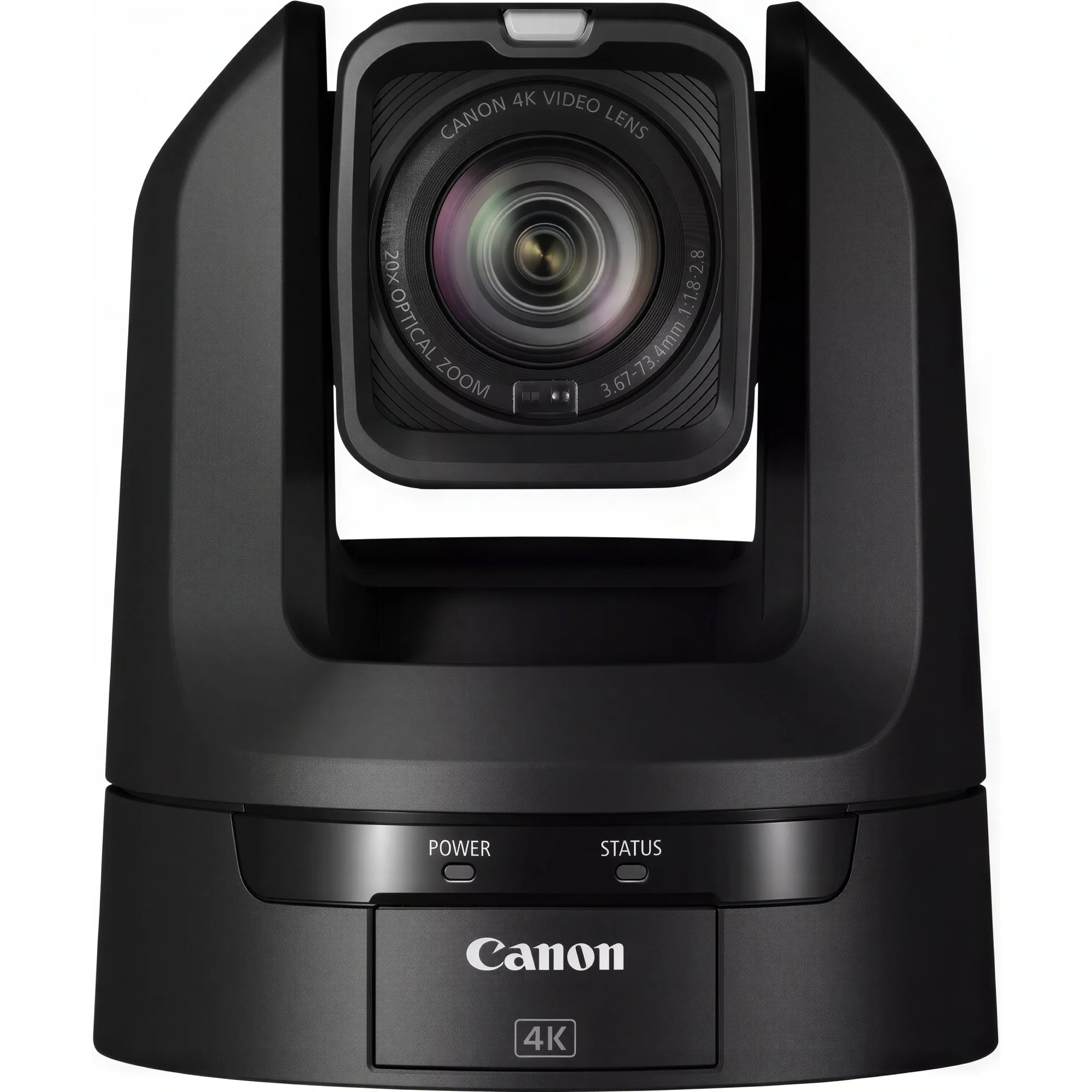
The Canon CR-N300 Black combines a 1/2.3-type sensor with a DIGIC DV6 processor and can output 4K UHD through HDMI as 4:2:2 10-bit. That output is useful in a corporate studio or education space where a remote camera must match other Canon sources and remain stable under mixed presentation lighting. The processing value is not just the number of tonal steps; it is the repeatability of white balance, matrix behavior, exposure and output coding from one camera position to the next.
Dynamic range and color processing are related but not interchangeable. Dynamic range describes the span between usable shadows and highlights. Bit depth describes how finely values can be represented, while the transfer curve decides where those values are spent. A camera may capture a wide scene range but compress it aggressively into an 8-bit SDR output. Another may offer a 10-bit log signal that preserves smoother transitions for grading. Both statements can be true at the same time.
How is the color processing value specified?
There is no universal single-value rating for color processing. A useful specification combines several fields and states whether they refer to internal recording, a physical output, an IP stream or the display panel.
Bit depth gives the number of code values available to each component. Eight-bit video has 256 nominal values per component; 10-bit video has 1,024. Across three components, that is 64 times as many nominal combinations before legal-range restrictions and compression are considered. The practical benefit appears in skies, studio cycloramas, defocused backgrounds and log footage: smaller tonal steps reduce banding and give color correction more values to redistribute. Bit depth does not guarantee accurate color, however. A poor white balance or matrix remains poor when represented with more numbers.
Chroma subsampling states how much spatial color information is retained relative to luma. In 4:4:4, color is sampled at full horizontal resolution. A 4:2:2 signal halves horizontal chroma resolution while preserving full vertical chroma resolution; 4:2:0 reduces chroma resolution in both directions. Because human vision resolves brightness detail more strongly than color detail, 4:2:2 and 4:2:0 save substantial bandwidth with modest impact on ordinary pictures. Fine red text, saturated graphics, hair against a green screen and small colored interface elements reveal the difference much sooner.
Bit depth and sampling answer separate questions. Ten-bit 4:2:0 offers fine tonal increments with reduced spatial color detail. Eight-bit 4:2:2 carries more chroma positions but fewer tonal steps. Neither label automatically wins; keying, grading, transmission bandwidth and the number of subsequent encodes decide which limitation is more costly.
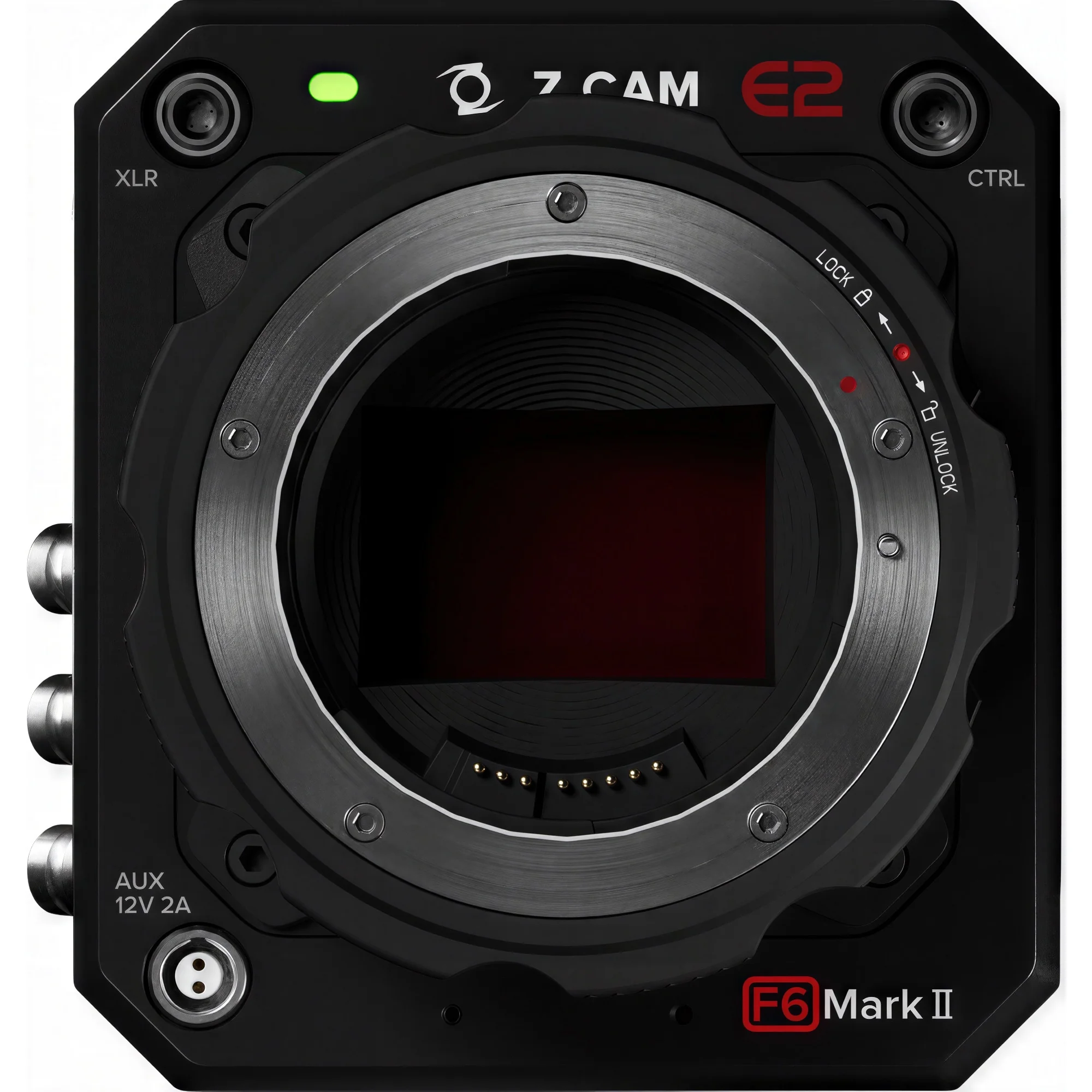
The Z-CAM E2-F6 Mark II is a useful procurement example because one body exposes several paths. H.265 recording is specified as 10-bit 4:2:0, H.264 as 8-bit 4:2:0, and HDMI can deliver up to 10-bit 4:2:2. ProRes RAW or Blackmagic RAW recording through compatible external hardware follows a different model again: sensor-derived data and metadata are retained so that more decisions can be made later. A buyer must therefore name the intended connection and recording mode before comparing this camera with another.
Color space and transfer function complete the basic description. Rec.709 defines familiar HDTV primaries; Rec.2020 uses a much wider set of primaries as a container for UHD and HDR signals. SDR gamma, log curves, HLG and PQ assign brightness differently. A file can be 10-bit yet look wrong if Rec.709 is interpreted as Rec.2020, if full-range values are treated as legal range, or if log footage is displayed without the proper transform.
Codec and bitrate still matter. Compression may blur chroma detail, introduce blocks around saturated edges or make repeated encoding visibly worse. The same “10-bit 4:2:2” label can describe an uncompressed SDI signal, an intraframe production codec or a heavily compressed delivery stream. The numbers only become meaningful when the transport and compression stage are stated.
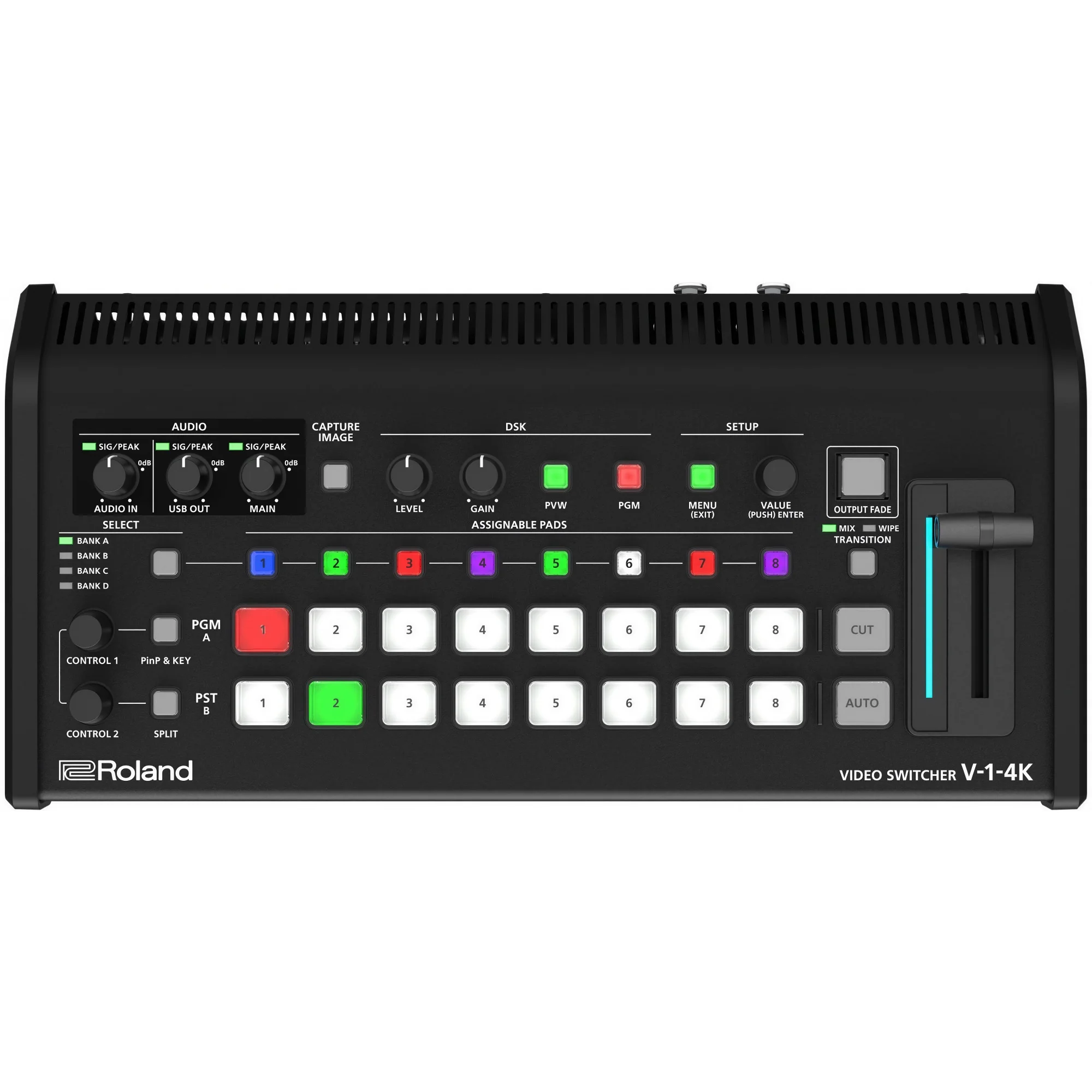
The Roland V-1-4K accepts and switches sources up to 4K 60p and supports Rec.709, Rec.2020, SDR, HLG and PQ system settings, but its video engine is 4:2:2 8-bit. This is not a contradiction. Resolution, gamut, dynamic-range signalling and processing precision are separate properties. In a live event path built around this mixer, the programme output should be assessed as an 8-bit 4:2:2 stage even when the cameras provide 10-bit signals.
When reading a data sheet, ask four short questions: Is the figure for internal processing, recording or output? At which resolution and frame rate does it apply? Which gamut and transfer curve are active? Does the next device preserve those properties? This prevents a premium camera from being purchased for a capability that disappears at the first scaler, converter or mixer.
For which applications is high color processing particularly important?
Higher precision earns its cost when the image will be transformed rather than merely passed through. Color grading, HDR finishing, chroma keying, VFX, virtual production and repeated encoding all amplify small errors. A production house shooting log footage may shift exposure, contrast and saturation substantially in post. Ten-bit material gives those operations more discrete levels, reducing contouring in smooth areas and break-up in heavily adjusted shadows.
Green-screen work adds a spatial requirement. The keyer separates foreground from background largely through chroma differences. A 4:2:2 source normally produces cleaner hair, fabric and motion edges than 4:2:0 at the same resolution and compression quality. More bit depth helps when the background is uneven or when spill suppression and edge color correction are strong. For product films, broadcast graphics and virtual sets, this can save roto time far beyond the cost of larger files.
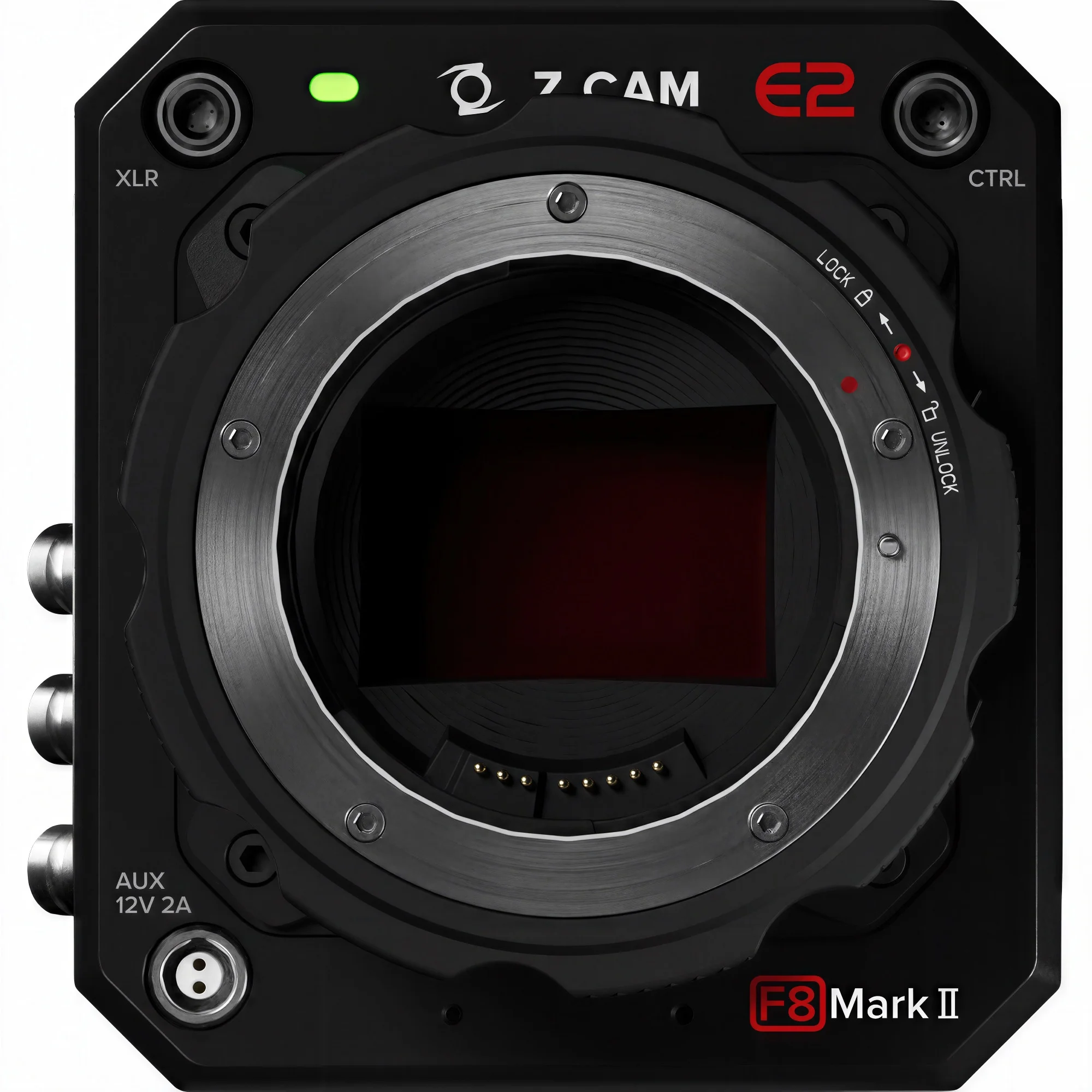
The Z-CAM E2-F8 Mark II NDI combines an 8K full-frame acquisition path with 10-bit H.265 recording, a 10-bit 4:2:2 HDMI output, Z-Log2, HLG and 12-axis color correction. The practical case is not “8K means better color.” Rather, a cinema or high-end commercial crew can preserve spatial detail for reframing while retaining a deeper signal for transforms and camera matching. For live IP production, the separate NDI path should still be evaluated by its selected resolution, bitrate and decode chain.
Multicamera broadcast raises a different problem: consistency over time. Skin tone must not jump when the director cuts from a pedestal camera to a PTZ. LED walls, moving heads and practical fixtures can push saturated colors close to or outside Rec.709. Ten-bit shading controls, a known matrix and reliable monitoring let an operator make smaller corrections without exposing coarse steps. Sports, worship, televised debate and concert production all benefit, even when the final viewer receives a compressed 4:2:0 stream.
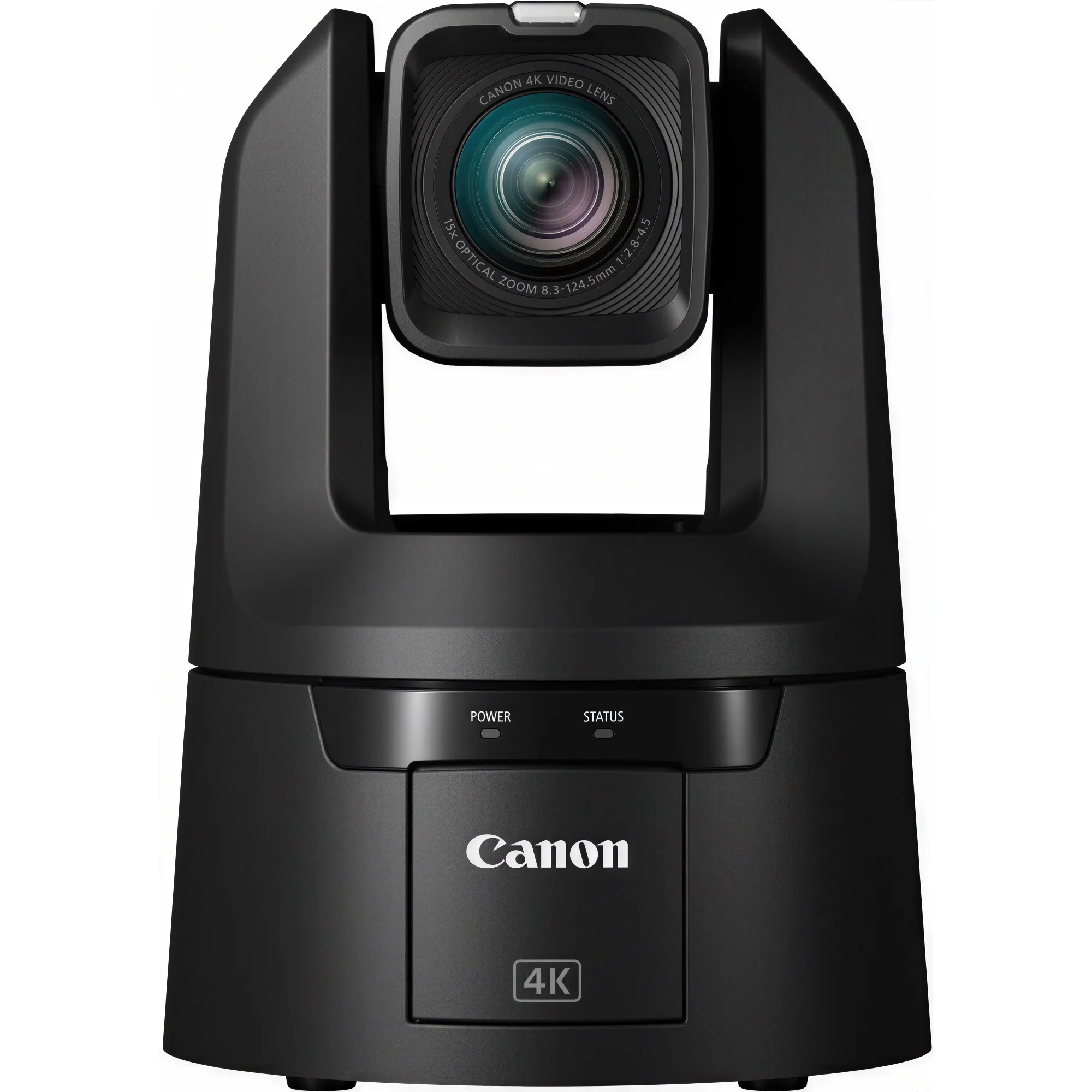
The Canon CR-N700 Black supports 4K 60p 4:2:2 10-bit output over 12G-SDI and HDMI, with Canon Log 3, Wide DR, PQ and HLG picture options. In a broadcast studio, Canon Log 3 provides latitude for a managed grade; HLG or PQ supports a direct HDR route; a correctly configured Rec.709 picture can go to air with less intervention. Its color capability is valuable because the production can choose between those routes without changing the camera position or optical system.
High color precision is also valuable when footage has a long commercial life. A master for cinema, television, streaming, social crops and future HDR versions may undergo several transforms and encodes. Retaining a stronger source master reduces the risk that today’s fast delivery decision becomes tomorrow’s visible artifact. The business case is preservation of usable options and fewer reshoots, not a more impressive number on the equipment list.
Where is high color processing not essential?
Not every production benefits equally from the largest files or deepest signal. A controlled Rec.709 programme that is switched live, lightly branded and delivered once can look clean through an 8-bit 4:2:2 path. Correct exposure, white balance, lighting and camera matching may make a larger difference than moving from 8 to 10 bits when no heavy grade or key follows.
This is common in internal corporate streams, routine lecture capture, council meetings, fixed training rooms and some worship services. The pictures contain ordinary motion and natural textures, while the final platform commonly distributes 4:2:0 video. Capturing a higher-quality master can still be prudent, but it should answer a clear need such as archival reuse, difficult lighting or later repackaging.
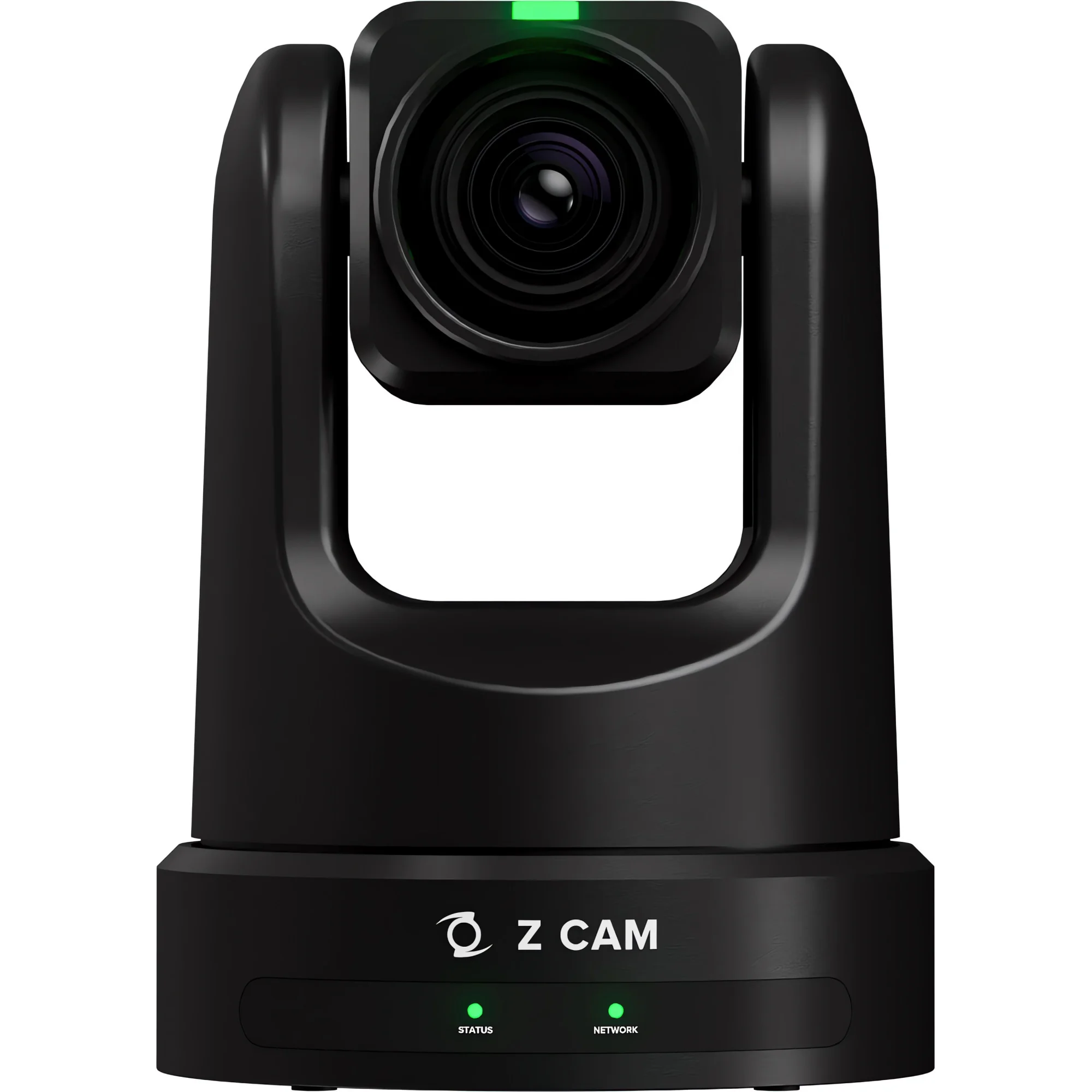
The Z-CAM P2-R1 18x Zoom shows why operational requirements sometimes outweigh a headline bit-depth figure. Its 1/1.3-type sensor, UHD 4K60 capability, 18x optical range, PDAF and selectable Rec.709, Cine and HLG looks address remote event, education and house-of-worship coverage. If the programme is exposed and matched in camera, then switched directly, repeatable PTZ moves, focus reliability and profile consistency may provide more value than a post-production-oriented recording format.
Digital signage and retail displays are another mixed case. Product photography, gradients and brand colors may justify a 10-bit source and calibrated display. Menu boards, timetables and ordinary promotional loops may gain little if the panel, player or HDMI path is 8-bit and the content is already mastered for that target. In control rooms and command centres, legible labels, low latency, redundancy and continuous operation can rank above grading latitude, though fine colored map lines still benefit from adequate chroma resolution.
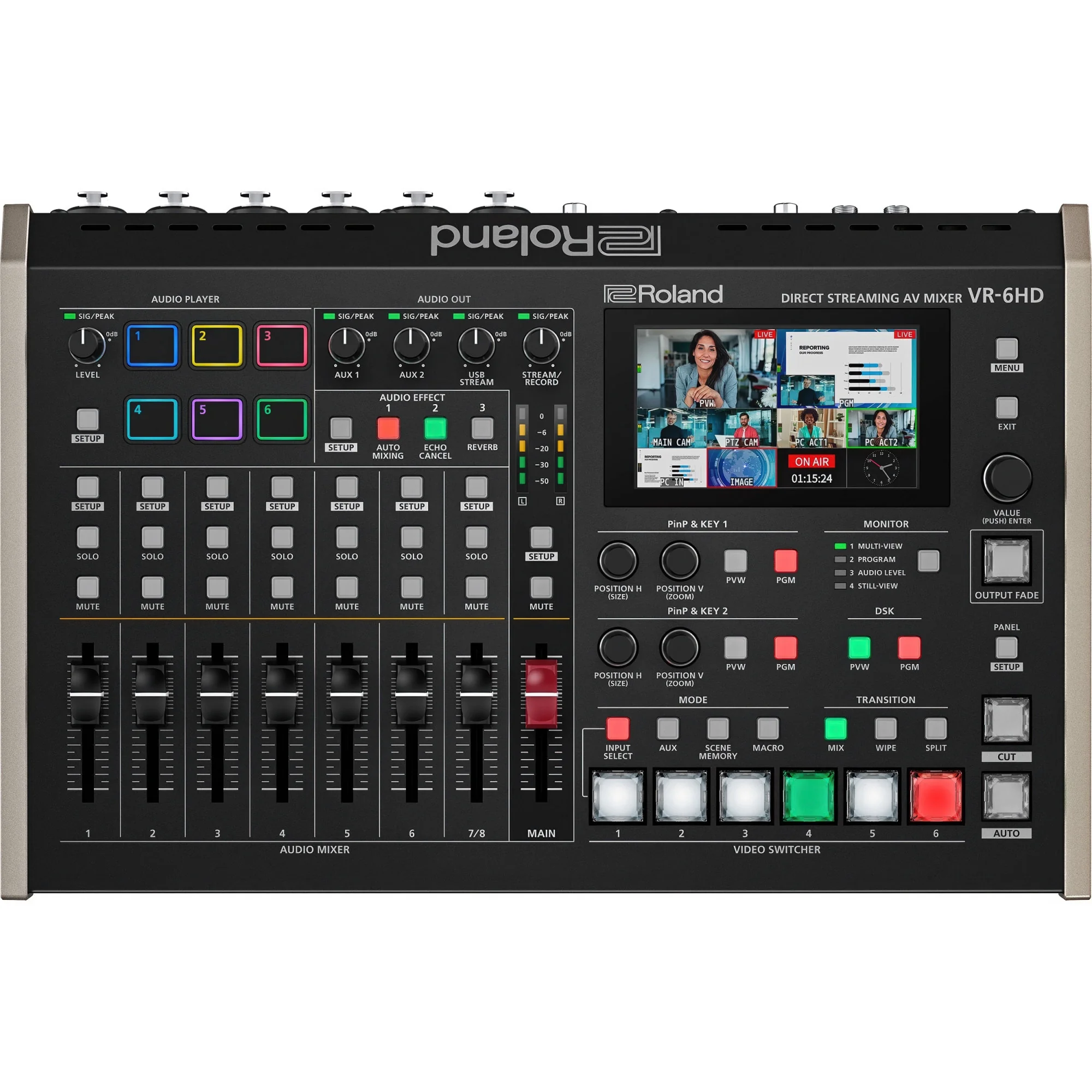
The Roland VR-6HD uses 4:2:2 8-bit video processing and handles six scaled HDMI sources for Full HD production, with direct streaming and recording functions. For a conference, training session or panel discussion delivered at 1080p, this can be a rational balance: the operator receives integrated switching, graphics layers, audio and streaming without building a separate color-finishing chain. It is less suitable as the central stage for a demanding log grade or a key that must survive extensive post work.
“Not essential” never means “color does not matter.” An 8-bit system still needs correct levels, matching gamut metadata, stable white balance and a monitor that is close enough to the target. It means the production should spend where viewers and operators receive a measurable return. More precision may increase storage, network load and processing cost without changing the result if every later stage and the final display discard it.
What other types of equipment have color processing parameters, and why are they important?
Cameras are only the first stage. Video mixers and switchers specify processing depth, chroma sampling, supported gamuts and HDR modes because every selected input passes through their engine. Scalers, keyers, still stores and picture-in-picture layers may force a conversion even when the source and output formats appear identical.
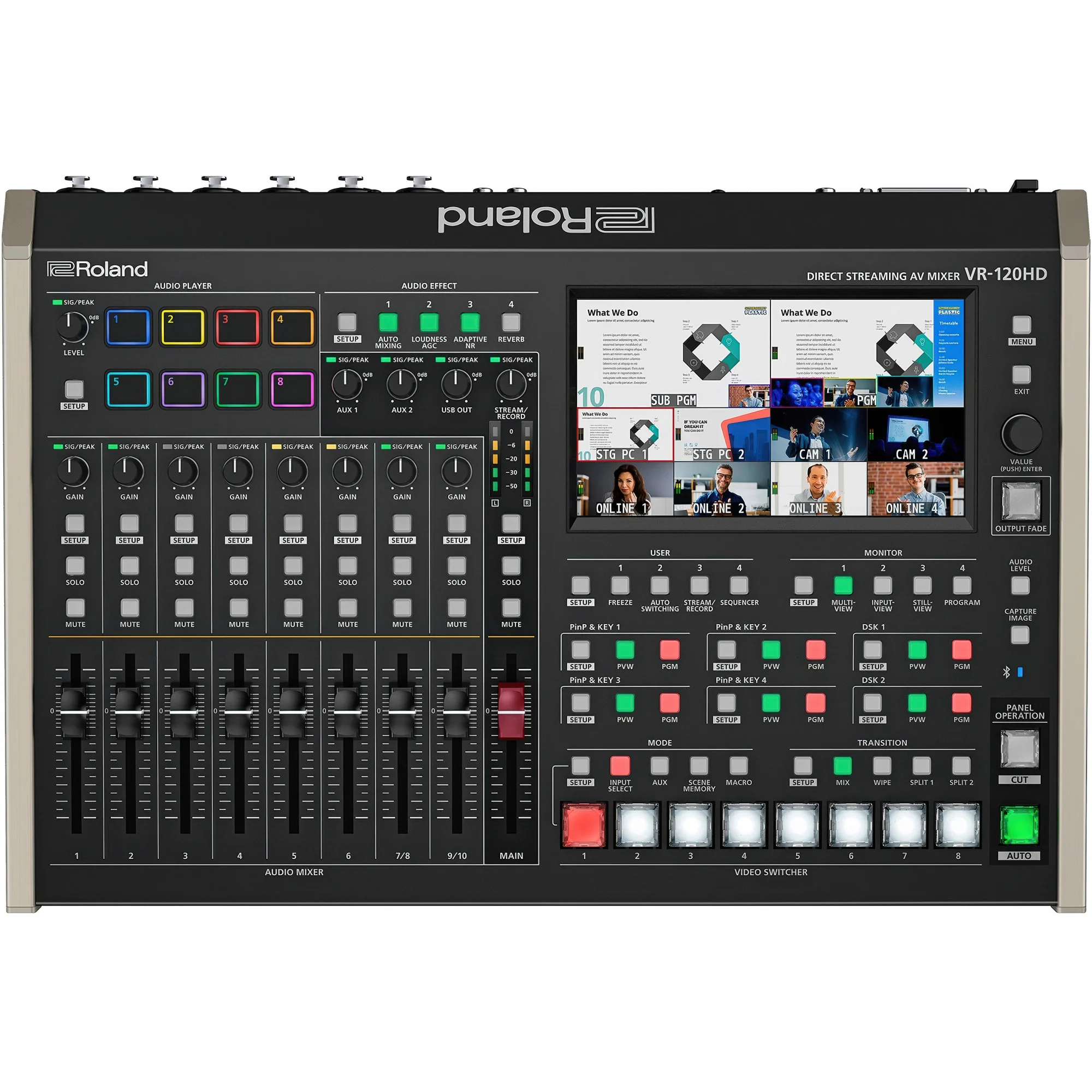
The Roland VR-120HD processes 12 video channels in 4:2:2 8-bit, combining SDI and HDMI sources with scaling, keying, graphics, recording and two direct streams. That specification sets the color ceiling for the live programme. A 10-bit camera can still bring cleaner acquisition, better exposure control and a separate high-quality recording, but the feed routed through the mixer is processed at the mixer’s precision. This distinction matters when quoting a system to a broadcaster rather than selling isolated boxes.
External recorders state accepted bit depths, sampling structures, codecs and RAW compatibility. They can preserve a camera’s 10-bit 4:2:2 output when internal recording is 8-bit or 4:2:0, but they cannot reconstruct values the camera never sent. RAW recording shifts part of the interpretation to post, yet it remains tied to the sensor, camera metadata and supported decoding implementation.
Capture cards, converters, frame synchronizers and IP gateways also have a color path. A capture card may accept 10-bit YCbCr but expose only an 8-bit format to a particular application. A converter can change RGB to YCbCr, legalize levels, remap Rec.2020 to Rec.709 or apply a LUT. These operations are useful, but undocumented automatic conversion is a common cause of raised blacks, clipped whites and hue shifts. For SDI and HDMI systems, EDID, range selection and format negotiation deserve the same attention as connector type.
Monitors and displays add two more values: panel output depth and internal LUT precision. A display may accept a 10-bit signal yet use an 8-bit panel with temporal dithering; another may show 10-bit output from a 16-bit or deeper internal LUT. LUT precision affects the smoothness of calibration corrections, while panel gamut determines which colors can actually be shown. Calibration, viewing environment and a valid signal transform are at least as important as the nominal panel bit depth.
Encoders, media players and digital signage systems must preserve color metadata as well as pixels. Codec profile, bit depth, chroma sampling, range flags, Rec.709/Rec.2020 signalling and HLG/PQ metadata tell the decoder how to reconstruct the picture. A player that silently treats limited-range video as full range can make a technically good master look flat; a display that selects the wrong HDR mode can alter brightness and saturation across an entire retail network.
Lighting equipment uses a related but different set of measures. CRI, TLCI, TM-30 and SSI describe spectral rendering, not video bit depth or chroma sampling. Poor spectral output can make fabrics and skin difficult to reproduce before the camera performs any calculation. No 10-bit recorder can restore wavelengths that were weak or absent on set.
The practical procurement rule is simple: document the complete signal path from sensor to viewer. For every stage, record resolution and frame rate, bit depth, chroma sampling, gamut, transfer curve, range, codec and any LUT or conversion. Then identify where grading, keying, scaling and compression occur. The lowest-precision or incorrectly configured stage can dominate the final result, while extra precision that survives the whole path provides genuine production margin.
Comments
No comment at this time!
Leave your comment