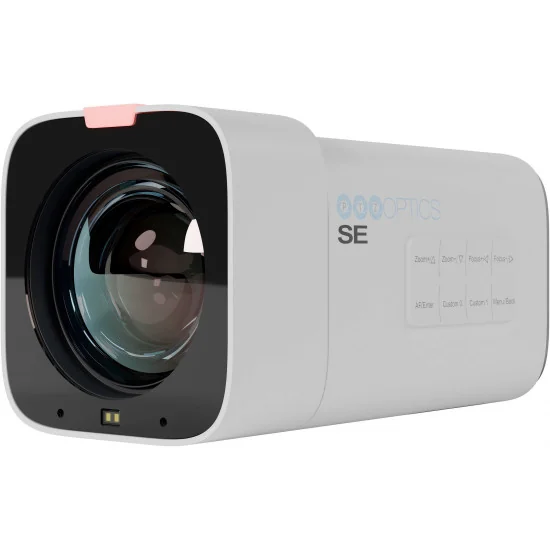
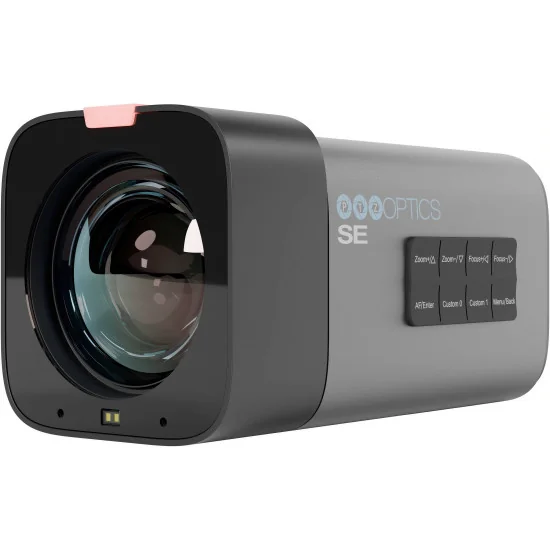
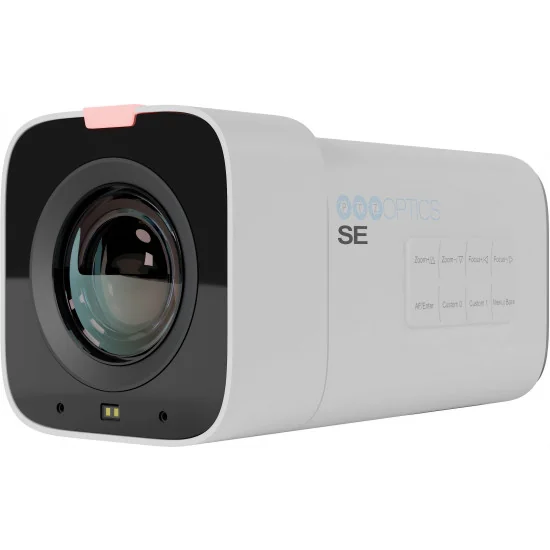
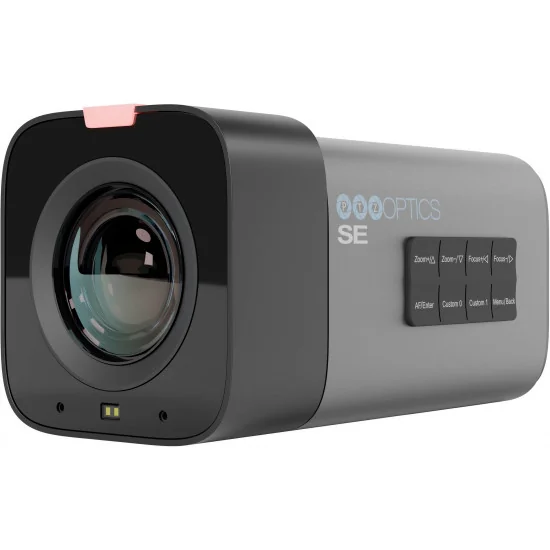
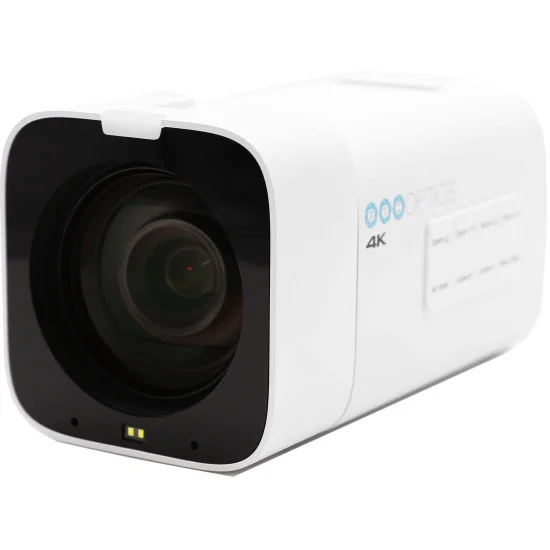
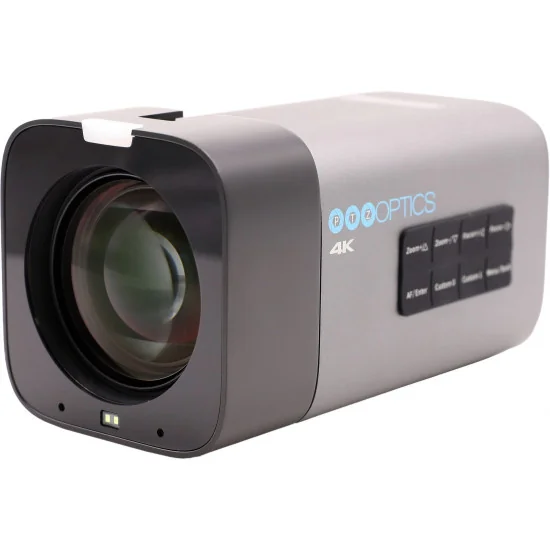
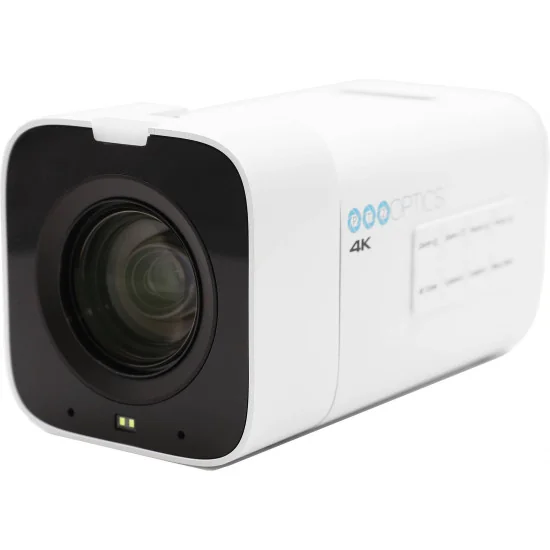
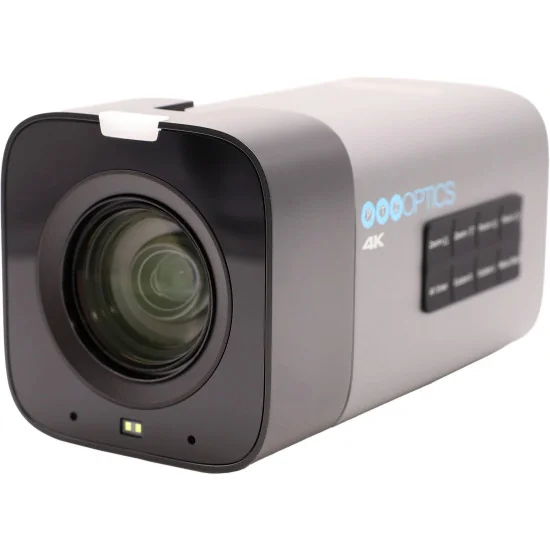
PTZOptics Studio Pro Box Camera 12x Zoom
€699.00
PTZOptics Studio Pro is a professional 12x optical zoom box camera for live streaming , studio cutaways and broadcast inserts. It captures...
Filter By
Brand
Brand
Price
Price
€699.00 - €1,249.00
Sensor Size
Sensor Size
Optical Zoom
Optical Zoom
Video Output
Video Output
Audio Input
Audio Input
Audio Output
Audio Output
Max Output Resolution
Max Output Resolution
Streaming protocols
Streaming protocols
POV & mini-cameras bring broadcast-grade capture to spaces where full-size rigs don’t fit—perfect for live switching, sports angles, tight installs, and stream-ready multi-camera workflows.
Active filters
POV & mini-cameras are the “silent operators” of modern production: small enough to disappear in a set, yet capable of feeding a switcher with low-latency, repeatable images. In a control room, they behave like infrastructure—always on, always framed, always reachable over network control. In the field, they become problem-solvers for angles that a shoulder camera simply cannot hold for hours.
Professionals pick this category when placement matters as much as picture quality: under a stage lip, inside a car cabin, on a goal rig, above a lectern, or behind a product table. The practical checklist goes beyond “resolution”. Teams evaluate sensor format and highlight handling, lens options (fixed vs CS/MFT mounts), streaming protocols (NDI, SRT, RTMP, RTSP), and how cleanly the camera drops into a PoE or single-cable workflow.
On AVGear.shop you can build a coherent compact-camera ecosystem across key pro brands—mixing network-first boxes and cinema-style minis. For example, compact IP-ready POV units such as Datavideo BC-15P/BC-15C focus on tight installs with HDMI and streaming features, including PoE-friendly deployment for fixed rigs. Meanwhile, creator-ready network boxes like BirdDog MAKI Live bring a pocket footprint with NDI-style workflows and on-body control logic, and cinema-oriented minis like Z CAM E2N add lens flexibility and network integration for multicam shading and matching. (Product examples vary by project scope and I/O requirements.)
In venues and studios, the win is geometry: you gain a camera position without blocking audience sightlines or cluttering the set. Look for a chassis that accepts standard mounts and a control layer that doesn’t require physical access after installation. Many pro teams also prioritise remote parameter access (exposure, white balance, colour matrices/looks) so matching remains consistent across long event days.
For infrastructure-style installs, Ethernet-based control and power simplify cabling runs. A PoE path can cut rig complexity dramatically—particularly when the camera is mounted 6–12 metres from the nearest safe power point. When you can power and carry video/control over one cable, you also reduce failure points for permanent installs and touring flypacks. Cameras in this segment frequently provide simultaneous outputs (e.g., HDMI plus IP), enabling a split between local confidence monitoring and network contribution.
Sports and action production reward cameras that keep focus, hold detail in fast motion, and survive awkward mounting. A compact POV box can live near the action as a dedicated “specialty” feed—goal angle, referee view, inside-the-net, corner flag, pit lane, or backstage reveal. Practical features here include fast autofocus behaviour, stable exposure under mixed LED lighting, and streaming modes that preserve detail without saturating your venue network.
In esports and arena setups, compact 4K/HD boxes are often placed for keyboard/hand cams, audience reaction, sponsor integration, and tight stage perspectives where a PTZ head would be visually intrusive. When you choose a camera that supports SRT or NDI-class transport, you can route it through the same IP backbone as your main robotics while keeping latency predictable for switching.
A smart mini-camera strategy complements PTZ coverage rather than competing with it. PTZ cameras deliver framing range; mini POV units deliver proximity. Put a compact box at the lectern, drum kit, product table, or cooking station while PTZ units handle wide-to-tight moves. This is where brands like Telycam and BirdDog frequently appear in the same system design: robotics for coverage, plus discreet POVs for “impossible” positions.
On the control side, teams benefit from consistent protocols (VISCA over IP, web UI, REST-style APIs) and predictable colour behaviour. If your production relies on tally discipline, pay attention to tally implementation (hardware light rings or network tally) so operators and talent read the on-air state instantly. When the POV camera supports the same network timing/transport philosophy as your PTZ fleet, routing becomes simpler and troubleshooting becomes faster.
Live production buyers typically ask: “Can I switch it cleanly?” That means stable cadence (50/60p where required), consistent colour, and transport that your router and switcher already understand. In compact boxes like PTZOptics Studio Pro, the appeal is hybrid connectivity—HDMI plus USB-C plus IP contribution—useful for small studios that jump between broadcast switching and conferencing platforms without swapping cameras. For IP-centric multicam, Z CAM E2N-class minis add lens control and cinema-oriented capture options while still fitting into network-first workflows.
For shading and matching, modern compact cameras increasingly provide deeper image controls than legacy “webcam” devices: gamma choices (Rec.709/HLG in some ranges), detail/sharpening management, and noise reduction settings. That matters when a mini-camera is cut next to larger broadcast bodies; you want it to hold up in the same waveform conversation, not just “look okay” alone.
Streamers and small teams look for speed: fast setup, minimal cabling, and direct compatibility with common platforms. A mini camera that can output USB-C UVC for a workstation and also publish a clean IP stream gives flexibility when the show grows from single operator to multi-camera. Pocket boxes like BirdDog MAKI Live can suit roaming creator shots and “quick deploy” interviews, while cinema-style minis from Z-CAM suit controlled studio lighting where lens choice and image tuning are part of the brand look.
For creator workflows, pay attention to audio contingency (embedded audio over HDMI/USB), onboard recording for backup (microSD/SD where supported), and wireless operation where cabling is impractical. A compact camera earns its place when it reduces friction: fewer adapters, fewer power bricks, fewer reasons to delay going live.
To build a reliable category shortlist, align the camera with your routing model. If your facility is IP-first, start with network-native options from Datavideo and BirdDog that slot into PoE and streaming protocols. If you need lens interchangeability and a cinema-leaning image pipeline inside a compact cube, evaluate Z CAM minis that support high-frame-rate acquisition and IP contribution. For mixed studios that alternate between hardware switching and direct-to-PC capture, compact box cameras from PTZOptics can bridge HDMI/USB/IP without forcing a workflow reset.
The result is a camera package that scales without drama: discreet specialty angles, repeatable remote control, and a picture that holds up when cut next to your primary cameras—whether the job is live television, corporate events, sports, or daily streaming with a professional finish.
check_circle
check_circle