Kinefinity E Mounting Adapter
€649.00
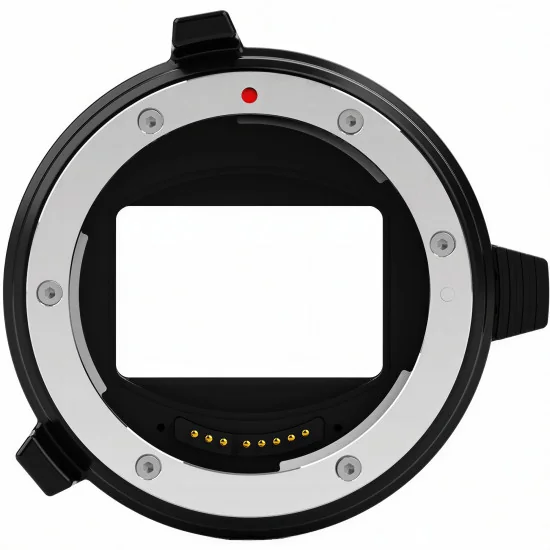
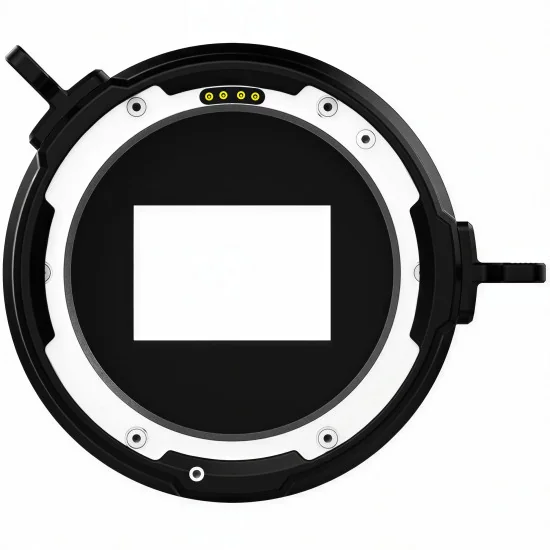
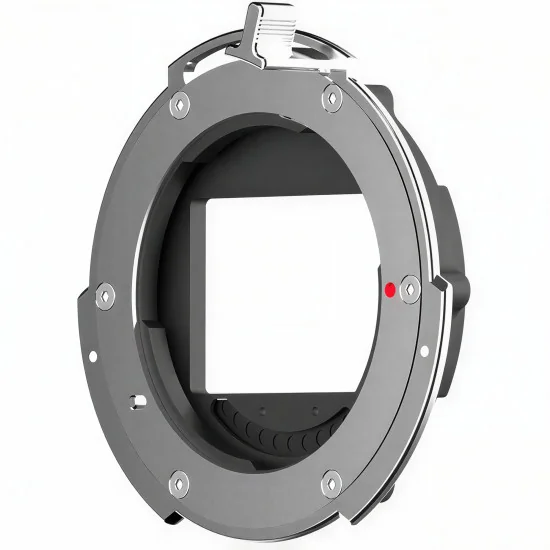
Lens choice can determine whether a camera package stays compact or becomes needlessly complex. The Kinefinity E Mounting Adapter gives...
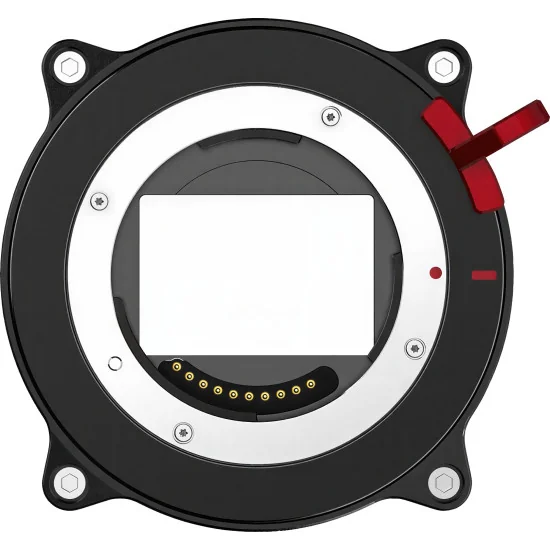
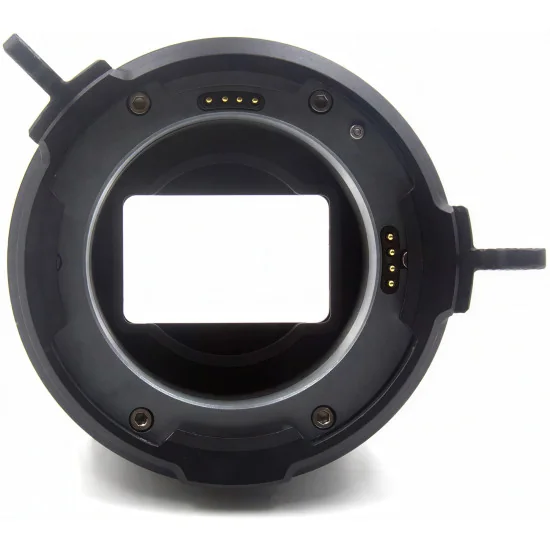
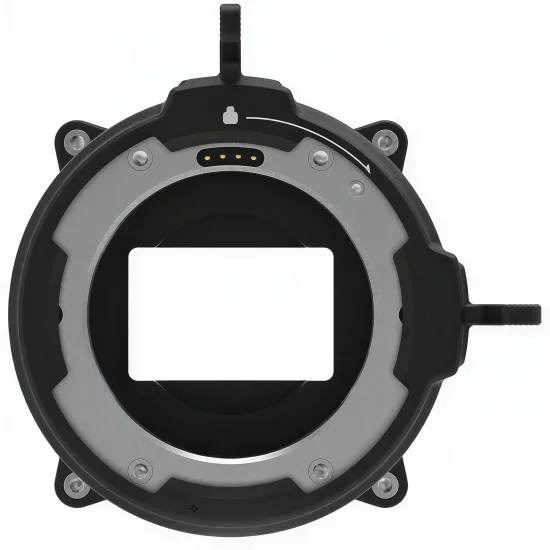
Kinefinity was founded in Beijing in 2012 and put the KineRAW-S35 into working hands the same year — China's first self-developed cinema camera, and the body that introduced the short-flange KineMOUNT still in use today. That one decision shaped the whole ecosystem. Because the native flange sits close to the sensor, EF, PL and LPL adapters swap without tools, so a rental house can rotate a single chassis between an owner-operator's stills glass and a set of cine primes in minutes rather than sending it to a technician. Two motorised interfaces joined later: an Active PL mount whose cine locking collar carries heavy primes and passes Cooke /i data — focal length, iris, focus distance — straight into the clip for tracking and compositing, and an Active E mount that drives iris, focus and optical stabilisation on modern Sony glass. Neither asks for a trip to the bench to set flange depth.
What followed was steady rather than showy. KineMINI and KineMAX gave way to the TERRA line, then MAVO and MAVO LF, then MAVO Edge 8K in 2020 and MAVO Edge 6K in 2022 — the latter's full-frame sensor now sitting inside the mark2 LF. The Edge chassis took an iF Design Award in 2021, and that same year two MAVO Edge bodies went aboard the Chinese Space Station to record its construction in 8K for the documentary Beyond the Sky. Work shot on the range has reached Sundance and Venice, while the company's honours include a Primetime Emmy and a Special Contribution Award from the China Film & TV Technology Society. The MC8020 pushed into live EFP territory in 2023, the EAGLE SDI viewfinder followed in 2024, and VISTA arrived in 2026 for solo filmmakers.
Both mark2 bodies carry over the integrated aluminium alloy chassis from MAVO Edge, which has a commercial consequence worth noting: cages from Movcam, Tilta and SmallRig built for the Edge bolt straight on, so a house already holding Edge accessories does not restock. The Kinefinity MAVO mark2 S35 PL Mount 6K Camera pairs that chassis with a Super 35 sensor of 24 × 16 mm active area reading 6144 × 4016 in open gate. Cadence climbs as the crop tightens: 6K Wide runs to 96 fps, 5K to 112 fps, a Micro Four Thirds region at 3.8K to 150 fps, and a Super 16 area as far as 270 fps — sprint speeds a documentary operator can call on without swapping bodies mid-shoot.
Its large-format sibling, the Kinefinity MAVO mark2 LF PL Mount 6K Camera, covers 36 × 24 mm with an image circle of 43.3 mm and reads 6016 × 3984, holding 48 fps in open gate and 75 fps at 6K 2.4:1, with a Super 35 crop releasing 112 fps at 4K DCI. Dual base ISO of 800 and 5120 on the LF — 800 and 3200 on the S35 — means a night exterior or a concert floor starts clean instead of pushed, and latitude beyond 14 stops leaves a colourist room to pull a blown window back. Anamorphic de-squeeze runs in camera from 1.25× to 2×, so 65 mm-style glass frames accurately on a three-axis head, and Wi-Fi 5 lets a focus puller or director monitor and adjust from the ground while the camera rides a crane, a car mount or a gimbal.
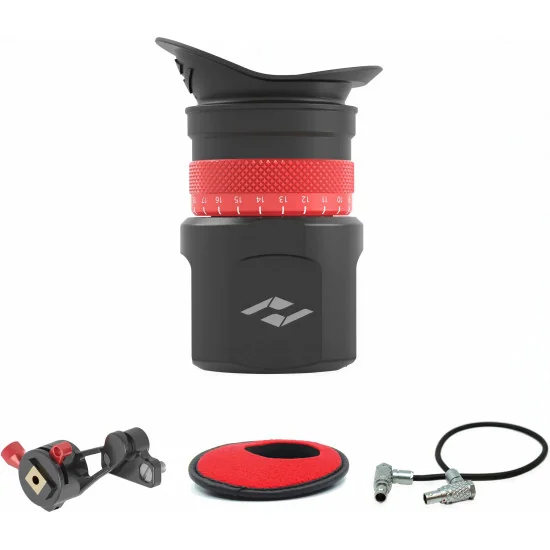
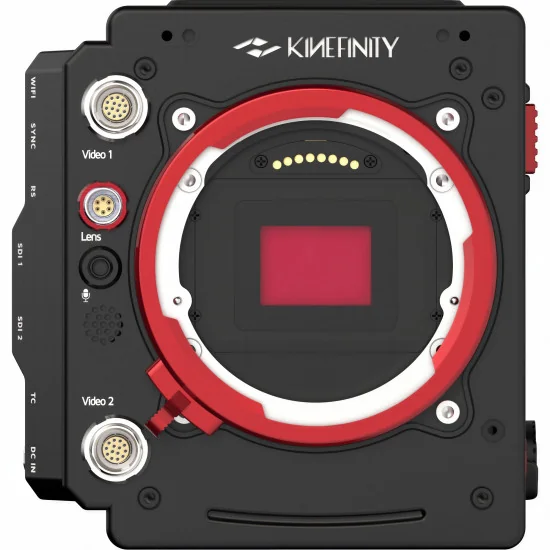
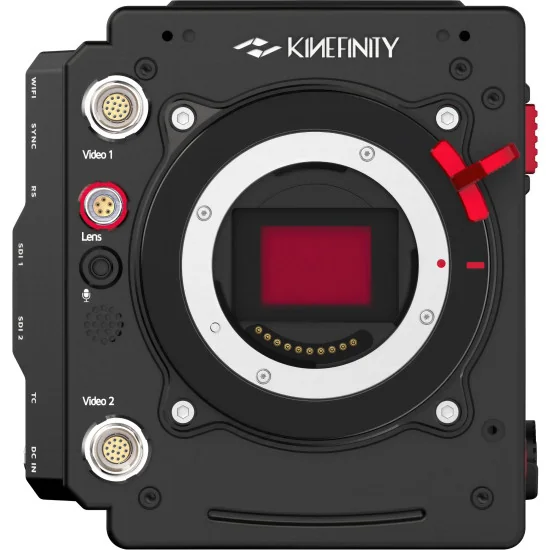
Connector choice is where a body either fits a multi-camera plan or fights it. Each mark2 carries two 3G/1.5G-SDI outputs that run independently on standard BNC with embedded audio and metadata, letting a vision mixer and a DIT station be fed from one camera without a distribution amplifier. Two proprietary Kinefinity video ports feed the 2000-nit KineMON-5U2 and 7U2 touchscreens, or the OLED KineEVF2. Timecode arrives and leaves on a 0B 5-pin LTC connector, RS422 sync and Kinefinity's own camera sync share a 0B 9-pin, an RS232 lens port talks to third-party motors, and a Fisher 3-pin trigger input starts and stops recording from a rig button or a jib operator's switch.
Audio is wired in rather than bolted on: a pair of standard XLR inputs, phantom power at 48 V, linear PCM sampling at 24-bit/48 kHz, plus a 3.5 mm microphone jack and a headphone output. Pogo-pin extension contacts EXT 1 and EXT 2 pass data and control to accessories, while a single USB-C port takes firmware and custom 3D LUTs. Media leaves set on a cable too — the KineMAG Nano magazine has a USB-C port of its own running at 10 Gbps, so a lead and a laptop stand in for a card reader on location, and read-only protection plus RAID 5 guard the take once it is out of the camera. Right-angle D-Tap to 1B 2-pin leads and combined power-and-SDI cables for the EAGLE viewfinder keep runs short and strain off the connectors, which is often the difference between a clean day and an intermittent fault at hour eleven.
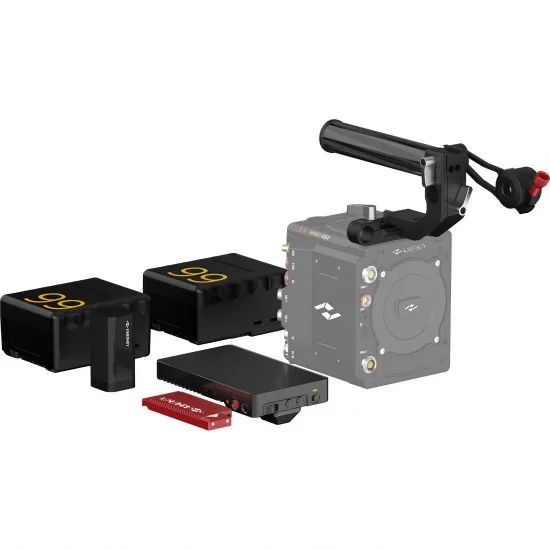
Consumption sits near 27 W at 6K HD 25 fps with live view, modest enough that battery planning becomes arithmetic rather than guesswork. The hybrid battery plate accepts both 14.8 V V-mount bricks and compact BP-U style cells, so one body serves a studio build and a travelling two-person crew without a change of stock. PD KineBAT 99 and 200 packs bring 95 Wh and 190 Wh with two 10 A D-Tap ports each and USB-C Power Delivery charging up to 60 W; a 99 reaches roughly 80 per cent in about two hours from a laptop-class charger, which suits overnight turnarounds on tour. For lighter builds the 52 Wh GripBAT 4S covers the BP-U30 footprint.
Away from the plate, DC input on a 1B 2-pin accepts anything from 11 to 26 V, useful on vehicle rigs and studio distribution. Regulated outputs sit inside the control ports — 4 A on RS, 3 A on sync and 6 A on the lens port — running follow-focus motors and small accessories without a separate splitter. Add the Movcam KineKIT-Edge and its UPS baseplate takes NP-F550 cells, holding the camera alive through a battery hot-swap; across a live multi-camera event that single detail earns its keep faster than most headline figures. Operating range is quoted at 0 to 40 °C.
Everything is written as Apple ProRes inside a QuickTime wrapper, with 422 LT, 422, 422 HQ, 4444 and 12-bit ProRes 4444XQ all on the menu, and graded from KineLOG3, a neutral Rec.709 output or a custom 3D LUT loaded by the operator. KineOS firmware has kept adding to that: 7.2 brought pre-roll of up to 30 seconds and a faster exFAT file system, while 8.0 standardised wide gamut on Rec.2020, added an HLG curve beside KineLOG3 and embedded shutter, ISO and colour-matrix metadata for ACES-based grading. Specifying a Kinefinity body through AVgear means the mount, media, monitoring and power are quoted together as a working package, with EU warranty cover behind it — the kind of technical backing a production company needs from a camera expected to earn across the next twelve jobs, not merely the first.