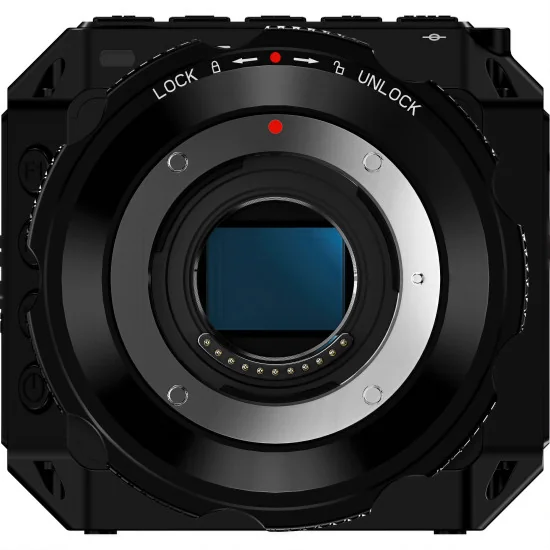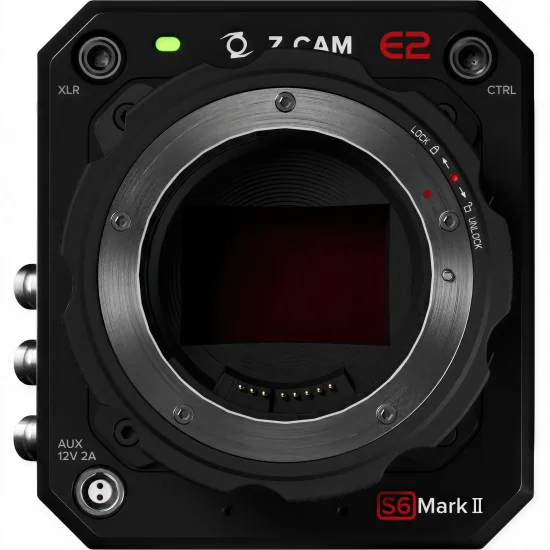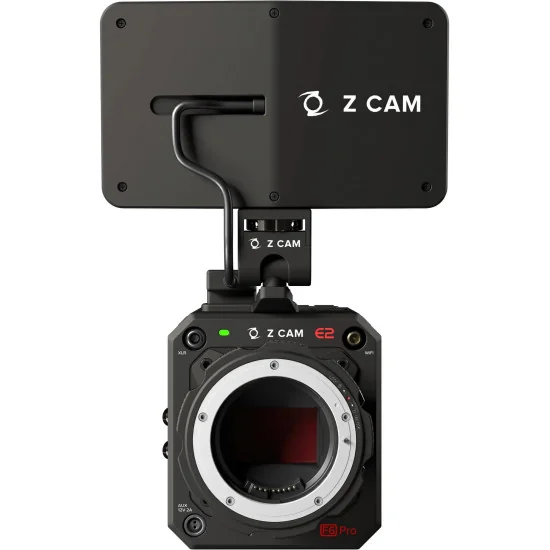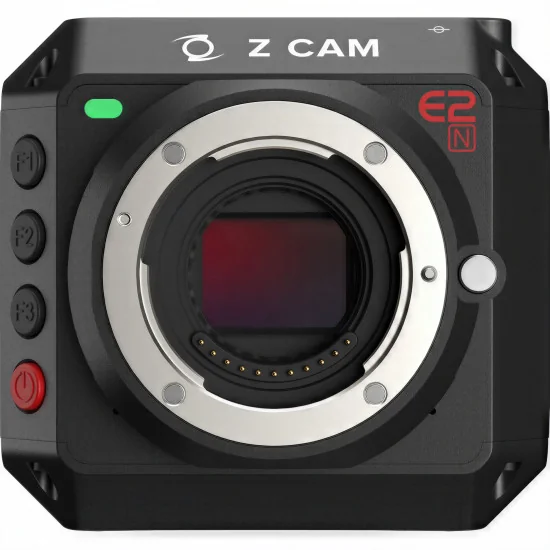
Z-CAM E2N 4K NDI Cinema
€979.00
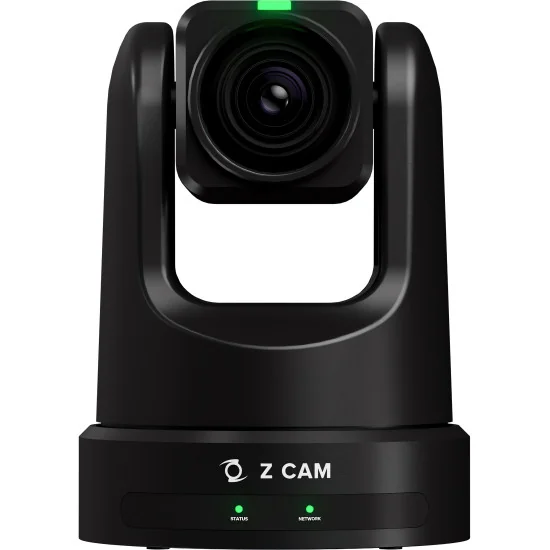
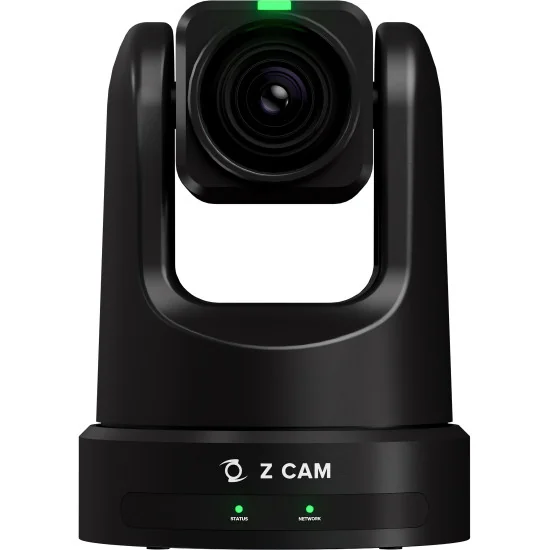
One Cat 6 run can carry everything a live camera needs: the programme feed, power, control data and tally. That is the operating logic of the...
Filter By
Brand
Brand
Price
Price
€979.00 - €5,199.00
Professional PTZ, cinema cameras, POV/mini rigs, and cine/broadcast lenses for studios, OB, streaming and TV—focused on codecs, I/O, control protocols, optics, and repeatable workflows.
Active filters
In professional production, the camera choice is rarely about “a camera” and more about a predictable chain: sensor behaviour, codec strategy, genlock/timecode, lens geometry, and how quickly operators can repeat a move. This category brings together PTZ cameras, cine cameras, POV & mini cameras, and cine lenses / broadcast zooms for broadcast, corporate studios, live streaming, and multi-camera television workflows.
PTZ is the backbone of fixed installs and IP-first control rooms. The practical differentiators are sensor size, optical zoom, low-noise processing, and the transport layer: SDI for switcher-native routing, HDMI for compact racks, and IP video when you need remote contribution and distributed production. A model like the PTZOptics Move 4K 12X-4K-GY-G3 delivers simultaneous outputs and operator-friendly motion with extensive preset memory—useful when a show runs the same blocking every day.
On IP, many modern PTZ ecosystems lean on NDI|HX3 and SRT when bandwidth and reliability matter: HX3 targets low latency with H.264/H.265 efficiency, while SRT focuses on resilient delivery over imperfect networks. These are common decision points in corporate streaming, worship, esports, education capture, and remote production links. For brands, compare approaches from PTZOptics for flexible multi-output workflows, BirdDog for network-native production tools, and Telycam when the brief includes 4K60 over HDMI/SDI with IP control.
Optical reach is where PTZ earns its keep. BirdDog X1 30x White suits long-throw coverage in auditoriums and venues where the camera must stay invisible but still isolate faces and details. For compact rooms that still demand clean 1080p60, the Bolin B2-210 offers predictable Full HD output with PoE-friendly deployment—often chosen for lecture theatres, council chambers, and hybrid meeting studios. If your pipeline needs presenter-follow behaviour, Lumens options such as VC-TA50 bring auto-tracking into the PTZ layer without turning the control room into a science project.
When you integrate a PTZ fleet, control matters as much as image: VISCA, serial (RS-232/RS-485), and web APIs decide how smoothly your controller surface, automation, or third-party system will behave. If you operate mixed infrastructures (SDI + IP), this is where product families from Bolin Technology and the broader PTZ ecosystem become relevant.
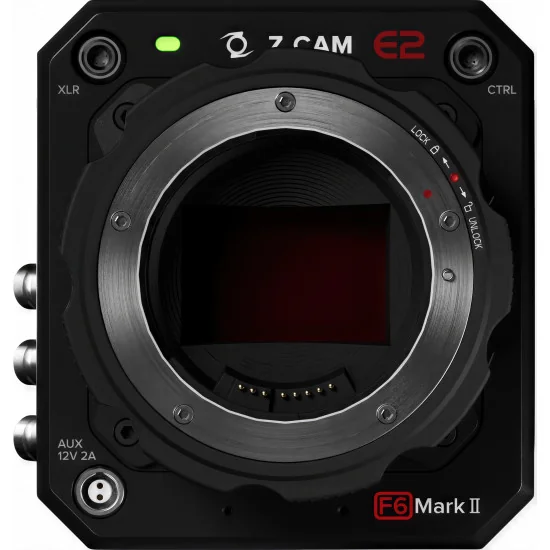
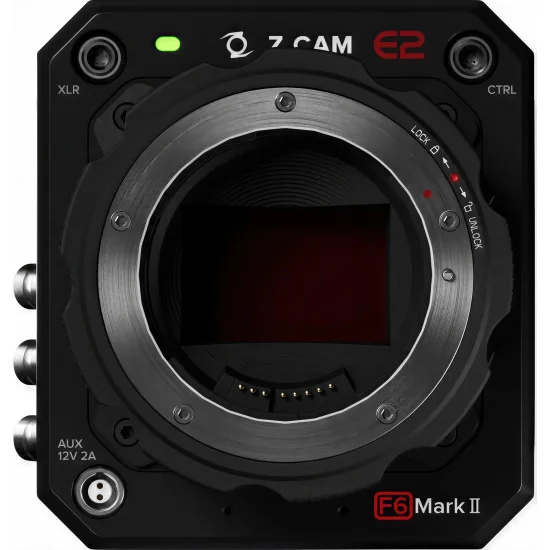
Cine bodies live or die by colour pipeline, highlight handling, and workflow speed in post. In that context, Z-CAM is a strong fit for compact rigs that still need professional hooks: Z-CAM E2-F6 Pro pairs a full-frame sensor with high-frame-rate capture and production staples such as genlock, timecode, and robust I/O. ProRes recording modes matter when you need consistent editing performance, fast turnaround, and files that editorial teams can trust under tight deadlines.
For advertising sets, music videos, and branded content, the camera body is only half the story. A stable lens mount ecosystem (PL/EF) and repeatable focus mechanics are what keep a crew moving when lighting, blocking, and talent timing are constantly changing.
POV cameras are often the “missing angle” that saves an edit: top-down product shots, overhead cooking streams, behind-the-scenes angles, vehicle interiors, or confined studio corners. They’re also increasingly used as primary cameras for small live sets when space and cabling are limited. Datavideo BC-15P is a 4K POV box camera concept built around compact placement and IP-friendly workflows, while BirdDog’s MAKI-style box cameras are popular when you want a discreet footprint with network transport and fast integration into switching/streaming software.
In practice, POV selection comes down to mounting geometry, heat management, and how you’ll get signal and tally where you need it. If the camera will be part of a larger routed system, matching SDI/HDMI standards and sync behaviour early prevents pain later.
Lens choice shapes not only sharpness but time on set: breathing, focus throw, gear placement, flare character, and close focus distance determine whether a take is smooth or a fight. DZOFilm Vespid Prime 35mm T2.1 is a practical example of a full-frame cine prime built around controlled mechanics and fast aperture for narrative and commercial work. If your visual language leans anamorphic without turning every setup into a heavy build, Laowa Nanomorph 32mm T2.9 1.5X Anamorphic LF (Amber) targets a wide image circle and a characteristic flare response while staying manageable for gimbal and compact matte box workflows.
Broadcast zoom requirements are different: repeatable servo operation, stable back focus, and predictable parfocal behaviour under live pressure. In multi-camera studios, the lens is part of the control system—zoom demand, framing repeatability, and matching across cameras matter as much as MTF charts. When you need an end-to-end toolkit—from optics to PTZ capture to studio control—brands like DZOFilm and Laowa complement the PTZ and cine bodies in a way that keeps rigs coherent.
Whether you’re building a fixed PTZ studio, a commercial cine package, or a hybrid setup with POV inserts, the goal stays the same: repeatable results, predictable integration, and a workflow that remains stable when the production schedule stops being polite.
check_circle
check_circle